

The Award-Winning Hosta Variety With Large Foliage & Pretty Purple Flowers
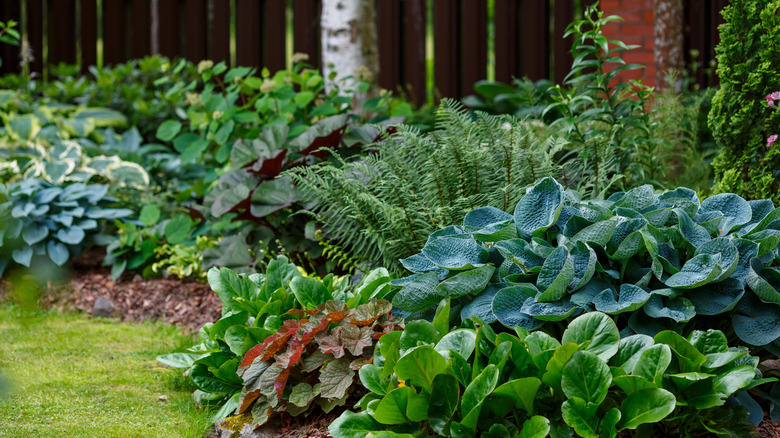
Some plants ease their way into your heart and before you know it, you're suddenly collecting cultivars like they're stamps or baseball cards. If you have a woodland garden filled with hosta species, you know the feeling. Like other plant-lovers who cherish hosta plants, you could be looking to add a few of the over 2,000 cultivars to your curated collection this year. One to consider is the award-winning 'Dancing Queen' Hosta variety, which has bold, bright yellow-green foliage. Topped with the pale lavender flowers rising above it, it's easy to see why it was selected in 2020 by the American Hosta Growers Association (AHGA) as the Hosta of the Year.
If you're looking for pretty plants that thrive without direct sunlight, hostas are a good choice. They come in a variety of colors and sizes, with 'Dancing Queen' being one of the prettiest yellow or gold hosta cultivars available. Hardy in Zones 3 to 9 and reaching up to 2 feet tall, 'Dancing Queen' is a medium to large size hosta that needs about 30 inches of space. The leaves start out a brilliant chartreuse, then turn a lighter shade of yellow in the summer. If you have a dark, shady corner in your yard, a shade-loving hosta with color like sunshine could be exactly the type of landscaping idea you need to liven up your yard. It pairs nicely with darker colored hostas, which can help it stand out even when the colors fade later in the summer.
Explore how to use the award-winning 'Dancing Queen' Hosta in your yard
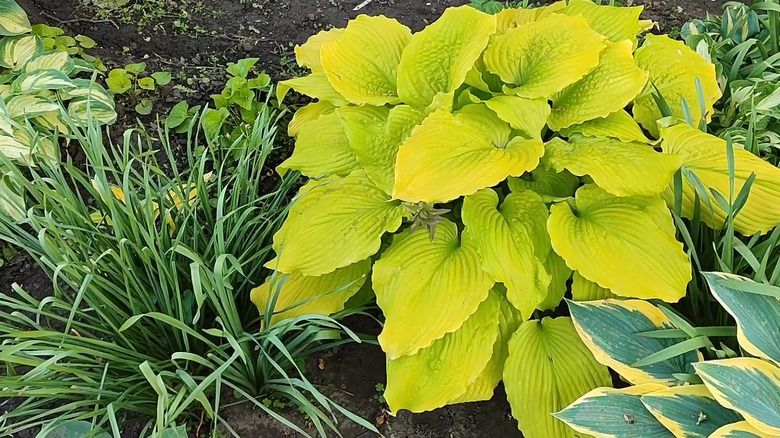
While the colorful foliage is the showstopper when it comes to the award-winning 'Dancing Queen' Hosta, the flowers are a bonus you can't ignore. The purple, trumpet-shaped flowers attract bees and hummingbirds, and with the ruffled leaves, they add a lot of texture to your shaded or woodland garden. If you have to put these hostas in a sunny spot, a little morning sun is okay, but try to avoid harsh afternoon light if at all possible. It will weaken the color of this vibrant plant. If there's no other choice, at least protect them with some shade cloth or plant a shrub to give them cover.
Once you have a large planting of hostas, they are a low-maintenance plant that cover a lot of ground. However, they need the right conditions to thrive, and hostas prefer moist, well-draining soil. Make sure to put plenty of nutrients and organic matter in the soil, and ensure they get plenty of water, especially if they're planted under your eave or near a large tree that will compete.
When it comes to pests, slug and snail damage is the worst for hostas because the foliage is the prize. If you find yourself faced with a slug problem, tackle the issue by trying beer traps, baking soda, or coffee grounds. You could also try using mint as a companion plant to keep slugs away, especially since it likes the same well-draining soil.