

What To Do If You Find A Baby Vole In Your Yard
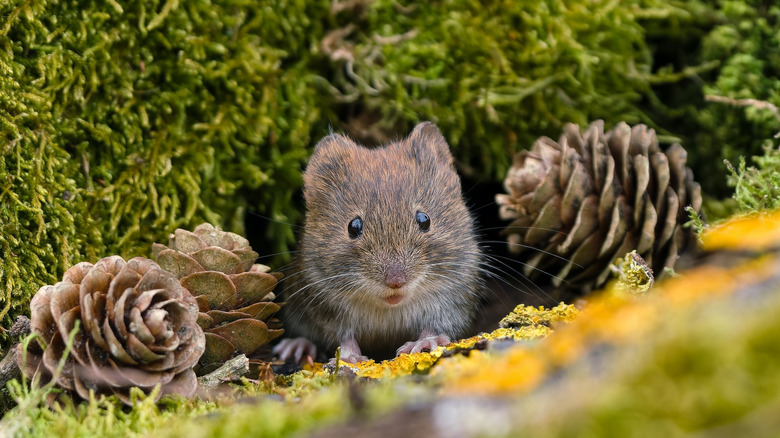
The fresh spring days kick off a time that wildlife rescuers call "baby season." Newly born critters are learning their way around the great outdoors, with lots of trial and error, which can lead to surprise encounters with baby voles in your yard — a cute or frightening experience, depending on your perspective. Voles are rodents with a mouse-like appearance and gopher-like behavior. They're usually burrowing underground in tunnels they dig, but you can sometimes see them above ground, especially if their nests get disturbed and their mother is in the process of moving her babies somewhere safer. If you find a baby vole in your yard, the course of action will depend on its age and whether parents are nearby. A healthy baby vole should be left alone for a while to give it the best chance of reuniting with its mom, but if the animal is injured or mom doesn't return, it's time to get wildlife rehabilitators involved, although you can make a temporary shelter in the meantime.
The way to respond when you see a baby vole is similar to how you'd treat their lookalikes — moles — since they're all mammals that do best when their mothers can come and find them. But if there's damage to your grass, you may want to know which pest is digging holes in your yard. Voles can be distinguished from moles by their rounder snouts and noticeable ears. After voles are born, they take between three and four weeks to grow a coat of gray fur, open their eyes, and gain independence. If the young rodent still has sealed eyes or doesn't run away, it may be orphaned and in need of a warm place to rest until the wildlife rescuers arrive.
When and how to get help for a baby vole
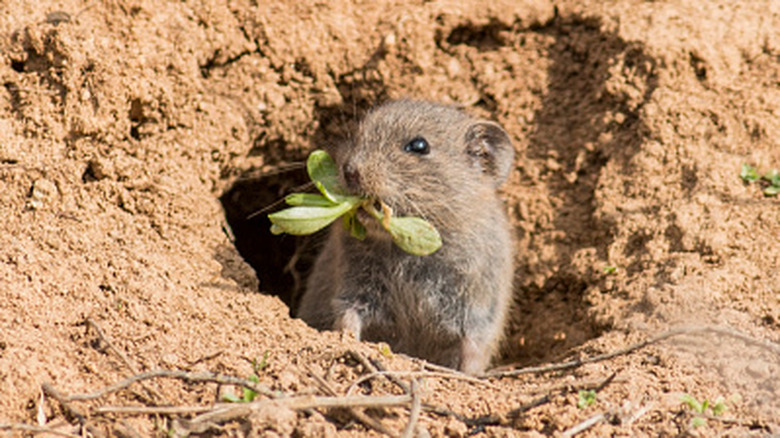
In many cases, the vole's mother will come to get the baby, so just like when you find a baby skunk or any other small critter in your yard, give it some time first. If no parent returns or the animal is visibly injured or ill, wildlife rehabilitation centers may take them in as patients. You can search online for agencies maintained by your state or enter your location into the Animal Help Now website to find the rehabilitators nearest to you.
While you wait for help, suit up with gloves to keep yourself safe and put the baby vole in a safe location. If you can see the nest they were displaced from (perhaps due to mistakenly uprooting it when you were doing yardwork), place the baby back there. When there's no nest in sight, get a small box and some towels. Gently place the vole in the box with the towel for warmth. To make it more comfortable, you can also fill a sock with rice, microwave it, and set it in the box. Don't feed or give water to the animal while you wait; even if it sounds counterintuitive, this can compromise its survival.
As interesting as it may be to see some garden wildlife, it's better for the health of your grass and other plants not to encourage a vole family to stick around. Neglecting regular lawn upkeep is a sneaky mistake that can attract voles, so make sure to clear out thick weeds and cut your ground cover short (between 3 and 6 inches). If you're seeing damage to trees, you can also clear any mulch from their bases and put cylindrical guards made from wire around them.