

Replacing Ripped Or Torn Window Screens Is Easy With The Right Equipment
We may receive a commission on purchases made from links.
When the weather starts turning warmer, opening the windows in your home is a great way to welcome sunshine and fresh air into your living space. Allowing fresh air to circulate throughout your home has many benefits for both the integrity of your house and for the people who reside in it. Doing so can reduce humidity and prevent mildew and mold from forming. It can also improve the air quality indoors, allowing you to breathe in cleaner, fresher air. Screens that have holes or tears can be gateways for allergens, insects, and even small creatures to enter your home. To ensure only fresh air enters your dwelling, it's important to make sure you have window screens that are intact and secured in window frames. Equipped with the right tools -– a roller knife, a spline, and a roll of window screen –- and enough practice, replacing your damaged window screens can be as easy as the breeze that flows through them.
Even if your window screens are not obviously torn or ripped, it's important to keep an eye on them and look for more subtle signs your window screens may need replacing. Screen discoloration, warped screens, and windowsills lined with dead insects are just a few of these tell-tale signs that your window screen needs a little TLC or needs to be completely replaced. Likewise, if your screens have been installed for more than a decade, it might be time to swap them out for new ones.
What tools to use to replace your window screens
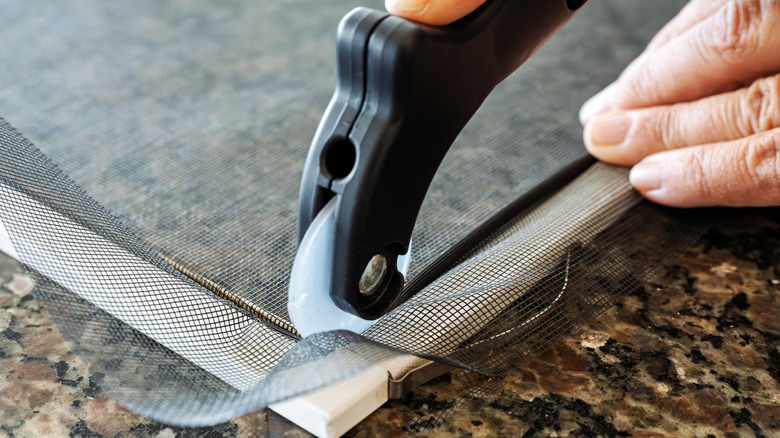
If your window screen is damaged enough to require more than a quick and easy way to patch holes, replacing the entire screen is doable with a two-in-one screen roller knife. The Professional Screening Roller Knife, available at Home Depot for about $10, features an end to trim away excess screen material as well as an end to press the spline back into the groove of the frame. The spline is the strip of material that keeps your screen embedded into the window frame. Alternatively, you can opt for a separate tool that solely rolls the spline back into place and use a regular knife or scissors to cut excess material off. Having either of these tools will help ensure your new window screen is both trimmed properly and secured tightly in the frame.
Another important thing to add to your DIY shopping list is the actual window screen. Rolls of window screens come in a variety of materials. Fiberglass screens are flexible, rust-resistant, and affordable. Aluminum screens are sturdy, durable, and among the more popular screen types in older homes. There are also window screens that offer UV-reduction and screens that can keep pests out, even smaller insects.
When replacing a screen, the existing spline can sometimes be reused. With time, though, the window spline, typically composed of rubber, foam, or plastic, can wear out. It's good to have an extra coil of spline just in case you damage the existing spline when trying to replace the screen. To make sure you choose the correct window spline, you can always bring the damaged material to your local hardware store to find its match, or you can measure the diameter of the spline groove in the screen to determine the size you need.
How to replace your old or damaged window screens
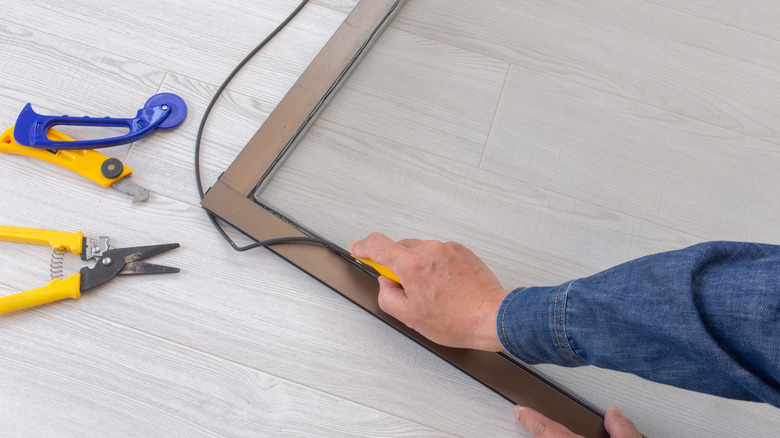
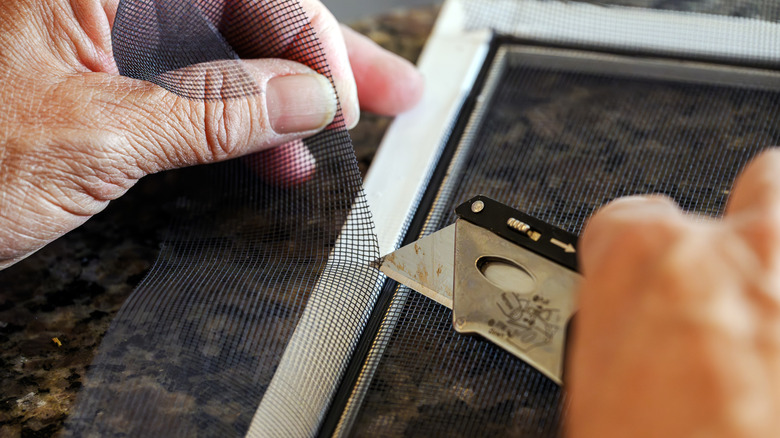
After gathering all of your needed supplies, swapping out your damaged and torn window screens can be a DIY project that takes less than 20 minutes, with proper practice, of course. Start by carefully taking the screen off of your window. Once the frame is removed, find the end of the window spline. Using the screening roller knife, gently pry that end out of the groove and carefully pull the rest of the spline out from the frame. With the spline gone, you can now remove the damaged screen.
To replace the screen, measure your new window screen material to fit over the window frame. Ensure you have enough to cover over the spline groove. It's better to have some excess screen than too little. Once the screen is cut out, lay it over the frame. With the roller knife or a rolling tool, secure the screen in place by reapplying the older existing spline into the groove. As you go, be sure to pull the screen taut and tuck it along with the spline back into the groove to fasten it to the frame. With the spline in place, trim the excess screen material with your knife. Then you're ready to put your screen back on the window.