

This Beautiful Purple Flower Might End Up Ruining Your Soil: Here's Why
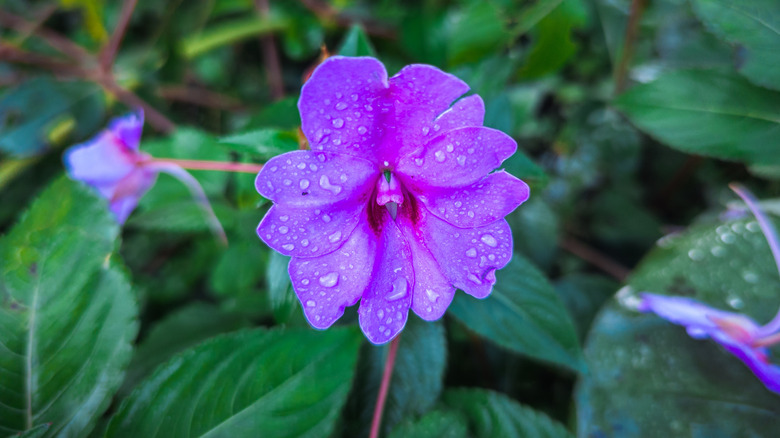
Busy lizzie (Impatiens walleriana) is popular for its long-blooming flowers that bring color to the garden from spring until fall. These vibrant purple blooms are among the flowers that even the worst gardeners can handle, as they thrive in many soil conditions with minimal effort. Although busy lizzies are great for new gardeners, something else thrives on these plants that can actually damage the soil.
On the upside, busy lizzies are versatile and easy to grow. The plants can be grown in containers or in the ground and do well in full sun or partial shade, but cannot handle the cold. They are a tropical plant treated as an annual, and, in addition to purple, its flowers can be pink, red, white, salmon, or bicolor shades.But, as cute and easy as they are, busy lizzies are prone to downy mildew.
Similar to a fungus, downy mildew is an oomycete pathogen, or water mold disease. Knowing what downy mildew looks like can help you recognize the problem, so you can deal with it quickly. At first, it looks like fluffy material growing on the underside of the leaves, in white, gray, or purple. On the upper surface of the leaves, small yellow dots will appear. As the infection worsens, the leaves will wither, and the entire plant will be affected — potentially ruining your soil.
How downy mildew damages flowers and soil
Downy mildew infections often begin in plants grown in greenhouses or in the south. The spores can be carried by wind and moist air, so frequent rain, dew, overwatering, or high humidity encourage the rapid spreading of the disease. Downy mildew can kill entire plants within a week and may infect the soil for other flowers. The only treatment is to completely remove the plant material from the garden.
While the airborne spores don't live for long, there is a second spore called an oospore (or resting spore), which can be released into the soil by infected plants. They can survive in the soil throughout the winter and for up to five years. If you continue to use that same soil, new plants can be infected by the spores through the roots.
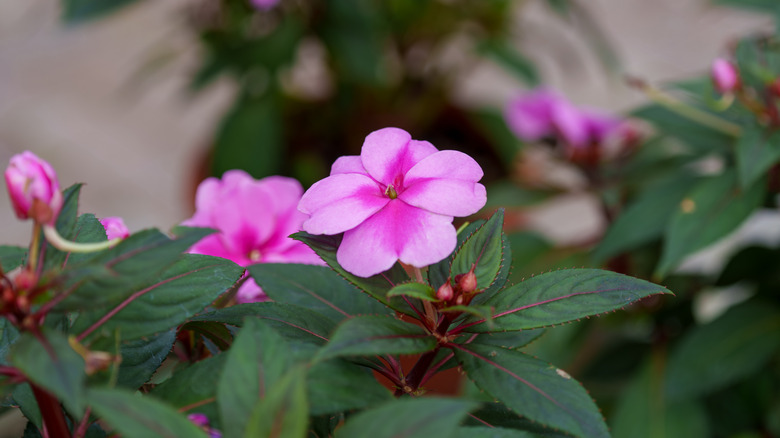
The best way to avoid introducing this disease into your garden may be to consider alternatives that are not susceptible to downy mildew. Some great options include New Guinea impatiens (Impatiens hawkeri), or learn how to grow and take care of begonias.