

How To Attract Bluebirds With A Feeder Solution They'll Love
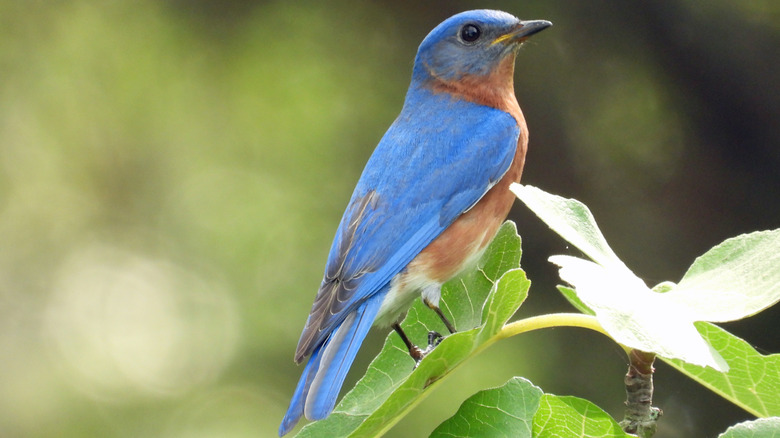
One of the most relaxing pastimes for many homeowners is birdwatching. There's something satisfying about sitting on a patio, coffee in hand, and watching the comings and goings of our feathered friends. Many people have a favorite bird that they love to spot in their backyard. Some like hummingbirds, some adore cardinals, but one colorful favorite that many bird watchers seem to admire is the bluebird. And many clever bluebird fans know that you can get these avians to make your yard their favorite place to hang out by drawing them in with a mealworm snack. A word of caution though, while these larvae make an appealing bite for your favorite lapis-hued bird, for a thriving bluebird population, you should avoid overfeeding with mealworms.
Something that should be noted about attracting bluebirds with mealworms is that if you haven't seen bluebirds in your area, it is very unlikely that you will be successful at attracting them by putting out these critter snacks. If you do have bluebirds in your area, this is definitely a way to get them to make your yard a regular location to hang out. They work especially well if you have provided a nesting location that you are trying to entice bluebirds to use. Many people think adding the color blue to feeders or nesting boxes will appeal to bluebirds, but as it turns out, they are more motivated by their stomachs than their eyes, and there is no scientific evidence showing they prefer the color blue.
Use mealworm feeders to attract bluebirds
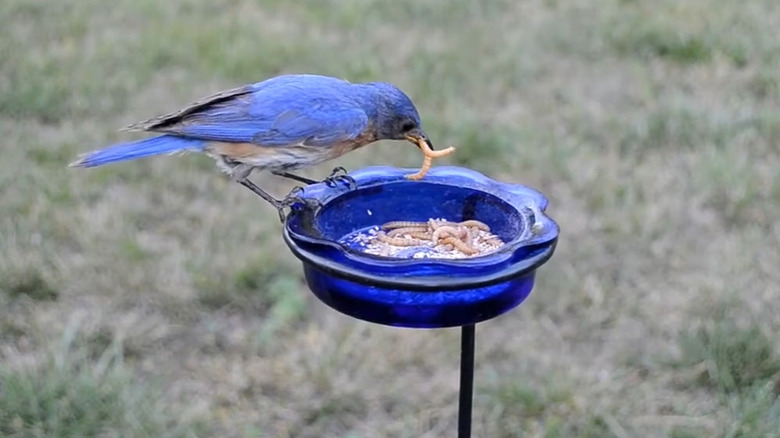
The best way to use mealworms to attract bluebirds to your yard is to buy a special mealworm feeder or DIY a small feeder to dole out the little wrigglers a few at a time. Remembering that mealworms are meant as a treat to supplement a bluebird's regular diet, there are some ideal times to feed them to your feathered friends. Because many female bluebirds are searching for food to feed their young early in the spring, it's best to wait until later in spring or even summer to offer mealworms. You should also consider live mealworms rather than freeze-dried for this very reason. Young birds need the food they receive to have lots of moisture, and they need a variety of foods, so they don't become deficient in nutrients.
A small jar on its side works well as a mealworm feeder. A feeder with a smaller opening (about 1 ½ inches) helps to ensure that other birds don't snag the treats before bluebirds have had a chance to accept your offering. Bluebirds prefer open-field areas, so the ideal location would be in the center of your yard high enough to avoid ground predators. If you are wondering where to buy live mealworms to feed your backyard visitors, they can be purchased at pet stores, a local bait shop, or you could even buy them online. Just remember, a small handful in the morning is sufficient. After a day or two you should notice the local bluebird population has spread the word about the buggy buffet available in your yard.