

Read This Before Growing A Peace Lily Outdoors
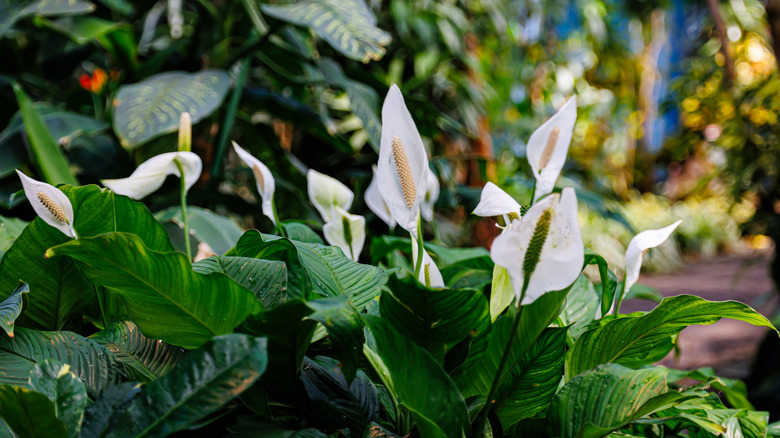
Don't hate your peace lily enthusiast friends in Hawaii and Puerto Rico. They can't help it if they're among the only fans of the plant with the temperatures and humidity to grow this popular houseplant outdoors. Technically, peace lilies (Spathiphyllum) can be grown outdoors in USDA hardiness zones 11 and 12, which also includes the Florida Keys and U.S. Virgin Islands. Most Americans won't have the option to plant them outside, however, because these are tropical plants and simply are not cold hardy.
Below 60 degrees Fahrenheit, peace lilies may start to suffer damage. Growth will likely cease when the temperature hits 45 degrees Fahrenheit. Once the thermometer drops to 40 degrees Fahrenheit, cold shock sets in, and the plant will begin to deteriorate. This is the time to look for warning signs that your plants are suffering from cold shock, such as black leaves.
Peace lilies also have light needs that make outdoor growth outside their preferred zones dicey. They are shade plants but still need indirect light; dappled sunlight suits them well.
Plant peace lily outdoors only in the right USDA hardiness zones
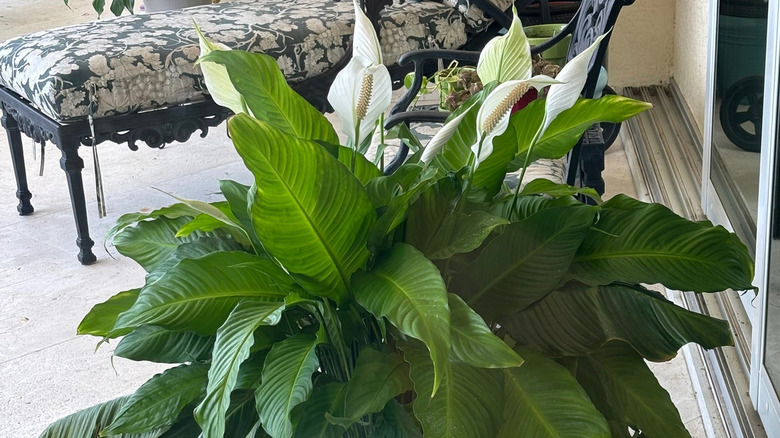
A decent compromise for those who crave outdoor peace lilies is to take your potted plants outside in the summer. But even then, you can do so only when nighttime temperatures are consistently no lower than 60 degrees Fahrenheit. It's also a good idea to gradually acclimate your potted peace lilies to the outdoors; for example, start them on a porch for just a few hours daily. If the temperature drops unexpectedly, and you see the edges of leaves turning black, you'll want to bring plants inside immediately. You may be able to bring a cold-damaged peace lily back to health as long as its roots aren't damaged. Remove any damaged leaves and keep it in a place that is 68 to 85 degrees Fahrenheit.
If you're lucky enough to live in a zone where peace lilies can be grown outdoors, plant them in well-draining soil rich with organic matter and situated in a shady spot with indirect sunlight. To accommodate growth and provide air circulation, plant 2-1/2 to 3 feet apart. You'll want to avoid the common mistakes that are sure to kill your peace lily plants – overwatering and getting its light requirements wrong. The plant should be regularly watered and consistently moist; be sure pots have drainage holes. Watch for telltale signs you're underwatering your peace lily plant, such as drooping, wilting leaves.
Peace lilies will tell you if they're getting too much sun by showing brown tips or yellowing on their leaves. You can fertilize monthly, from spring to early fall with a balanced, granular fertilizer, following label instructions.