

Avoid Growing This Low-Maintenance Flower: It'll Take Over Your Yard
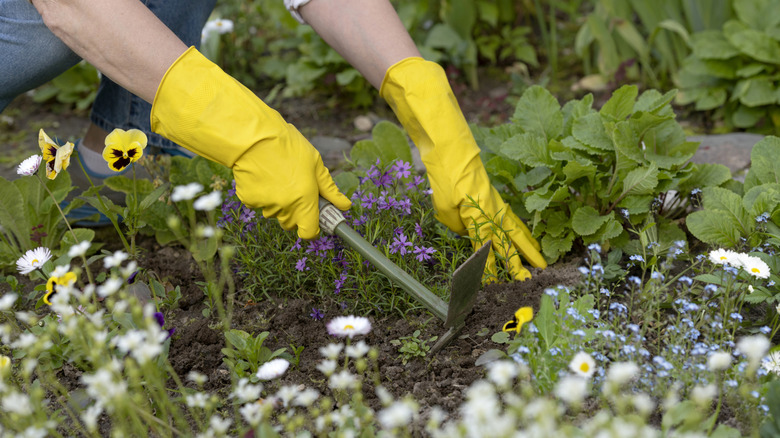
Flowers are beautiful, but they can be demanding, too. That is why many gardeners often try to search for low-maintenance flowers that can handle a bit of neglect and still look good. Lucky for them, there are many that fit the bill. However, some flowers come with a drawback: they are almost too resilient. These flowers keep growing even when conditions are not ideal and show up in places where you never wanted them. Take, spider flower (Cleome hassleriana), for instance. It has been a garden favorite for decades and is known for its no-fuss nature, ability to thrive in poor soils and good drought tolerance once established. It also rarely suffers from serious pest or disease problems, and deer and rabbits usually keep their distance from it, too.
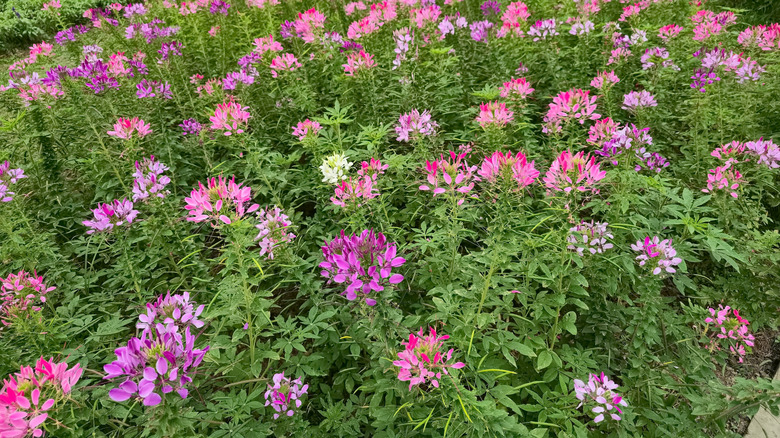
Put simply, if you are trying to create a low-maintenance flower garden, the spider flower seems like an ideal choice. After all, it is not just easygoing, it is also beautiful. It has aromatic foliage and bold, fragrant blooms held high on tall, upright stems. The flowers have long, dramatic stamens stretching outward and giving the plant its distinctive spider-like appearance.
Spider flower is the kind of plant that turns heads. But the problem is that the spider flower is an aggressive spreader. It reseeds itself quickly and heavily. The seeds are inside pods which appear on plants after the flowers, and if left alone, they split open, spreading the seeds all over the place. And even though it is not invasive, it can still naturalize and take over yards.
How to remove spider flower and keep its growth in check
Annual weedy plants reproduce by seeds, so your best defense against them is to stop the production of seeds before it even starts. And luckily, it is pretty easy. All you have to do is remove the spent bloom before they go to seed, and you probably won't see additional spider flowers next season.
Deadheading the spent blooms will also encourage the spider plants to bloom for longer. Still, you should keep an eye out for its seedlings next year. They are small but easy to identify, thanks to their alternate palmate leaves. If you spot any of these plants, pull them as soon as possible. It is much better than dealing with and removing established spider flower plants later on. Other than that, you can also use mulch to prevent weeds in your yard. Mulch can prevent the seeds from germinating, which will also stop spider flower seeds from spreading and taking over the yard.
If the spider flower plants have already taken over your yard, you have two options. For smaller infestations, hand pulling works the best. Just don't use removed plants in compost, as it can spread the seeds. For larger infestations, use a foliar spray. Just make sure to follow all the label instructions to avoid any damage. In short, if you are looking for stunning annual flowers to plant for a colorful garden, the spider flower should be one you approach with caution.