

What To Do If You Find Duck Eggs In Your Yard
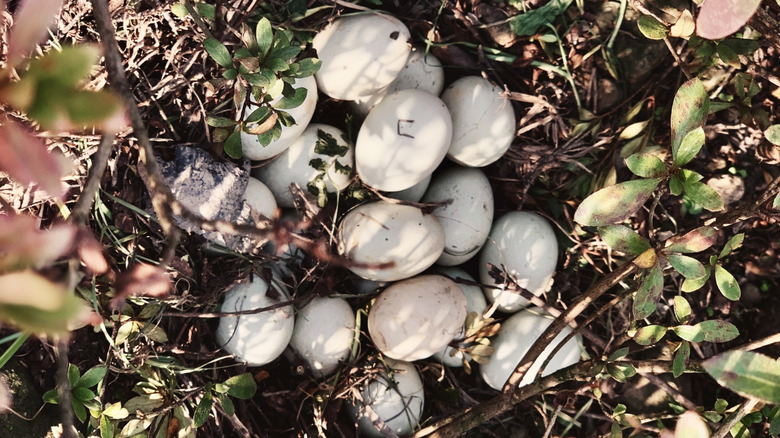
If you've ever stumbled across a clutch of eggs in your yard, there's a chance you're looking at duck eggs, especially if you live within a mile of a body of water. You'll know what kind of eggs are in your garden by the materials, location, and contents of the nest. Given that mallards are the most common duck in North America, they are a likely candidate. Mallards make nests out of materials like grass and their own feathers and leave clusters of eight to 13 white or greenish eggs around 2 inches in size. You'll often find these nests in dense vegetation where waterfowl feel safe from predators. If you find these eggs, what should you do? The answer is always to leave them alone.
If the duck eggs are lying in the grass, make a note of it and alert members of your family or anyone who visits your property of their presence so they can avoid them. Keep in mind that your pets or children might try to disturb the eggs, and be careful while cutting grass. To learn more about the treatment of any type of eggs in your yard, you should call your state's wildlife agency.
Legal repercussions for tampering with duck eggs and what to do when they hatch
The Migratory Bird Treaty Act of 1918 makes it a crime to tamper with duck eggs. Violations of this act can carry misdemeanor or felony convictions. For a misdemeanor conviction, one can receive up to six months in prison and a $15,000 fine. An attempt to sell duck eggs can lead to felony conviction, which carries up to two years in a federal penitentiary.
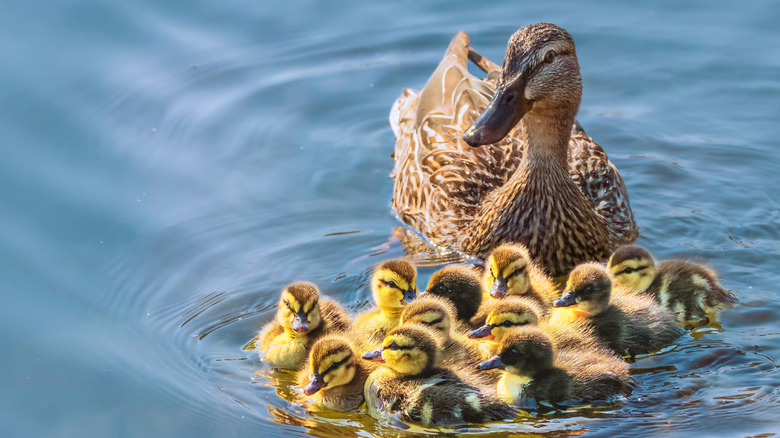
Once these eggs hatch, you'll be able to enjoy the presence of baby ducklings swimming on or near your property and even learning to fly. These ducks will have a positive impact on your local environment as well. For instance, ducks play a role in getting rid of invasive species like zebra mussels and pests like mosquitoes. If you have a pool, the ducklings may try to swim in it. For their safety, it's important to set up an escape ramp, which can cost less than $20. Otherwise, view your new bird friends from a distance and allow nature to take its course.
How to encourage or discourage ducks nesting in your yard
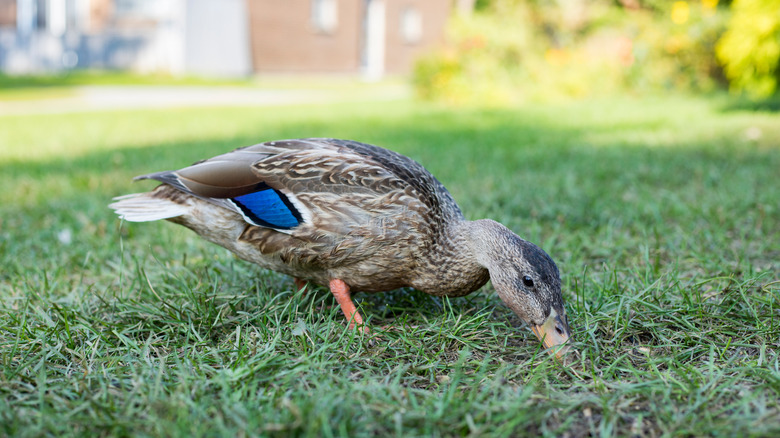
If you're especially interested in fostering a waterfowl-friendly ecosystem, look into rewilding the landscape in your yard, especially along the edge of a pond or lake on your property or bordering it. This involves letting wild grasses grow around the water's edge. While you're at it, you can also turn your garden into a wildlife habitat by growing biodiverse native plants.
Some homeowners understandably may not welcome ducks into their yards, especially if they have gardens. While ducks can control pests like snails and slugs, they can wreak havoc on your greens. But fortunately there is a plethora of ways to keep ducks at bay. For starters, you can set up owl or hawk decoys to scare them off. These plastic figures may look phony to the human eye, but they should trigger your backyard neighbors' fear of predators. You can also just remove the nests if the hen has not yet laid her eggs. You can also remove sources of food and water. For instance, try covering your pool so they don't have a place to swim. You can also get rid of any bird feed that might be attracting them. Consider putting up fencing around your garden as well.