

How To Propagate String Of Hearts For An Endless Supply Of Vining Plants
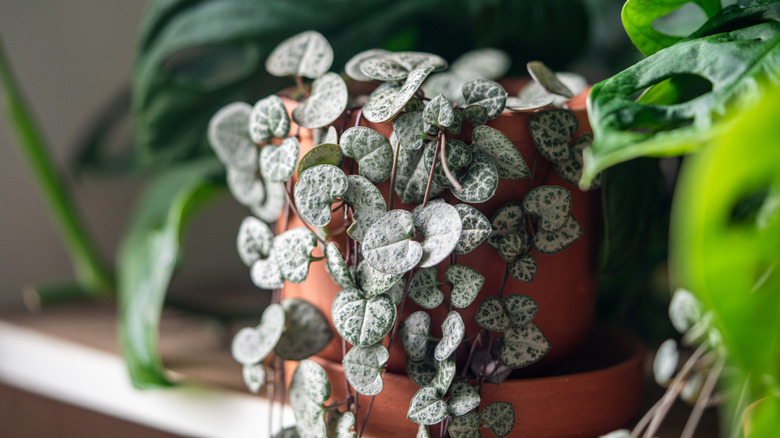
What's better than a string of hearts (Ceropegia woodii) houseplant? How about many more of them? The heart-shaped leaves and long, trailing vines of this plant make such a dramatic statement and are certainly worthy of propagation. Newly propagated string of hearts would make sentimental gifts to share with loved ones. We've previously issued a warning when using string of hearts as a house plant given that they grow so fast. And since you'll likely prune string of hearts to keep up with that growth, why not use the vine trimmings to propagate a steady supply of new plants to enjoy and share?
You can propagate string of hearts in several ways, none of them complicated. Even beginners should be able to master most of these processes. At least five propagation methods are available to you, and four involve cuttings from parts of the plant.
For the fastest and most reliable propagation method, start when the plant is in a spring or summer growth phase. As you prepare to propagate, avoid the mistake too many people make when propagating plants of using dirty tools. You'll need sharp and sanitized scissors or shears no matter which of methods you choose.
Use cuttings to propagate your string of hearts plant
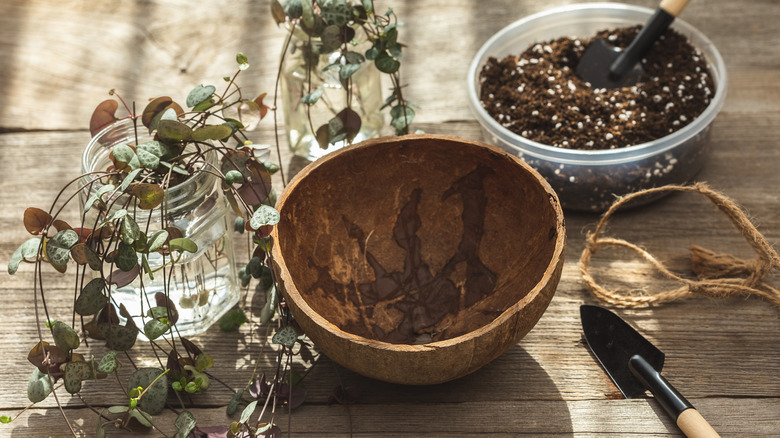
Propagating stem cuttings in water is perhaps the most familiar method and also quite easy. Take string of hearts cuttings that are 2 to 3 inches long. Then, prepare containers — ideally glass so you can see roots developing — of water to place your cuttings. Snip off any leaves that would fall below the water line in the containers. Place your cuttings in water, ensuring that at least two nodes (where the pairs of heart leaves are attached to the stem) are submerged. Refresh the water regularly, keeping those nodes underwater. Place the containers in a warm spot with indirect light. Eventually you can transfer these cuttings to a container with soil when their roots are about 2 inches long.
For the soil-based cutting method, prepare small pots with a moistened potting mix that drains well –consider a cactus or succulent mix – and then follow the same process of taking cuttings as for those propagated in water. Insert the cuttings in the soil mix so that two nodes are buried. Make a little greenhouse for your cuttings by placing a plastic bag over pots so humidity can support root growth — but give your cuttings weekly fresh air breaks of up to 15 minutes. Follow the same temperature and light guidelines for water-based propagation. Once your plants seem to be established, you can move them to a larger container, if desired.
A variation on in-soil cuttings method, is laying the cuttings horizontally in the soil, ensuring they are making direct contact with the soil. Apply the same conditions and plastic-bag greenhouse treatment as above for warmth, light, and humidity. Plant these cuttings when the roots reach 2 inches in length.
Use tubers for string of hearts propagation
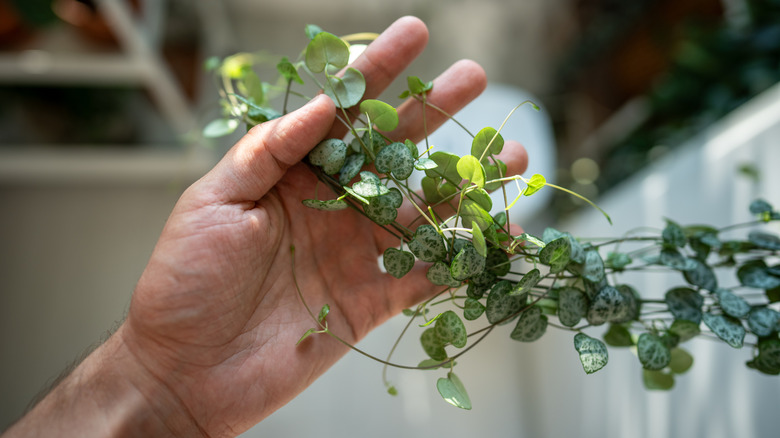
If your string of hearts plant has been around for a while, it will have small, round tubers (also known as "beads"), which you can deploy for the fourth and fifth methods. The first is the "circling vines back into the pot" method in which choose you one or more vines with the largest tubers and carefully shape them in a circle in your potted string of hearts plant, ensuring the tubers make contact with the soil. You can then use a bent paper clip to keep the vines in place.Give the plant light moisture for a few weeks until their roots are established. Then, it's time to make a decision. You could simply leave the newly rooted tubers in the pot to give your plant a fuller, bushier look or remove them for new string of heart plants.
If your goal is to grow new plants, another option is to skip the vine circling and simply remove tubers and press them into soil mix to root. Include a bit of plant material when removing a tuber from a vine if you go in this direction. You'll want to provide a spritz of moisture regularly until the plant takes hold. Some plant enthusiasts have also had success propagating tubers directly in a glass jar of water.