

What To Do If You Find A Baby Gopher In Your Yard
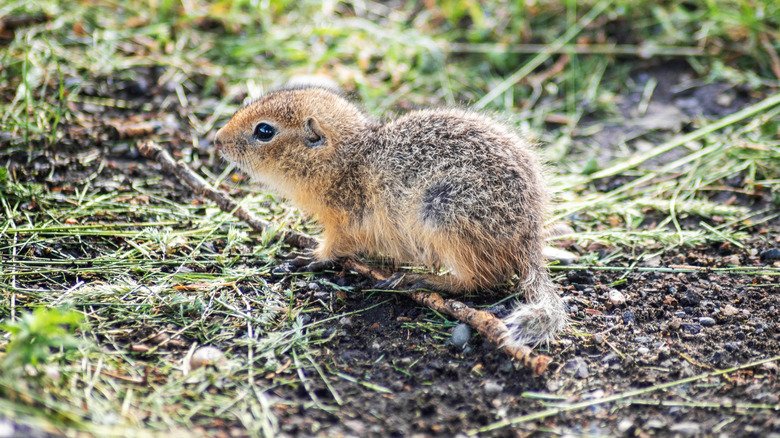
Whether you're finding a rabbit and its nest or another furry creature in your garden, coming that close to nature so close to home can be a heart-tugging moment. If you've spotted a baby gopher in your yard, your first instinct is probably to scoop it up and take care of it. However, when it comes to wildlife, the best help we can often provide is a hands-off approach. Gophers are notorious burrowers, but their young can occasionally end up above ground if they are forced out of a flooded burrow, were left behind by a predator that tried to dig out and eat them (but failed for whatever reason), or are in the phase where mother gophers force weaned pups out on their own. So before you take action, it can help to learn the difference between a baby that needs your help and one that will probably be just fine.
The most important first step is to just watch from a distance. Often, the protective mother is nearby (possibly destroying your garden if a mole or another pest hasn't done it first) and will eventually come back once any predators (you, in this case) leave. If the gopher is furry, has its eyes open, and seems to be moving purposefully, it will likely be fine and move on to its own burrow.
However, there are clear signs that the baby animal truly needs assistance. If the animal is seen near a dead parent, crying, or has a visible injury, it likely needs help. Another tell-tale sign is if the baby is wandering above ground aimlessly for hours; since gophers are subterranean, a healthy baby should be tucked away in a burrow.
How to safely handle a baby gopher and what steps to take

If you've figured out that the animal does need some help, know that your goal is just to stabilize it, not adopt it. Before you approach it, though, put on some protective gear first. Gophers have sharp teeth and can carry diseases (like leptospirosis or hantavirus). Then, gently place the baby in a small box lined with a soft cloth, leaves, or some grass. This temporary box nest you make has to go back outside, near the original nest so the mother can easily find them. Make sure there are holes for drainage in the bottom if it's raining outside. With your protective gloves on, put the baby into this makeshift nest, place it near the original nest, and then exit the space. Do not give it water or food.
To give the baby gopher a good chance at staying healthy and returning to the wild, however, the best thing you can do is call up a professional wildlife rehabilitator. You can find local experts by contacting your state's Department of Fish and Wildlife website, or through online resources like Animal Help Now. A professional will know how to treat any injuries and eventually release the gopher back into a suitable habitat (ideally one that's far away from your prized flower beds). By carefully following these steps, you help make sure that the unexpected guest in your yard gets the professional care it needs to thrive. Then you're free to think about finding the best type of fencing to keep gophers out of your yard to begin with.