

Quick Fix Solutions For A Sticky Sliding Glass Door
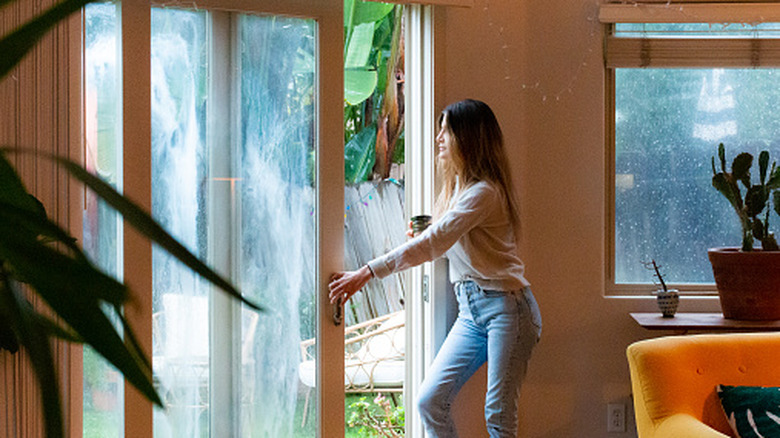
Opening your sliding glass door shouldn't turn into a long, drawn-out struggle. When everything's functioning properly, your door should glide open with minimal effort on your part. However, one major downside of sliding glass doors is that even the best options require regular maintenance, and without a little TLC here and there, you may find yourself struggling to open a sticky sliding glass door. While this can be frustrating, there are several quick solutions to fix a glass door that sticks rather than slides.
The first step to troubleshooting any problem is to identify the cause. When it comes to a sticky sliding door, the causes range from simple fixes, like a dirty track in need of a deep clean, to damaged hardware. As a result, while you could remedy your problem by vacuuming and scrubbing the tracks of your sliding glass door, more significant issues could involve replacing components of your door's system, such as the rollers or other hardware.
Many of these quick fixes are DIY-friendly. However, if you're uncomfortable with DIYs, or you believe your door has a larger problem than a simple clean or maintenance can fix, you could reach out to a professional. This may also be your preferred solution if you have a warranty in place for your sliding glass door, as DIY repairs could invalidate an existing warranty. As with all DIYs, make sure to use caution when working with heavy or fragile pieces.
Vacuum the tracks
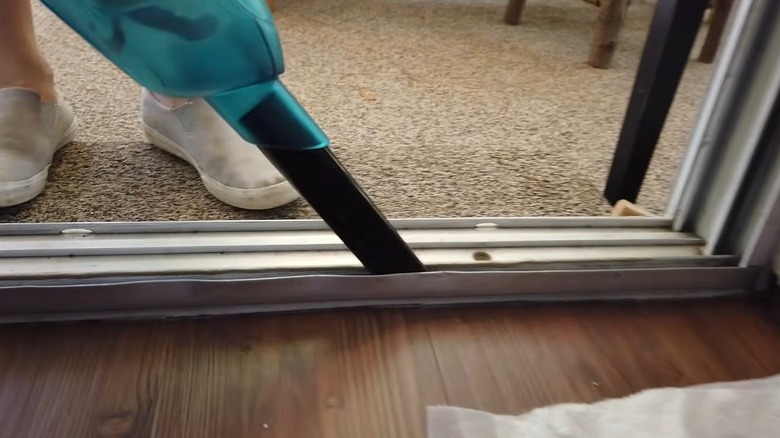
One of the easiest ways to start if your sliding glass door is sticking is by vacuuming the tracks with a nozzle attachment. Think about how often you clean around the entrances to your home to combat dirt, dust, and other outdoor debris. That same debris also ends up in the tracks of your sliding glass door, accumulating over time until it eventually leads to a door that's difficult to open or close. This step can also easily be incorporated into a sliding glass door maintenance checklist for regular upkeep.
Give the tracks a deeper clean
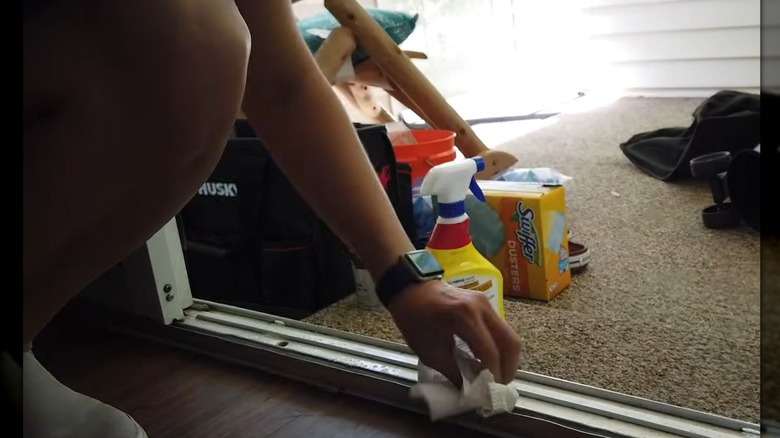
Sometimes, vacuuming alone may not be enough to remove grime from your door's tracks, especially if it's been building up for a while. Water, a mild dish soap, and a rag or paper towel are often enough to get the job done. Then gently wipe the track and surrounding frame to remove dirt affecting the door's glide. If a rag alone isn't enough to reach the nooks and crannies of your frame, you could also gently use a small brush.
Clean and recondition the rollers
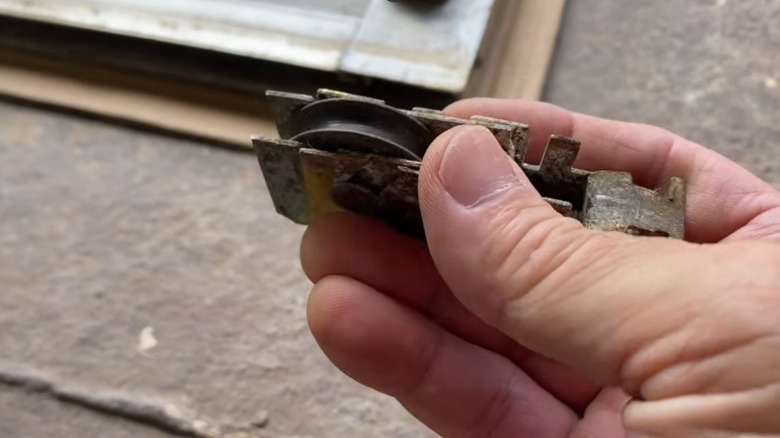
Your door's track isn't the only place where dirt can accumulate. The rollers (or wheels) that allow it to easily slide open can also get dirty over time, leading to sticking or jamming. To clean, you'd need to carefully remove your sliding glass door from the frame to get access to the rollers. Remove the rollers from the door, then use a penetrating oil and brush to scrub away dirt and rust.
Apply a good lubricant
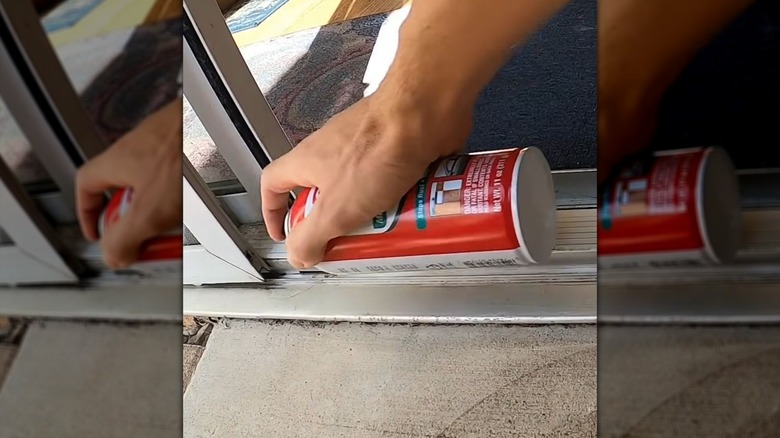
If the door still sticks after cleaning the track and rollers, you may need to apply a lubricant. It's important to choose the right type of lubricant for this task that'll work as a fix for a sticky sliding glass door as well as a preventative, as it allows the door to glide easily while also reducing the amount of dirt and dust that builds up in the future. A silicone-based option is often the best choice, although your door's manual may recommend a specific type.
Adjust the door's rollers
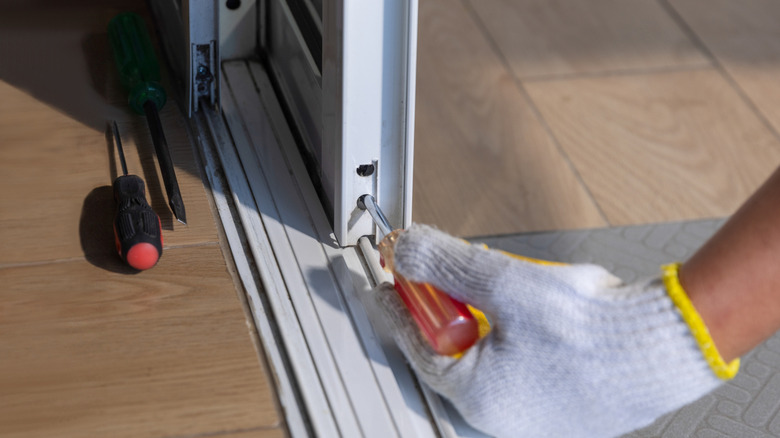
If you're feeling resistance even after cleaning and maintaining your sliding glass door, your rollers could be due for an adjustment. This simple adjustment tightens or loosens the door's grip on the track, and in many cases, only requires a standard Phillips screwdriver. While every door is different, the overall adjusting process involves using the screwdriver to turn the adjustment screws on your rollers through a hole at the bottom of the door, testing as you go. Make sure that the rollers on both sides are adjusted to the same level to prevent misalignment.
Fix alignment issues
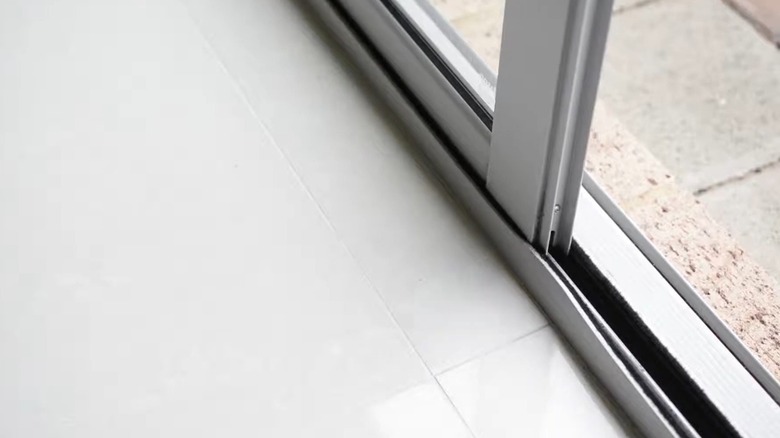
An unaligned door is another common cause of resistance. If your door doesn't sit evenly in its tracks, it won't be able to achieve that smooth, effortless glide. As mentioned above, badly adjusted screws could result in a misaligned door. However, doors can also lose alignment due to track warping caused over time by factors like freeze-thaw cycles, temperature, and even salinity. For minor cases of warping, pliers can be used to straighten the track. For severe cases, a replacement might be necessary.
Replace minor hardware and parts if needed
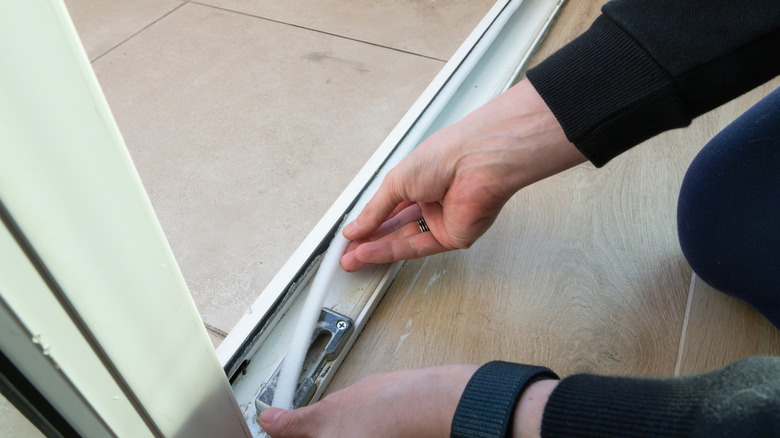
While parts like rollers or latches may seem simple, these essential components impact your door's function, and if they begin to degrade, a replacement could be necessary to restore an easy glide. Common areas that can be easily replaced to reduce resistance and fix a sticky sliding glass door include rollers, weather-stripping, and small hardware like screws. Making these replacements would also help in winterizing your sliding glass door.
Clean away any rust
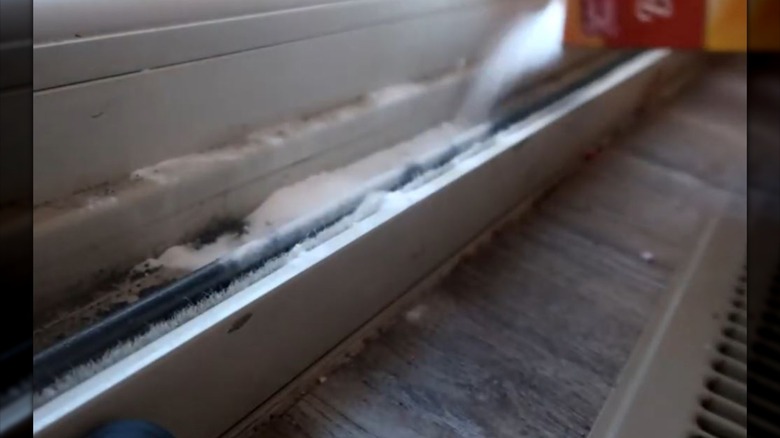
When your door is exposed to salt or water without the proper protection, rust can easily accumulate on the metal tracks of your sliding door. While this may seem like a cosmetic issue, it can also cause your door to stick instead of gliding smoothly. If using soap and water as mentioned above isn't enough to remove the rust from your door's tracks, you may wish to use baking soda as a more abrasive cleaner. For more stubborn rust stains, vinegar or even a store-bought rust remover can often help.