

Hummingbirds Will Flock To Your Yard For This Shade-Loving Flower
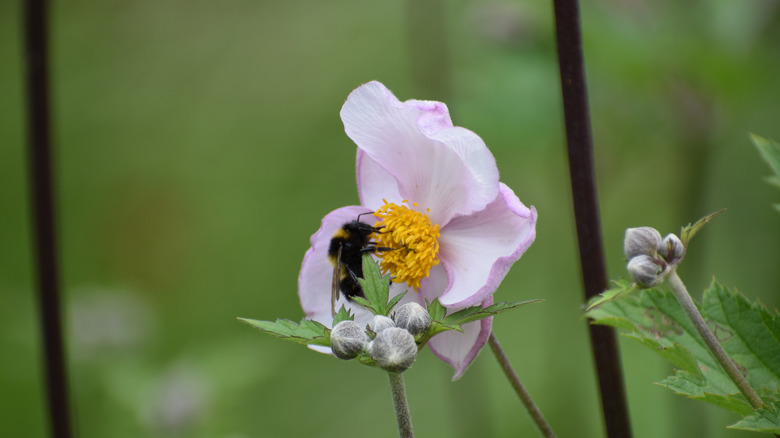
Hummingbirds are nectar-sipping pollinators who enchanted the garden with their whirring wings and graceful darting moves. There are plenty of sun-loving plants that attract pollinators, including hummingbirds, but if your garden is on the shady side you can still enjoy hummingbirds by planting the flowers they love. One shade-friendly flower that attracts pollinators, including hummingbirds, is the Japanese anemone.
The Japanese anemone (Anemone x hybrida) is a tall perennial with large flowers of pink or white. It should not be confused with Anemone blanda, though both are confusingly referred to as windflowers. Instead Japanese anemone a member of the Ranunculus family, and is native to Japan and China. These graceful late season bloomers are known to attract many types of bees and butterflies, who are seeking fresh sources of nectar as the garden season starts to wind down. They also attract an occasional hummingbird, and you can increase your chances of luring hummingbirds if you have a good-sized stand of these flowers in one spot.
You can add Japanese anemones to partial shade gardens or woodland gardens for their late season color, and if you have room, allow them to spread out a bit. The white variety 'Honorine Jobert' grows 3 to 4 feet tall and adds some brightness to shady spots. Being non-native, they can be an assertive spreader in the garden, spreading via rhizomes, but are fairly easy to control by simply pulling or digging up unwanted plants. These plants are also desirable as they are resistant to deer, rabbits, and gophers.
Why Japanese anemones appeal to hummingbirds all season
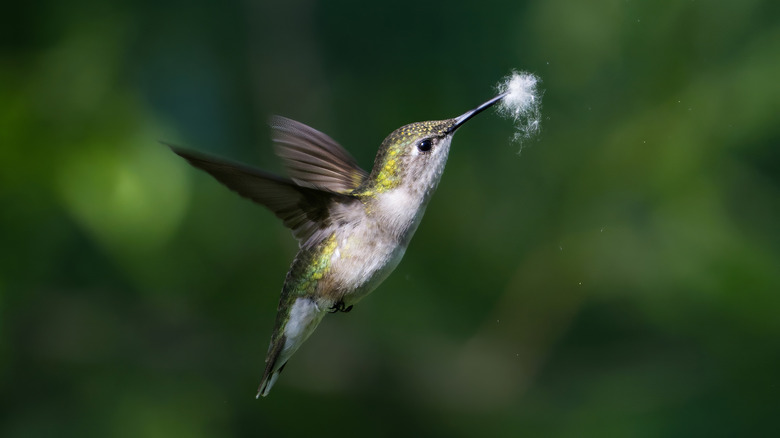
Japanese anemones are somewhat late blooming, and flowers usually appear in late summer and last through autumn. Hummingbirds can enjoy the nectar from these flowers in late summer, but many species of hummingbird are migratory and don't hang around for winter. Still these flowers remain useful to hummingbirds in spring if you leave them intact.
Hummingbirds have been observed using the fluff from the dried flower heads of Japanese anemones to line their nests in spring. If you want to draw the birds, leave some flower heads intact for them until May, then cut the flowers back. The Anemone virginiana cultivar has white flowers and produces large flower heads that have plenty of fluff when they dry; this variety spreads via seeds, and is less aggressive in the garden than the rhizomes of Anemone robustissima. Speaking of which, this pink native is also the hardiest variety, it thrives in UDSA Zones 4-8.
The color range of Japanese anemone includes pure white and various shades of pink and mauve, as well as magenta. Pale pink 'September Charm' is a vigorous variety. 'Prince Henry' is a hot pink, double-petalled stunner that grows 2 to 3 feet tall. 'Queen Charlotte' has luscious pale pink flowers, blooms from August to October, and grows up to 5 feet tall. These reliable flowers will attract many pollinators to your garden from late summer through mid autumn. Plant them near your hellebores, another shade flower loved by hummingbirds that blooms in early spring.