

What To Do If You Find Rust Stains In Your Garage
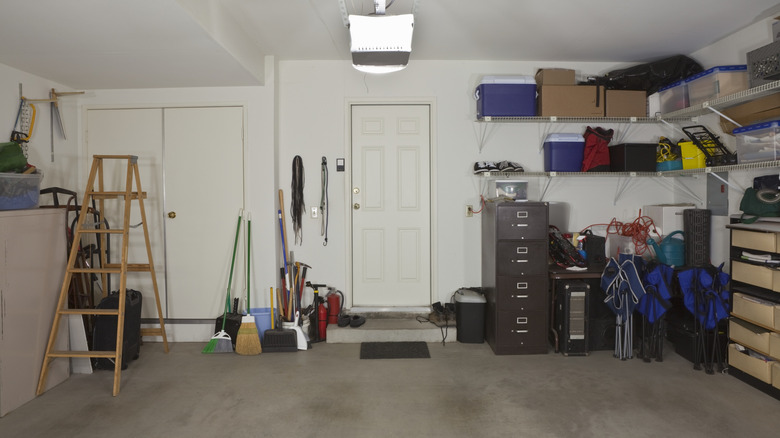
Your garage is the hardest-working room in your home. It houses your car, acts as your home workshop, and even holds all the stuff you need to store. Nothing ruins the look of that nice concrete floor quite like an ugly rust stain, though. But before you try to remove that orange stain, it can be helpful to figure out exactly how it got there in the first place. That way, you can stop it at the source and keep your garage floor looking nice.
Rust forms when iron, oxygen, and moisture meet, making a garage an oddly perfect breeding ground for these unsightly marks. A common culprit is damp gardening equipment. If you're regularly putting away wet shovels, lawnmowers, or wheelbarrows after a long weekend of yard work, the moisture left on the metal can transfer rust onto concrete. Similarly, heavy-duty metal shelving units or tool cabinets resting directly on the floor can corrode over time, especially if your garage deals with high ambient humidity or even puddles from rain and snow melting off your car.
Beyond tools and storage, you should also check for leaky appliances. If your garage is where your water heater, utility sink, or washing machine live, a slow and unnoticed drip can easily rust the bottom of the appliance and stain the floor. Even leaks from an older vehicle can create a rusty spot. Once you've identified the source and stopped the moisture, you're ready to clean your garage floors to keep them looking like new.
How to properly get rid of garage floor rust stains
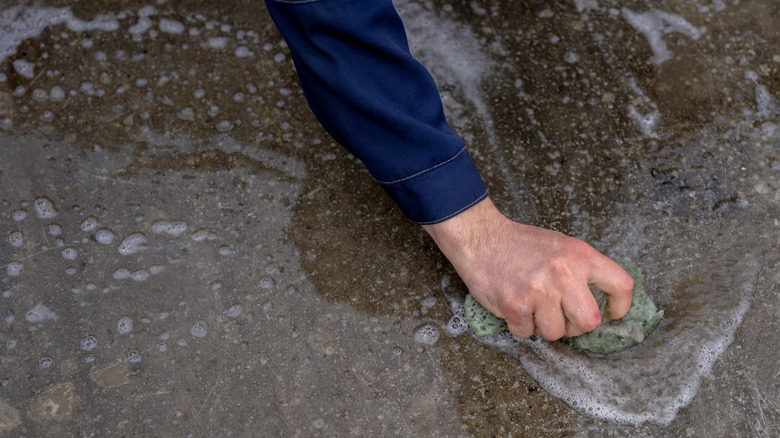
Now it's time to get your concrete looking fresh again. First, sweep off the stained area, then use a strong jet-like setting on your hose to see what you can clean up before you really dive in. For mild or new stains, grab some plain white vinegar or lemon juice from your pantry. Acids like these do a fantastic job breaking down rust. Pour either directly onto the rusty spot, let it sit for about 15 minutes, then give it a scrub with a stiff-bristle brush and rinse. Skip using wire brushes, though; those are metal, and any bits that break off and get left behind could create more rust.
If that approach doesn't work, step up to a stronger DIY rust stain remover. Create a paste of baking soda and liquid laundry detergent, rub some on the stain, let it sit for about an hour (but keep it moist), then scrub it away with warm water. And if you've got the world's most difficult rust stain, head to your local hardware store for a commercial rust remover. Look for products containing oxalic acid, which makes rust become water-soluble so you can rinse it away. Use protective gloves while using this, and work in a well-ventilated area.
Once your garage floor is clean and dry, you're good to go. However, there are preventative steps you can take to stop rust from showing up in your garage again (or on any other flooring types). Consider adding protective rubber feet to your metal shelves or even putting down a sealant coat over the cement. With a little bit of elbow grease, your garage floor will be looking pristine in no time.