

Is A Small Sponge A Good Hack For Flourishing Succulent Plants? Here's The Complicated Truth
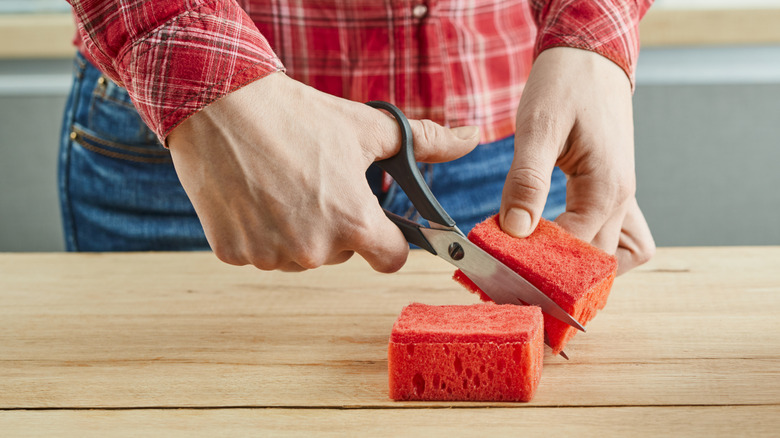
Some gardening hacks seem quite logical and are easy to buy into. One idea circulating around the internet proposes that a small sponge could be the answer to your container plants' watering woes. By tucking a sponge — or several small sponges — into the bottom of the container, this hack claims to support healthy moisture balance for potted plants, especially succulents. Succulents can be notoriously easy to overwater, so an absorbent sponge floor might sound like the perfect fix. However, that sponge won't just wick away moisture; it will also hang onto it.
The truth is, no peer-reviewed scientific research exists to support the idea that using sponges will help potted plants flourish. In fact, some research shows that any material placed under the soil in a pot — even gravel or pebbles — results in an accumulation of water that actually hovers just above the layer of drainage materials. This water fails to drain out from the soil and instead fills up all the air space, causing the roots to suffer from lack of oxygen. The absorbent nature of sponges might also lead to other problems that affect the health of your plant.
Just say no to sponges in your succulent pots
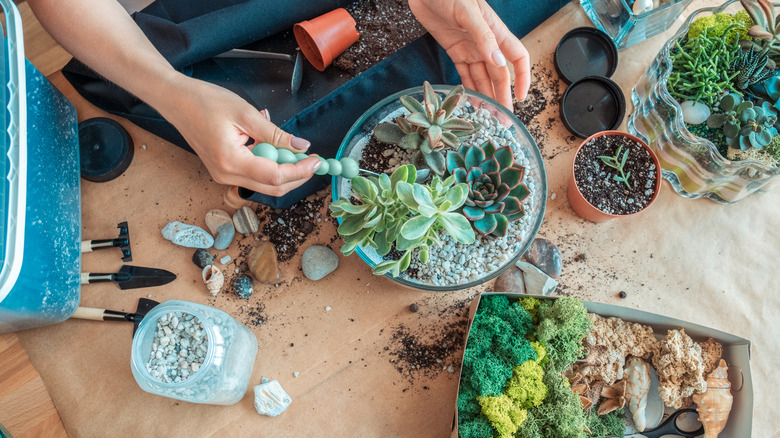
Overall, the sponge hack is a risky practice, especially for succulents, which shouldn't be allowed to remain wet. Besides overwatering your plant, the sponge can introduce issues for the soil. "Sponges can also become heavy and dense when saturated with water, leading to soil compaction," gardening expert Alex Tinsman told Living Etc., "This compression can hinder root growth and reduce oxygen availability to the roots, potentially harming the plant." A warm, wet sponge is also the perfect medium for fungi and bacteria to take hold. Once they start, it can be extremely difficult to eradicate bacterial diseases or rescue moldy potting soil.
Lastly, if you depend on the sponge to keep your plant hydrated, you may not develop a good understanding of your plant's care needs. The wiser choice with succulents — and other plants — is to avoid internet hacks and stick to proven practices. Proper drainage is important for houseplants and a must for succulents, which are typically adapted to live in dry, desert regions. Don't let your succulent sit in water, such as in a saucer, beyond a few hours. Provide effective air circulation to help keep the soil dry.
Succulents will actually do best if they're allowed to dry out completely between waterings. Even ordinary potting soil can retain too much moisture, so it's best to use a special cacti-friendly blend or DIY your own succulent soil for thriving plants. These soil mixes usually contain a higher balance of mineral materials such as perlite or gravel to allow more airflow throughout the soil.