

The Common Bird Feeder Mistake That'll Attract Opossums To Your Yard
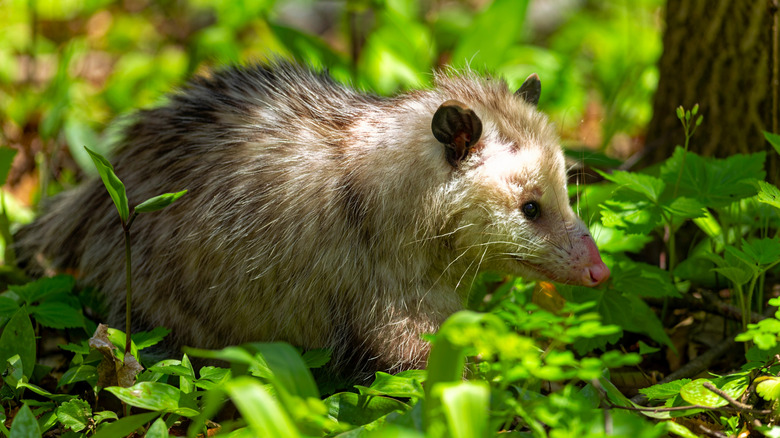
If you're excited to see birds outside your window or while gardening, you've probably gotten a feeder and some seed and chosen the best place to hang a bird feeder in your yard. While you may be prepared to replace the food as needed and clean the feeder often, the ground underneath it is worthy of your attention. If you make the common mistake of not cleaning fallen bird food beneath bird feeders, opossums can congregate there, make a mess, scare birds away from the feeder, and even eat your feathered visitors. The good news is that once their food source is removed, opossums will usually stop frequenting the area. Regularly sweeping up the seeds and grains that fall from bird feeders with your rake or shovel is enough to deter these critters. Replacing some of your bird seed with less opossum-friendly ingredients and choosing feeders that catch food before it falls can further reduce the mess, making cleanup a lighter task.
Opossums are marsupials about as big as house cats who forage for their food and eat a wide range of animals and vegetation. A growing pile of discarded bird seed will tip them off to a new feeding spot. You may not actually see the opossums since they do their food searching at night, but there are some telltale signs: noises from the bird feeder area after the sun goes down and waste droppings, or scat, on the ground or even in the feeders themselves. Bird lovers will especially want to keep these animals away from the area, since birds as well as their eggs are part of an opossum's diet.
How to prevent opossums from taking advantage of your bird feeders
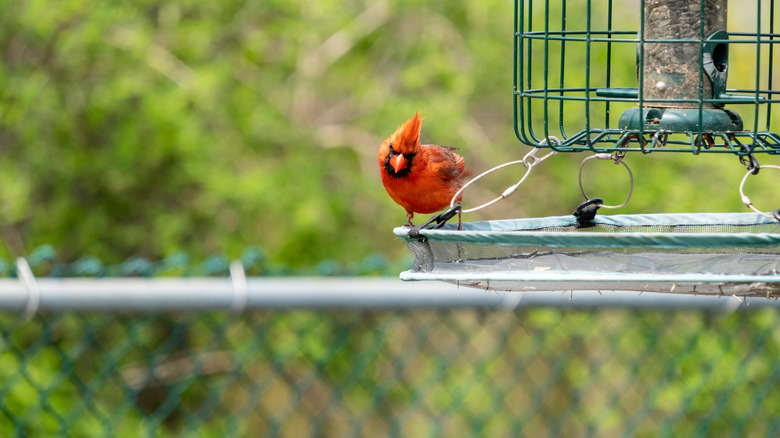
With a few effective practices, you can prevent or stop opossums and other rodents from making your bird feeder their buffet. One tip is changing what you fill the feeder with. Whole striped sunflower seeds are a common opossum magnet. Birds are known to crack the hulls open and drop them the ground after they've eaten the kernels, leading to a pile of debris that's edible to opossums. Retailers and bird food brands sell hulled sunflower seeds you can use instead, so the birds can access the meat of the seeds without leaving a mess behind. Opossums also snack on cracked corn and a grain called milo, so avoid these ingredients in bird seed. Birds who don't like the milo or corn bits (or are eager to get to the good stuff) will push them out of the feeder and onto the ground within reach of furry foragers.
You can also outsmart gravity and keep food out of opossums' reach by attaching a seed-catching apparatus to your existing feeder, or getting a new feeder with a tray attached. One way to prevent spillage on an existing feeder is by attaching a hanging seed catcher that dangles from the feeder, a clever accessory that saves spare bird seeds. There are also many DIYs floating around, including using a spare pizza pan or an aluminum pie plate which you can poke holes into for drainage. Finally, taking your bird feeders indoors when night falls is another way to keep nocturnal opossums away from your bird seed and keep it safer for its main customers who eat during the daylight hours.