

The Easy Solution To Upgrade Old Patio Concrete Without Having To Repave It
We may receive a commission on purchases made from links.
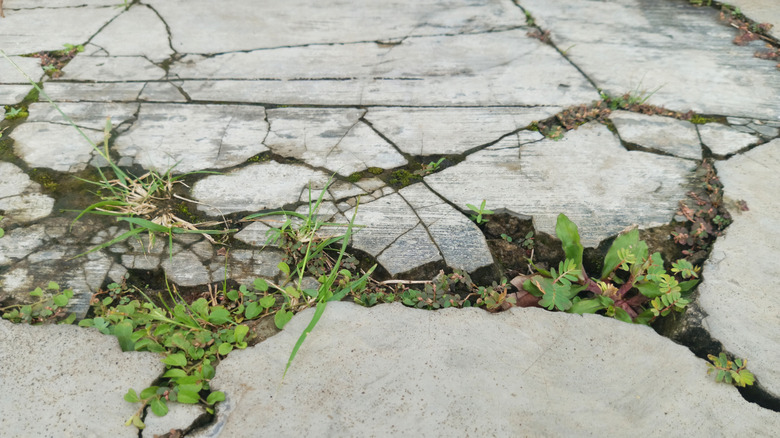
If you feel your concrete patio is starting to look more like an old parking lot than an extension of your home, then it may be time for an upgrade. The good news is that you don't always need to call in the experts to lift up and repave your patio concrete. There are plenty of simple DIY patio upgrade options available to you that will save you both time and money as you expand your outdoor areas. Even if you're the type of DIYer that doesn't mind getting your hands dirty pulling up an existing slab of cracked concrete and repaving it, you can find a variety of materials that can be laid directly on top of the existing layer. For the eco-conscious, this includes alternative decking material to wood, like PVC. There is another option that requires very few tools and gives you a lot of flexibility: composite decking tiles.
Composite decking as a whole has become more popular in recent years thanks to its durability, flexibility, and realistic grain. Another key feature is that it's an environmentally friendly way to upgrade outdoor areas of a home, as the tiles are often made of recycled and reclaimed materials. Composite deck tiles come with the added advantages of being very simple to lay for even the inexperienced DIYer and come in many options to match a variety of outdoor aesthetics. For this home deck hack, you'll need to get a measuring tape ready and find a composite deck tile design to match your space.
How to lay composite decking tiles on your old patio concrete
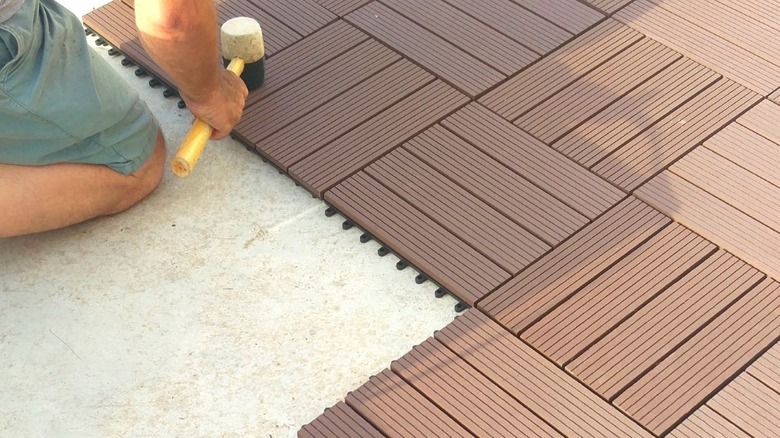
To pull off this simple patio concrete upgrade, you'll need to start by making sure that you're dealing with a clean and stable base. Remove any debris, plants, and rocks from the area you're looking to upgrade. Then, check that you're working with a level surface. A builder's level will do the job, but for complete accuracy a self-leveling cross-line laser level is the way to go. With your measuring tape, work out the square feet of the space you're looking to cover. It's best to opt for square feet, as most composite decking tiles in the U.S. are sold in this size, the equivalent of 12 square inches. When considering a composite decking tile style, a great option is to alternate the pattern, giving you a checkered basketweave look that adds instant visual interest. As far as style options go, note that interlocking tiles are the easiest to install.
When it comes to laying the decking tiles, you won't need to place any sort of layer between the concrete and the tiles, as the tiles are most often designed with a plastic lattice base. When you start to lay the tiles, begin in the furthest corner of the space and work out from there. Once you've placed the first tile, grab the next one and line up the two interlocking edges. Then, just snap it into place. Repeat the process until you've fully covered the area. Once you're done, all you need to do is replace the patio furniture.
Mistakes to avoid with your composite decking tiles
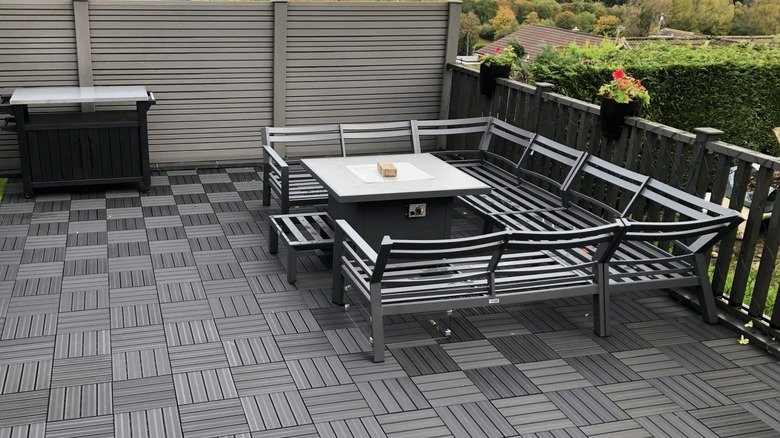
To get the most out of your new composite decking tiles, there are a few things to know. First up, when preparing the area before putting down the tile, it's important that you deal with any spots where water may pool. While these tiles have a base that allows for drainage, it won't solve excess water buildup. Check the full area first to make sure that water is draining correctly. It's also crucial to consider that tiles can expand in heat, so it's best not to place them right up against walls or other fixed structures. Rather, you'll want to give them a little room to expand when the hot summer months arrive. Leaving between 3mm and 6mm should be enough.
There are also a few things to know about maintenance. Make sure you don't use a pressure washer when you clean the deck or harsh chemicals, as both could damage the surface of the tiles. Rather, simply use a mild soap and warm water with a sponge or mop. When cleaning the area, don't forget to remove any debris that may have fallen into the gaps, as these might create moss or mildew buildup over time. For any spills, especially if they are oil-based, make sure to clean them up as soon as possible to avoid staining. Lastly, during the winter months, don't leave salt on your decking for too long, as this can damage the composite materials over time.