

The Pretty Pink Ornamental Grass Variety That Looks Stunning In Cut Arrangements

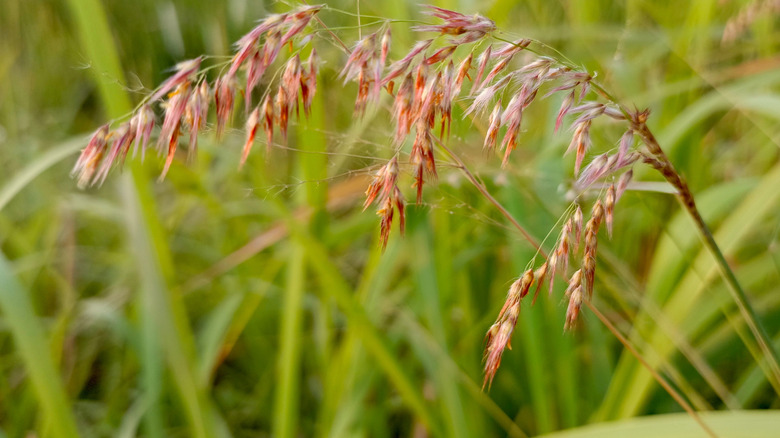
When you think of an eye-catching garden, grass may not be the first addition to come to mind. However, with this pink ornamental variety, you can curate a cut arrangement garden that's filled with depth, textures, and colors that go beyond your basic blooms. Ruby grass (Melinis nerviglumis 'Savannah') is also known as pink bubble grass or bristle-leaved red top. This species is native to Africa, and it showcases large blue-green leaves tipped with pink flowers during the summer months.
As fall arrives and the flowers fade to white, the foliage also changes colors, taking on a deep purple-red appearance that elevates the visual appeal of your yard. And, if your goal is to create stunning floral arrangements to decorate your home with, both the flowers and leaves of this plant can make unique accents. Ruby grass grows easily, making it a perfect plant for beginner gardeners searching for an ornamental grass species to diversify their outdoor spaces. However, even the easiest plants require TLC, and ruby grass is no exception, with optimal care lending itself to an overall visually appealing plant that's perfect for your next cut arrangement.
How to grow ruby grass
When you're looking for the right place in your yard to plant ruby grass, start by looking at those sunny spots spread throughout your garden. Ruby grass grows best when it's offered full sun. As a result, it excels in south-facing locations where it has ample light to soak up, while north-facing areas in your yard, as well as shady spots along your home's perimeter or fences, usually don't offer adequate light for healthy growth.
As far as water goes, ruby grass prefers soil that is slightly dry. While it does still need consistent moisture to sport those eye-catching flowers that bring your garden (and arrangements) to life, this means that it's more forgiving of the occasional dry spell than some water-loving species. Along with dry conditions, ruby grass also tolerates urban environments as well as nearby black walnut trees, making it an overall durable ornamental grass.
If you're growing ruby grass with the intention of making arrangements, you may also wish to consider growing favorable companion plants around it. For ornamental grasses, consider eye-catching varieties that thrive in similar growing conditions. You could also opt for flowering plants instead, like lavender or yarrow. This gives you the opportunity to grow a stunning cut flower garden, pairing brilliant blooms with decorative grasses. When picking out the right companion plants for ruby grass, keep year-round visual appeal in mind. Although ruby grass is a perennial, it's only winter hardy in zones 9 and 10, so you may wish to opt for perennials hardy in your USDA growing zone for an evergreen source of cut arrangements.