

The Disease-Resistant Dwarf Apple Variety You Can Grow In A Pot
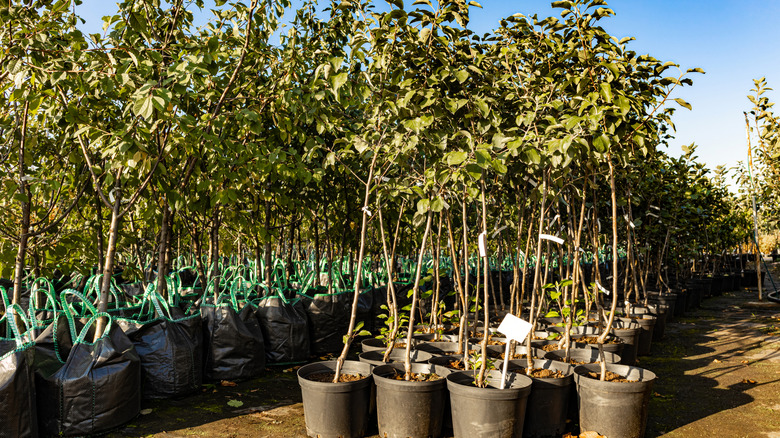
When it comes to planting trees for small spaces, you can't go wrong with choosing from the many dwarf fruit trees that are perfect for a smaller yard. Renters and homeowners alike can plant these small trees for a big impact in their miniature landscape. Unfortunately, fruit trees are notorious for being prone to diseases and damage that can impact your harvest, and potentially, the overall health of your trees. Planting disease-resistant varieties, like the Liberty apple tree (Malus 'Liberty'), is a great way to safeguard your dwarf trees from these imminent dangers.
Liberty apples are a disease-resistant dwarf apple variety that can fit into any landscape when grown in pots. Some nurseries even claim it is the most disease-resistant apple tree variety. Whether you're starting an orchard or growing in containers, apples in particular are susceptible to the damaging diseases. In fact, there are over 40 diseases that commonly impact apple trees, including different types of blotch, blight, mold, and rot. Apple scab, fire blight, and phytophthora root and crown rot are among the most common and damaging diseases that plague apple trees. While apple scab will most likely lead to damaged fruit and destroyed yields, fire blight and phytophthora root and crown rot can ultimately kill trees in the same season they infect them. With Liberty apple trees, you don't have to spend too much time worrying about these issues. Of course, they still take a bit of care, but they are largely considered low-maintenance.
What you need to know before planting disease-resistant Liberty apple trees
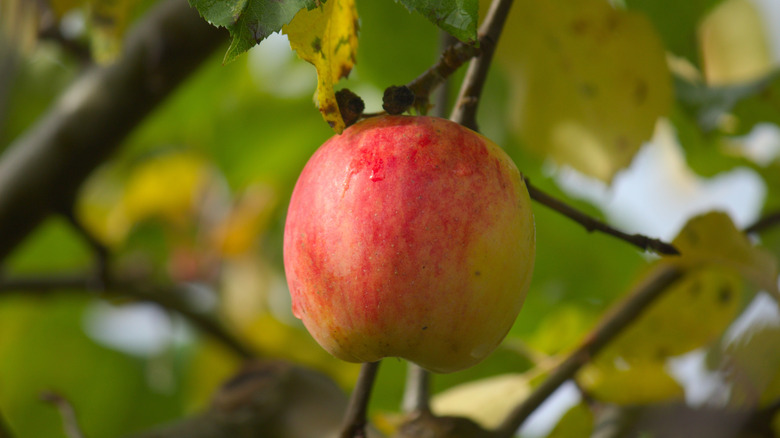
Liberty apple trees produce medium-sized, dark red fruit in the fall. They are even considered one of the best apple tree varieties you can grow that are great for snacking. Dwarf varieties grow to be between 5 and 11 feet tall, making them great candidates for container growing. They were bred specifically to resist apple scab, fire blight, cedar apple rust, and mildew, but they are also known for being high producers. Once they start producing fruit, usually between years 2 and 5, you can expect to start harvesting around late September.
While they are hardy in USDA hardiness zones 4 through 9, container growing makes it possible to grow in any climate as long as they are provided with ideal growing conditions year-round. If overwintering in containers, you will need to make sure they spend between 800 and 1000 hours below 45 degrees Fahrenheit to go dormant for healthy growth the following season. Liberty apple trees are not self-pollinating, so you will need to ensure you have at least two apple trees in the area. If you have a small yard, as long as there are other apple trees in the neighborhood, you should be fine.
How to grow a Liberty apple tree in a pot
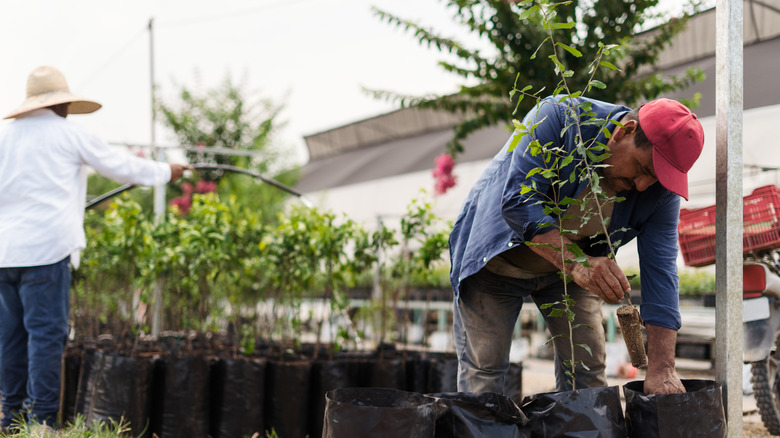
Even though Liberty apples are resistant to common diseases, they still need routine care, just like any other variety of apple tree. Soil composition, water, sunlight, air flow, and pruning are all important things to consider when caring for a fruiting tree. Plant your Liberty trees in rich, well-draining soil and place them in an area with full sun. If you are concerned about the potential fruit yields of your Liberty tree when growing in a pot, consider practicing tips and tricks to help your fruit trees grow and produce faster. For example, try purchasing from local nurseries, pruning on a consistent schedule, and fertilizing as necessary.
Once you select your Liberty tree and bring it home, make sure it is in the right size pot to allow the roots to expand. Usually, a container that is at least 18 to 22 inches in diameter is large enough for young trees. Then, for about 2 years, while the roots continue to become established, you will want to add water about three times per week. How much water you will need depends on rainfall and soil conditions. After they are established, you only need to water about once per week.
You will also want to prune your Liberty apple trees on a consistent schedule when they are dormant in the winter to control the height and shape, remove dead branches, and promote healthy growth. Finally, you will want to keep an eye out for common apple pests. Even though Liberty apples are disease-resistant, the fruit is still attractive to damaging insects and animals.