

Don't Toss Plastic Nursery Pots, Upcycle Them Into High-End Planters
We may receive a commission on purchases made from links.
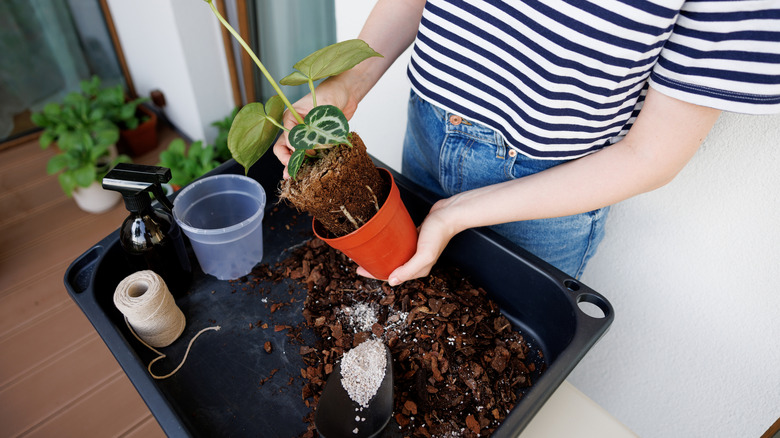
As the seasons shift and years go by, you need to repot houseplants outgrowing their original homes or transplant garden center purchases into raised beds. This will leave you with empty plastic nursery pots that you don't know what to do with. After all, they're rarely recyclable at the municipal level. Instead of throwing these cheap planters out with the trash, you could add a bit of personality to them — enough that you will want to keep and reuse them for years to come. Try this gorgeous DIY that adds visual interest to your small garden planters: coating them with homemade textured paint made using ordinary acrylic paint and baking soda.
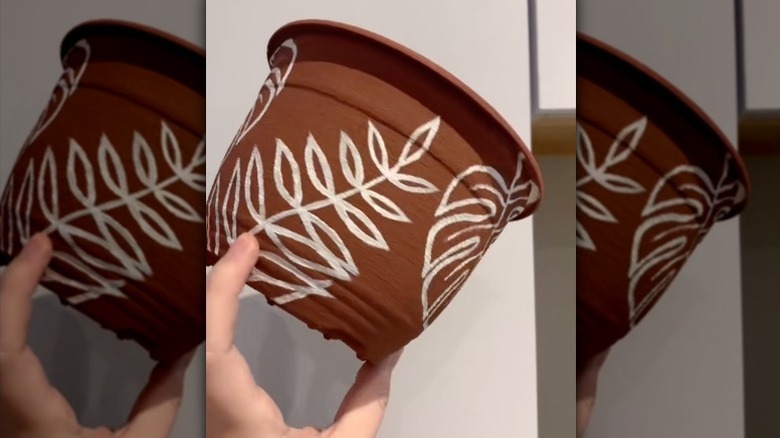
The idea is to add texture to the plastic exterior to elevate the pots, making them look similar to a terracotta pot or high-end ceramic planter. All you need for this DIY — besides the plastic pots, of course — is a few different-sized paintbrushes, some acrylic paint in your choice of colors, some baking soda, a small plastic mixing bowl, and Mod Podge Clay Pot Sealer Spray. You could choose, for example, a classic white paint and create a bespoke clay-like color by mixing white, brown, and red paint together. Pick shades that work for your existing décor. Large brushes are great for applying the paint to the planter. Use brushes with finer tips to paint on decorative details in a contrasting color, such as leaf patterns. With everything prepared, you're ready to tackle this charming upcycle that you can DIY to display flowers with a designer look.
Create luxe planter pots with a mix of paint and baking soda
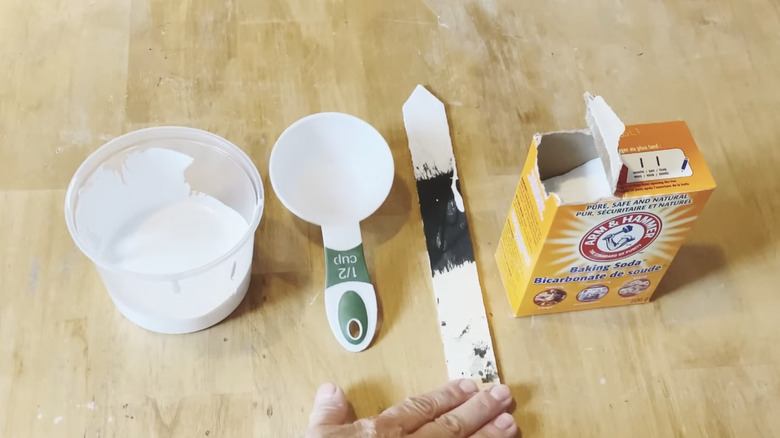
The first step of this project should be cleaning your flower pots both inside and out and leaving them to air-dry thoroughly. Then put on a mask and sand the outside of the planters with 150-grit sandpaper. For this DIY to work well, you need a surface free from dust, debris, and moisture. Next, mix one part baking soda to two parts acrylic paint using a Ktojoy Craft Stick or similar stirring tool. You'll need to mix each color you're using, whether it be bright white or a rosy brown, in separate bowls and use a dedicated stirrer for each one to avoid cross-contamination of hues. Once your paint mixes are ready, it's time to paint the cleaned plastic nursery pots.
Apply the paint in even brush strokes using a large paintbrush. Not every paint color will do a great job of disguising the planter's original surface, especially if it's made of a dark-hued plastic. You may need to do more than one coat. Allow each coat to dry to the touch before applying the next. If you want to emphasize the unique texture of the paint, run a fan brush over the pot before the paint dries completely. Once the base color is dry, you can add any decorative touches you wish in a contrasting paint color, such as the aforementioned leaf design. Not good at hand drawing? Invest in a Yazhiji Botanical Stencils Set. Seal the surface of your painted planters with the Mod Podge clay pot sealer spray and leave it to cure — up to 28 days.
Amending the paint texture and protecting your pots indoors and out
If you're not happy with the amount of texture on your pots, adjust the ratio of baking soda to paint. More baking soda gives greater texture. Try, for example, a 1:1 mix instead of a one part baking soda to two parts paint mix. For less texture, reduce the amount of baking soda in the paint. You could also experiment with other texture-creating materials: sub out the baking soda for sand, flour, or plaster. Another way to boost the texture is to dab extra amended paint onto the surface of the pot with a sponge.
If you plan to use these pots outdoors or if you bottom-water your houseplants, make sure the painted surface is properly sealed. If, for example, you used acrylic craft paints, they won't stand up to harsh summer sunlight, intense spring rains, or cold winter weather on their own. Products like Mod Podge Clay Pot Sealer Spray or Plaid Clay Pot Sealer are water-resistant but possibly not waterproof. Unless you apply a heavy-duty sealer, like Thompson's WaterSeal Multi-Surface Waterproofer, keep your painted planters under shelter outside and never leave the pot sitting in a saucer of water.