

The Right Way To Fill A Hole After Tree Stump Removal (And What To Avoid)
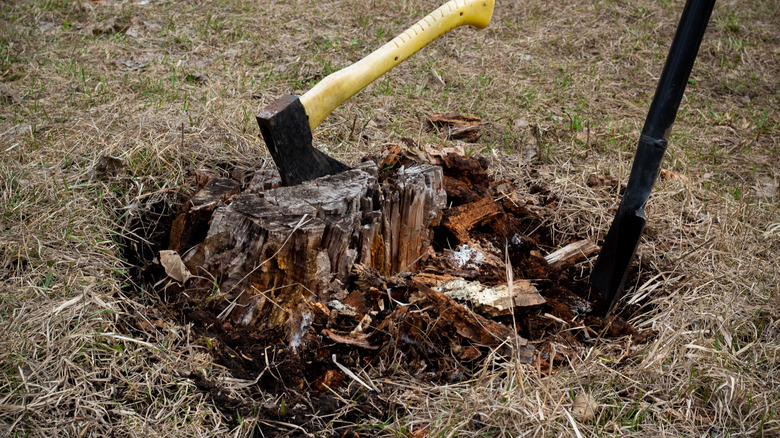
There are a few ways to remove a pesky tree stump from your yard: You could yank it out from the root, use chemicals to speed up the decaying process, or chip away at it bit by bit with a stump grinder. Whatever method, you'll likely be left with a sizable hole in your yard. It's important to fix the hole quickly; otherwise, it can mess with your property's soil drainage and ruin your yard's aesthetic appeal. At the very least, the hole is likely to trip you up at least a few times. Fortunately, the process for filling in a hole after tree stump removal is fairly straightforward, and can often be done using the remnants of the removal process.
If you get rid of the tree stump using manual means such as with a stump grinder, you'll be left with a large amount of wood chips. These chips can be used to fill in most of the hole, and then topped with ground soil to make the yard look uniform. You could also fill the hole with other organic materials like sand, compost, or grass clippings before adding topsoil. Pack the soil tightly, and water the area regularly to help the surface even out. The process for filling in a stump hole after chemical removal is similar. The only difference is you should avoid replanting in the area for at least six months to allow any residue to wash away. Regardless of your removal method, you should test the soil's pH balance before refilling the hole. You will need to fix the imbalances in the soil's acidity using limestone or iron sulfate.
Fill in stump holes with soil and organic materials
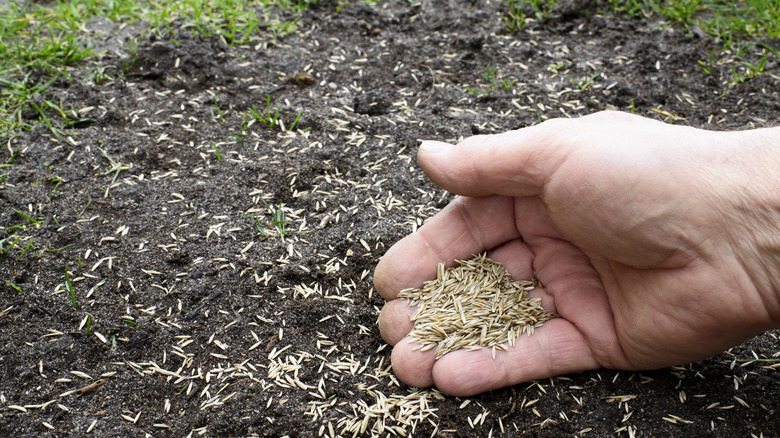
Once the hole has been properly filled in, you can decide what you're going to do with the new empty space. Even if you don't have any immediate plans, it's probably a good idea to start by planting some grass seed so your yard doesn't look patchy. If the stump removal affected a large enough area, you could also clean things up with the help of grass sodding. Once the ground settles after a few weeks, the soil will be ready for a new tree or shrub, or you could mix it up by installing a stunning water feature that will make your outdoor space feel more modern.
As long as you keep an eye on the progress of your lawn's new growth, filling in a stump hole is pretty easy, but there are a few issues to avoid for the best results. First, make sure you don't leave an abundance of wood chips laying out on the lawn, as doing so can limit grass growth. Be sure to rake all the chips up, and keep them handy in case you need to remove more stumps in the future. And while it is important to water the filled in soil and any new seeds you decide to plant, be mindful of overwatering. For help with this, try the affordable hack to never overwater your plants again. Finally, never fill in a hole unless you're certain the entire stump and all of its roots have been removed. Otherwise, you may be facing new shoots in a few years.