

Gardener Shares Flower's 'Gorgeous' New Look – Surprise, It's Probably Diseased
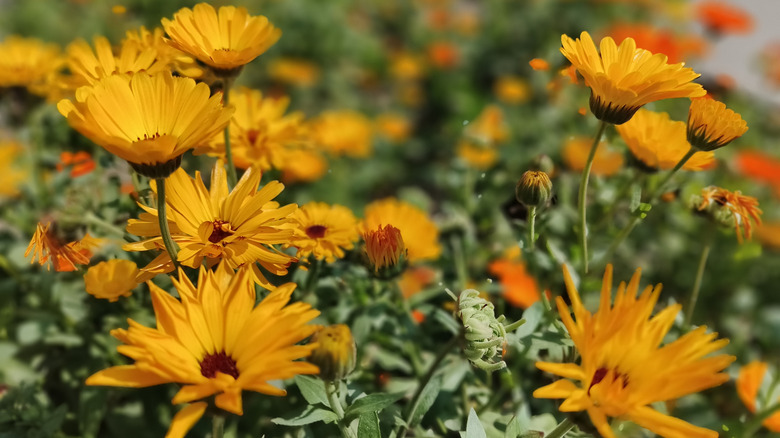
We're sorry to be bearers of bad news. An excited gardener recently posted a YouTube video of her calendula with an unusual growth pattern she described as "gorgeous" — a bedraggled-looking bloom with thin petals featuring four healthier-looking flowers growing out of it on long stems. Neither she nor the video's commenters realize that this plant growing in abnormally may be suffering from an incurable plant disease: aster yellows.
Though House Digest's Garden Editor and In-House Master Gardener Tiffany Selvey acknowledges how intriguing this growth may look, "Unfortunately, it is likely a mutation you would not want to reproduce," she explains. "Although I am not a plant pathologist, I suspect this calendula (and possibly others shown) is infected with aster yellows."
Aster yellows is a disease that afflicts more than 300 plant species, including flowering ornamentals, vegetables, grains, grasses, and weeds. It's spread by insects called aster leafhoppers that carry aster yellows' pathogenic phytoplasma. "As this pest's name implies, it hops from leaf to leaf, feeding on the tissue of plants. Once it picks up that bacterium, it spreads it to every susceptible plant it feeds on," says Selvey. Aster yellows rarely kills plants, but since plants infected with this disease are incurably damaged and need to be destroyed to prevent further spread, it's important to know how to identify it.
Watch out for aster yellows disease in your plants
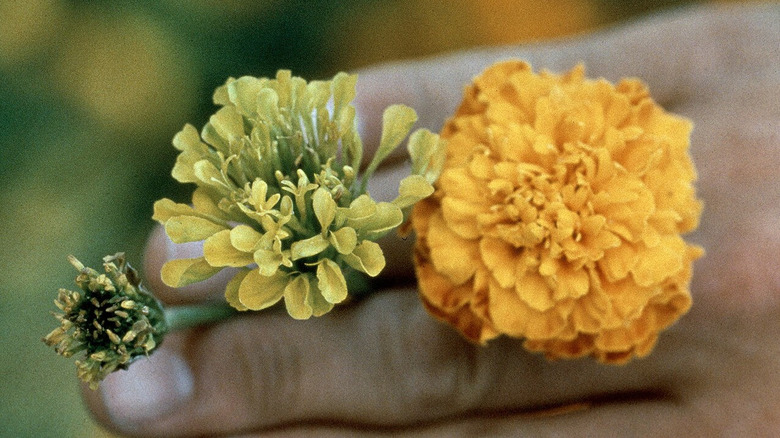
Your own plants may have aster yellows if you notice stunted or distorted growth, discolored leaves and flowers, and thin, yellowing stems. As Selvey advises, "Aster yellows presents in a few ways, depending on the type of plant, but the most obvious sign is mutated blooms. Often, it will look like a single flower is producing additional plants or more tiny full blooms." She suggests taking the potentially diseased plants to your local extension office to help get an accurate diagnosis. See if you can also identify aster leafhoppers, which are brown, yellow, or green with small, wedge-shaped bodies. If you can capture one, take it to your local extension office as well for positive identification.
Managing aster yellows starts with digging up and removing all parts of infected plants, including their roots. Burn the plant if you can do so safely and legally, otherwise throw it in the garbage. And though the disease needs a living host and can't survive in the soil, it's best to skip adding diseased plants to your compost pile. Be sure to pull up all perennial weeds in the area, too, since aster yellows can overwinter within their roots. Stay vigilant and watch for symptoms of further spread in nearby plants, removing more affected plants as necessary.
You're unlikely to prevent aster yellows by trying to keep leafhoppers out of your yard, though you can try placing strips of tinfoil near susceptible plants since the reflected sunlight may disrupt these pests. Instead, the best prevention method is growing plants that are less susceptible to the disease in the first place, like salvia, geraniums, and impatiens.