

What To Do If You Find A Huge Pile Of Bird Feathers In Your Yard
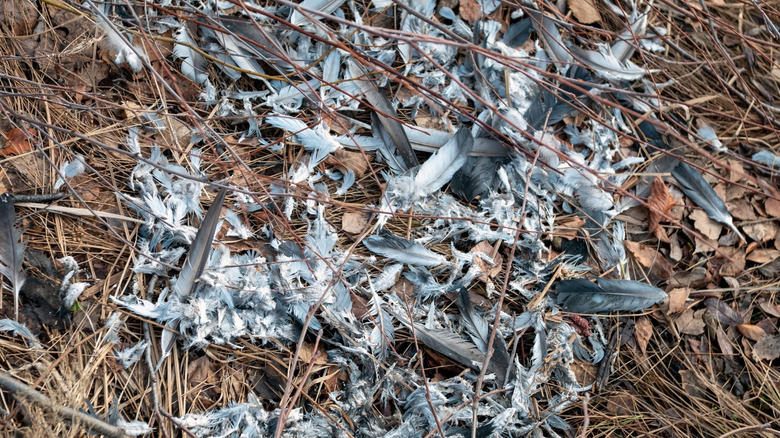
Birds are typically more active in the spring and summer months due to breeding and nesting habits. With the influx of bird activity, it's important to know how to act in certain situations, like finding a baby bird in your yard or discovering a large pile of bird feathers, the latter being an unsettling but fairly common occurrence during the warmer months.
If you notice a huge pile of bird feathers, the most likely reason is that a bird of prey attacked a smaller bird in your yard. Predatory birds like hawks, falcons, and owls attack smaller birds and pluck the feathers out of the carcass before eating it, resulting in a pile of cleanly plucked, intact feathers left behind. This differs from other predators like foxes, cats, and raccoons, which may leave a messier trail of damaged feathers after an attack.
While your first instinct may be to immediately clean up or collect the large pile of bird feathers, there are some legal factors to consider. Under the Migratory Bird Treaty Act (MBTA), it's actually illegal to collect feathers dropped by more than 800 species of protected birds. You can try to determine whether the unlucky victim is protected under the MBTA using a free bird-identifying app or searching online. If the feathers don't pose a health risk, it may be best to leave them and let them naturally decompose. You should examine the scene of the bird-on-bird crime to look for signs of a carcass, especially if you have pets or children. If you need to remove the feathers for safety reasons, be sure to wear disposable gloves, use a shovel or similar tool, and disinfect anything that touches the feathers after disposal.
How to improve bird safety in your yard
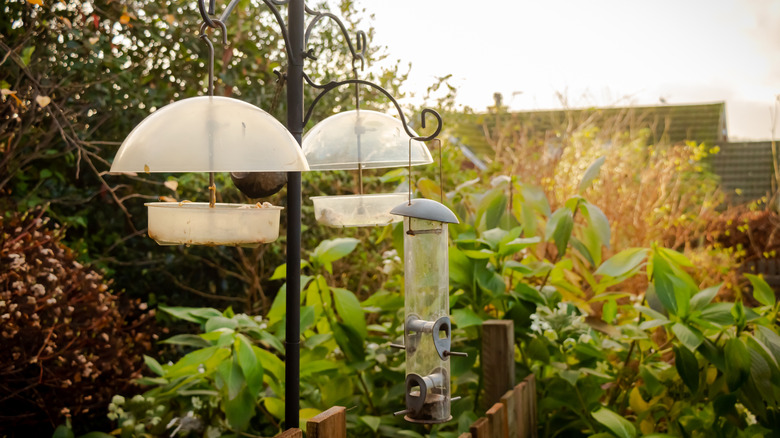
While there's no way to ensure birds of prey and other predators don't attack in your yard, there are steps you can take to create a safer environment for smaller birds. For starters, there are some strategic places to put bird feeders to help improve bird safety. Place your feeders in spots with natural shelter nearby, like bushes and trees, which provide an escape option if needed. It's also best to put bird feeders away from windows to minimize the chances of birds crashing into the glass.
You can install motion-activated lights in your yard to alert birds to predators on the ground or in the air. If you believe a ground predator has been attacking birds, consider fencing in your yard to lower the chances of the fox, coyote, or raccoon from visiting. Domesticated cats are one of the most common bird predators, so keep your cats indoors or monitor their time outside to reduce the number of attacks in your yard. Birds of prey are harder to prevent, but you can install a bird feeder baffle above your backyard feeders to prevent swooping aerial attacks from occurring while smaller birds are eating.