

What To Do If You Find A Cicada's Shed Shell On A Tree In Your Yard
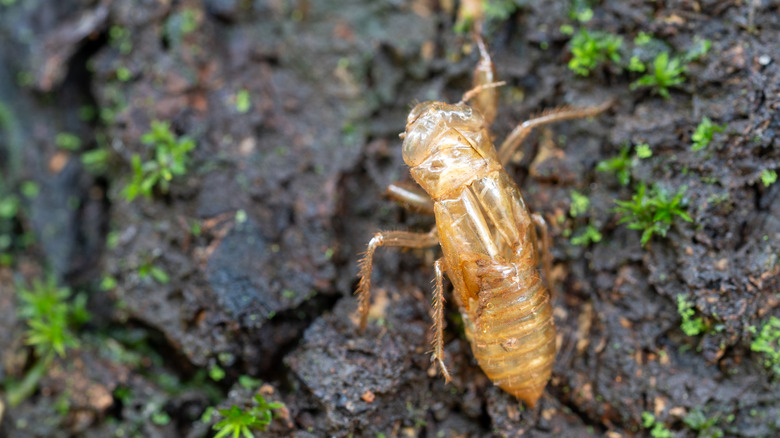
Walking out into your yard to enjoy a warm afternoon, only to find a hollow alien-looking bug casing clinging to your favorite tree, would probably send a chill down anyone's spine. During a mass cicada emergence, your landscape might start to look like a scene from an apocalyptic sci-fi movie. But before you grab a broom and sweep these creepy husks into the trash, know that there's actually something better you can do with them: use them as fertilizer.
The cicada's slightly unnerving casings are completely harmless. They are simply the shed exoskeletons left behind when a nymph cicada climbs out of the soil and transforms into an adult cicada with wings. But here's the good news: you can collect the casings and use them as a powerful, all-natural fertilizer. How does that work, you ask? Well, the crunchy shells are packed with nitrogen, which is a nutrient plants need for growth. Also, as these exoskeletons break down in your yard, they'll provide an absolute feast for beneficial bacteria and fungi in the soil. While you might rather just keep cicadas out of your yard to begin with, just think of them as a way to turbocharge your landscape's growth without you having to spend a dime.
How to turn shed cicada shells into garden fertilizer
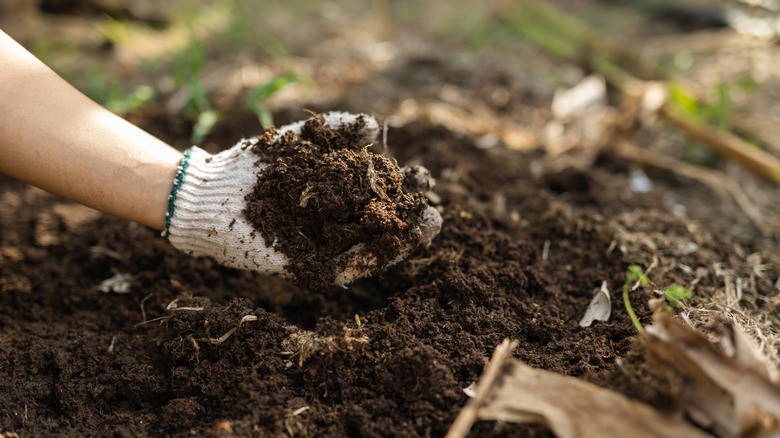
You have three options for turning these abandoned cicada shells into a long-term benefit to your garden, but they depend on how hands-on you want to be. The first option is to leave them as-is and let nature take its course. As the season progresses, they'll naturally decompose. It's a natural fertilizer that'll help raised garden beds thrive, as well as your lawn and trees. However, there is one catch: the decomposing shells have an unpleasant smell, and it gets worse the more there are.
If that's a dealbreaker, bury them instead. Dig a small hole near the base of each plant you want to target. Burying the shells masks the smell and will still help your plants reap all the nutritional benefits.
And finally, if you have a compost bin, that's the perfect destination for your yard's latest bounty. Just remember to keep your green-to-brown item ratio balanced: greens are nitrogen-rich (like wet grass and coffee grounds), and browns are carbon-rich (like wood chips or dry leaves). The cicada casings are definitely a green material that'll boost your compost pile's nitrogen, so be sure to toss in some "brown" items, too. By embracing this natural cycle, you can effortlessly turn a spooky garden discovery into a thriving, healthy landscape.