

The Fast-Growing Birch Variety With Colorful Flowers That Birds Can Nest In
Birch trees get a lot of praise for their beautiful bark, graceful form, and ability to thrive in a range of conditions. It is no wonder that many people want them in their yards. And if you happen to be one of them, you should definitely check out the seaside alder (Alnus maritima) tree. Also known as the beach alder, it is a small tree within the birch family known for its fast growth rate and its ability to tolerate wet and poor soils. It establishes itself quickly from seed and only takes about 10 years to reach its mature size of around 20 to 30 feet tall. What really sets it apart, though, are its bold and colorful blooms.
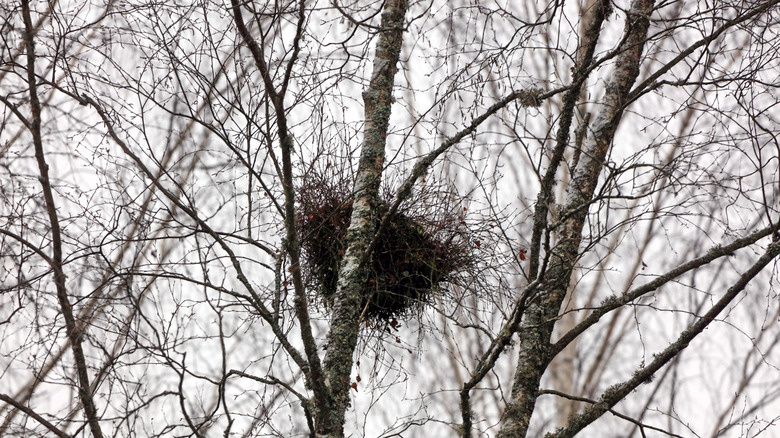
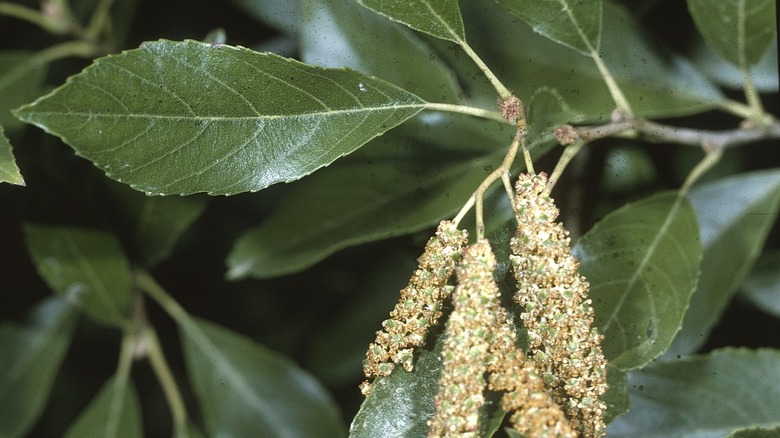
They come in colors of gold, yellow, purple, lavender, green, red, and burgundy and are highly showy. In terms of size, they range from 1 to 3 inches and bloom from August to September. Even better? Seaside alder can flower in just two years after being planted. Interestingly, though, birds are not drawn to its blooms. What attracts them instead is its thick deciduous foliage. It provides shelter and nesting sites for many birds, including some songbirds.
Also, the dense canopy and multi-stemmed growth habit of seaside alder make it a great option for creating windbreaks or hedges around yards and properties. Just keep in mind that seaside alder can successfully grow only in USDA hardiness zones 3 through 7. If you live outside these zones, you will have to look into other flowering trees that can help bring color to a yard.
Seaside alder thrives in poor soil and boosts soil fertility
Another thing that makes seaside alder desirable in landscapes is its ability to tolerate nutrient-deprived soils. And since it is a nitrogen-fixing plant, as it grows and expands its roots, it also adds nitrogen to the soil, increasing its fertility. You just need to make sure you don't plant it in too much shade. It needs full or partial sun to thrive and grow well. If your yard or garden, however, gets less than four hours of sunlight a day, you should instead look into other small trees that grow in the shade.
Also, try to plant it in wet or consistently moist soil. Seaside alder can withstand some drought once it develops strong roots, but since it grows naturally alongside streams and coasts, it prefers moist and wet soils. Other than that, though, it is not picky at all. You can grow it in clay, acidic, alkaline or even in salty soils with occasional flooding or standing water. You just need to make sure that you keep an eye out for leaf miners, alder aphids, and canker diseases that can weaken the tree and attract other pests, swiftly ruining your whole plan of turning your yard into a bird-friendly paradise.
Any effort you put in saving this tree is totally worth it. Seaside elder is rare and included on IUCN's Red List as endangered due to declining numbers. So, by planting and protecting it in your yard, you are helping the nesting birds, but you're also conserving nature.