

The Salt-Tolerant Shrub That Grows A Luscious Privacy Hedge

Unfortunately, planning the perfect coastal garden isn't all clear waters and smooth sailing. Whereas adding a variety of plants inland can be a breeze, when it comes to coastal regions, you may face some unique challenges, such as heavy winds and salt. As a result, you may need to get creative when picking out the right plants for your yard, whether you're interested in a visually appealing flower bed or a functional living fence for your backyard. While designing a coastal garden often involves extra research, there are plants available that can withstand these conditions, including this salt-tolerant shrub.
Cocoplum (Chrysobalanus icaco) is a species native to Florida, often found throughout the swamps and dunes where it's exposed to harsher conditions constantly. Because of this, it thrives as a part of a coastal garden, while its large, dense size makes it perfect for cultivating an eye-catching hedge that transforms your open backyard into a private sanctuary. And, because it's so easy to grow, it's among one of the best plants for beginner gardeners, especially given its overall hardiness. Cocoplum is also incredibly low maintenance once established. Of course, low maintenance doesn't mean maintenance-free, and while you may not need to labor strenuously to keep this plant alive, providing optimal growing conditions leads to an overall healthier plant. As a result, familiarizing yourself with its daily care requirements helps cocoplum to thrive in your garden, whether as a luscious privacy hedge or show-stopping statement piece.
How to grow cocoplum
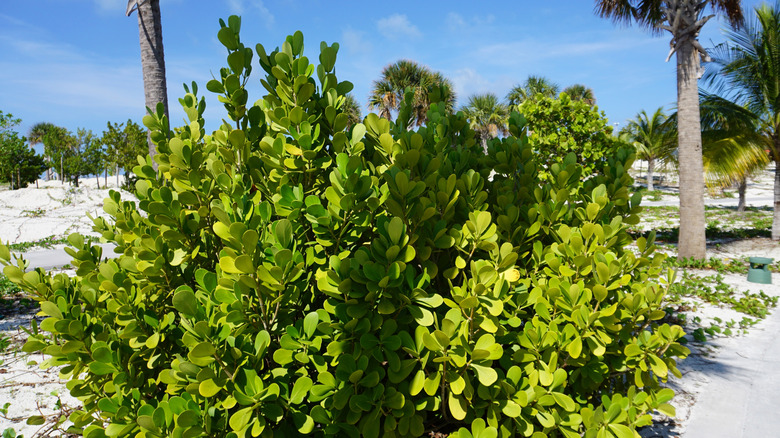
When it comes to durability, cocoplum has a laundry list of tolerances. It handles high amounts of wind and salt, while also sporting a medium tolerance to drought. This makes it forgiving of rough environments like those seen along coasts, although it's also commonly grown inland. Cocoplum requires full sun, though it also tolerates light shade. However, for the most ample growth, full sun is often best. This is important if you're growing cocoplum as a privacy hedge, as maximum growth often means denser foliage.
While cocoplum is no stranger to facing less-than-ideal environments, there is one thing to keep in mind: it's susceptible to below-freezing temperatures. In fact, cocoplum is only hardy in USDA grow zones 10 through 12. This doesn't mean a salt-tolerant shrub is completely out of reach if you're not in this area, however. Instead, you may choose to grow your cocoplum in containers that can be moved indoors once the temperatures start to drop. This method works exceptionally well if you choose to maintain smaller cocoplum hedges for adding privacy to patios and decks rather than the perimeter of your yard.
If you are within the zones to grow cocoplum as a perennial, there are a few steps you can take to grow a successful privacy hedge. Namely, space your cocoplum plants anywhere from 36 to 50 inches apart. At first, this may not provide you the privacy you want, but it gives your shrubs ample room to grow and form that dense hedging.