

10 Classic Garden Design Styles (& How To Best Get The Look)

Whether you are trying to settle on a cohesive look for your garden or simply looking for inspiration — understanding some of the most time-honored garden styles can be highly helpful. Classic garden styles run the gamut from ultra-formal designs with tightly pruned topiary, to meadow gardens with meandering paths, and everything in between. They're not just the cottage garden or Versailles landscaping many people think of when they hear the term "garden style". Classic styles also include Japanese gardens (which date back hundreds of years), as well as coastal, tropical, and woodland shade gardens. These classic styles have been around for a long time.
As a master gardener, I have worked on a variety of landscapes: Ranging from heritage formal gardens, to coastal designs, and, of course, my own permacultured English cottage garden. When planning a garden, I recommend people start with what plants and styles their climate can support, then choose one style to pursue from that shortlist. A clear style vision is great because it stops a garden becoming a chaotic hodge-podge of randomness. However, you do need to be realistic about what your garden and climate can support. So choose a style that fits with native plantings — this minimizes maintenance, better supports local pollinators, and makes sure your garden can keep looking its best.
Formal parterre gardens rely on symmetry, clipped hedges, and strong focal points
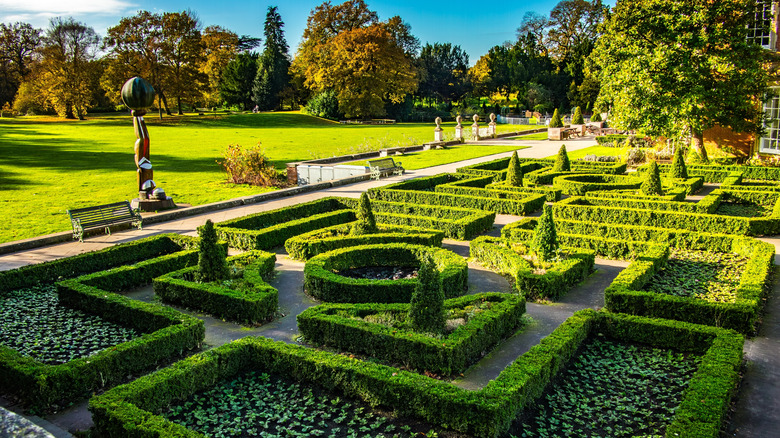
A formal, or parterre garden, is about order and symmetry. You'll often see this style in period dramas, with wealthy Victorian ladies walking elegantly by neatly, close-trimmed hedges, tightly controlled formal flower beds, and the occasional fancy water feature. These gardens have straight, clearly defined pathways. There are usually geometric or symmetrical beds and carefully placed focal points like urns, fountains, and statuary. No loose, billowy plantings for this garden. If a plant dares to spill onto the path, it's quickly cut back. The formal garden tends to work best in larger spaces, because you need plenty of room to get those wide, straight paths and the overall symmetry of the design.
However, you can create the look of a parterre garden even if you don't have a sprawling Victorian estate. Center the design around one focal point, like a large round fountain or geometric flowerbed, and anchor the space with symmetrically placed evergreens. Repeat shapes, flowers, and colors throughout the garden. Keep pathways straight, and bed edgings crisp and well-defined. A parterre garden should be disciplined and balanced, with clean lines and strong views. Just remember that these gardens, even small versions, require a huge amount of maintenance work to retain their look, as nature will always try to escape her bonds.
English cottage gardens should be packed with roses, self-seeders, and layered flowers
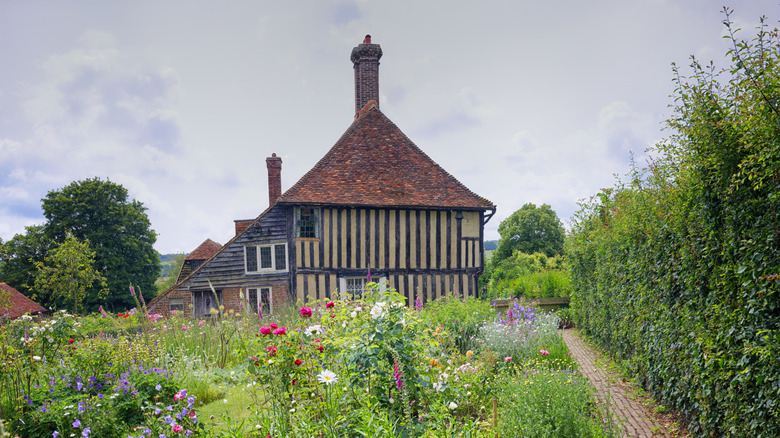
I'm a permaculture specialist, so the English cottage garden is more my style than formal, high-maintenance spaces. My outdoor space doesn't truly have a style; it's a little wild, full of color, practical, and my place of tranquility. But if I had to label it with a style, this one is probably the closest. An English cottage garden is soft, generous, and gloriously, wonderfully, packed with flowers, year-round color, and life. Deep borders crammed with perennials, roses, herbs, and self-seeders are the norm, and many of these plants spill over edges onto pathways and lawns. These gardens are full of life and have a wonderful, joyful energy to them. They look easy and romantic, but they do need a certain amount of editing from time to time so they don't become chaotic and overwhelming.
English cottage gardens are perfect for people in temperate climates who love flowers and fragrance. To transform your space to fit this style, start with deep, mixed borders. Use tall evergreens and deciduous shrubs at the rear to give focus and structure to the borders, then add heirloom roses, hollyhocks, mock orange, lupins, purple cone flowers, rudbeckia, sunflowers, and foxgloves for tall and mid-height flowers. Add some shorter plants, including those that tumble and spill, to the front of borders. Geraniums, phlox, marigolds, lavender, and lobelia are all perfect plants for an English country garden. Add arches, a pergola, or an arbor, and train honeysuckle or rambling roses to grow over it. Keep planting dense and full, but don't pack plants in so tightly that they stifle one another. Avoid big bare patches of mulch, as a cottage garden is supposed to be full and abundant.
Mediterranean courtyard gardens need gravel, terracotta, and sun-loving herbs
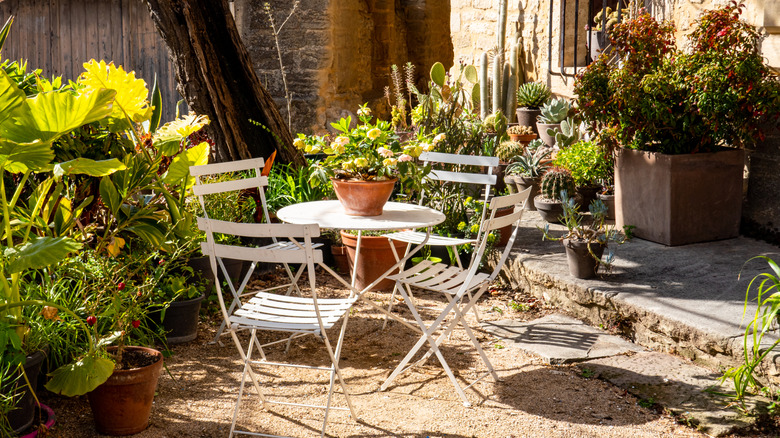
A Mediterranean courtyard garden is brilliant if you've got limited outdoor space and a temperate to warm climate. For this style to really work, you need a hot, sunny climate with dry summers, but if you are in a more temperate zone, you can substitute hardier natives than the sun-loving, drought-tolerant plants of a true Mediterranean-style garden. This style is lovely if you've got a warm, sheltered, enclosed yard or courtyard, which is why it's popular with people living in tight, urban spaces. Designing a garden in this style creates a cozy, intimate area, making an otherwise bland enclosure feel like an extra room.
You need rustic, warm-toned paving, gravel, or stone, and, to really get that Mediterranean backdrop, you might consider painting the walls a complementary pale but warm color. Add terracotta and stone containers so you've got plenty of space for plants. Choose species like lavender, rosemary, thyme, sage, cistus, and santolina. You could also consider a dwarf olive tree to further transform your yard into a Mediterranean retreat. For other planting choices, go with fragrant varieties with silvery foliage, and opt for drought-tolerant species to reduce maintenance and watering needs. Add some seating and, if you want more lush greenery, think about using climbers to create a vertical wall of flowers and leaves.
Japanese-inspired gardens use rocks, gravel, water, and restrained planting
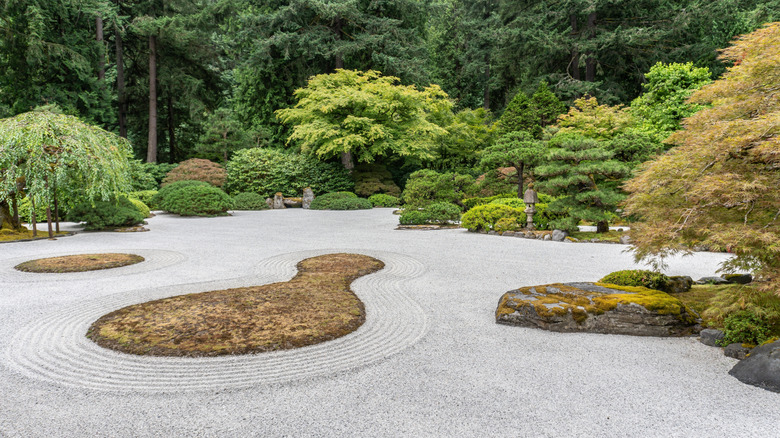
A Japanese-inspired garden exemplifies balance, restraint, patience, and calm. I love the effect, but ironically don't have enough patience to achieve it myself. There's a strong sense of balance between water, stone, empty space, and planting in a Japanese-inspired garden. This style suits many climates and is great for small spaces, too, as you can achieve a beautifully balanced look without a compact yard looking crowded. Gardeners who want a quiet, contemplative yard rather than a busy, flower-filled one should consider this style of outdoor space.
When designing a Japanese-inspired garden, keep simplicity and balance at the forefront of your mind. You don't need to fill every inch of space with plants or structures. Limit yourself to a fairly restrained color palette and embrace moss and lichen as part of the design, as they'll soften the hardscaping, structures, and any statuary. Use rocks, stepping stones, water, and gravel to create a simple, open, well-balanced space that helps calm the mind. Avoid symmetry, though, as Japanese-inspired gardens tend to favor asymmetry rather than predictable mirroring. For plants, choose small trees or shrubs with a strong shape, such as Japanese maple, cloud-pruned pine, camellia, azalea, or Japanese holly. These give you a distinctive structural shape and draw the eye. Choose low groundcovers like dwarf mondo grass, Japanese sedges, pachysandra, or Japanese forest grass to soften the space without overwhelming it with color.
Meadow or prairie-style gardens replace lawn with grasses and wildflowers
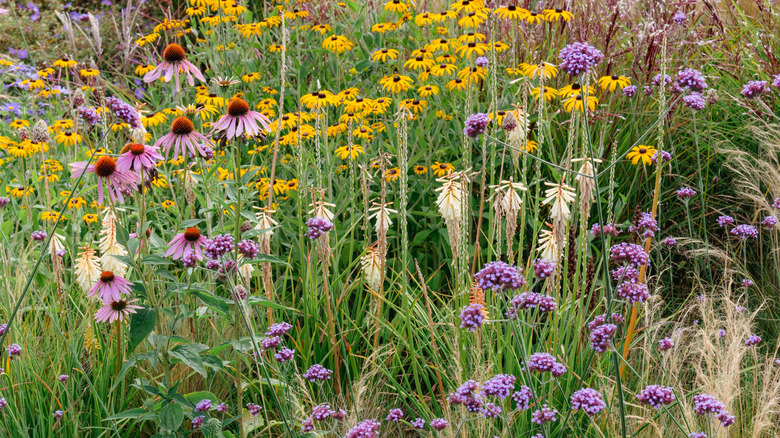
A meadow or prairie-style garden is loose and natural. This style is filled with movement and color. There's no short-mown lawn with a meadow garden, as it essentially replaces your lawn. Instead of a lawn and carefully edged beds, you get a sea of native grasses, meadow flowers, and long-flowering perennials. Meadow gardens support pollinators and a huge range of other wildlife. They're also ideal as an ultra-low-maintenance yard and for climates where drought tolerance is an important consideration.
However, if you choose this style, don't just scatter a random meadow flower seed mix. You're still designing a garden that you want to enjoy, after all. Choose native grasses like little bluestem, switchgrass, prairie dropseed, or Indiangrass. Then mix in flowering perennials, planted in generous, repeating drifts, such as coneflowers, black-eyed Susans, bee balm, blazing star, asters, and goldenrod, so the meadow has color and movement from early summer into fall. Mow winding pathways through the meadow so you don't just have a wild patch of randomness. You can make pathways more permanent and a little more whimsical by adding stepping stones.
Woodland shade gardens layer trees, shrubs, ferns, and groundcovers
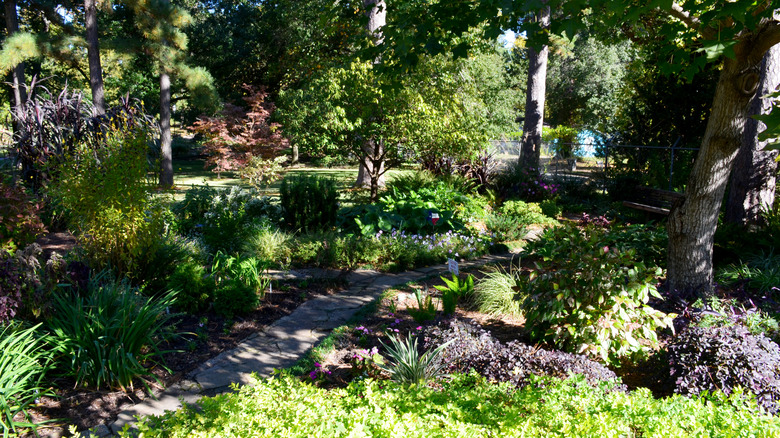
I love a woodland shade garden. I have a patch on my property that's full of fruit trees and a few aged evergreens, and I've managed to incorporate a woodland shade garden in that area so that it's both pretty and productive. If you've got a yard with trees in it, planting in the shade of them is a challenge. But you can absolutely use layered woodland planting to keep that shady area full and colorful. Generally, this kind of garden is best-suited to temperate climates and tends to be cool, sheltered, and fairly natural-looking.
The aim is to make the space beneath the existing canopy feel fuller. If you have ornamental trees, then you can start with slightly smaller trees and bushes toward the rear of the space. But if you have productive trees, like me, that you need to pick fruit from, just be mindful that you leave plenty of room around them to gather your harvest. The next layer should be short shade-loving shrubs, followed by perennials, ferns, and ground covers. Choose plants like hellebores, epimediums, hydrangea, camellia, mahonia, and japonica. Sweet woodruff, daisies, sorrel, and chives are also great choices for the outer edges of a woodland area.
Tropical gardens need bold foliage, dense planting, and a lush, enclosed feel
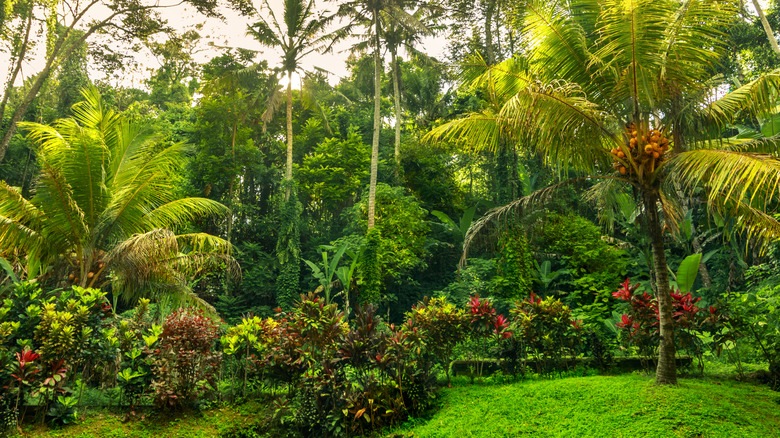
A tropical or jungle-style garden is bold and wildly dramatic. If you're lucky enough to find yourself in one of these gardens, you'll see huge leaves, strong vertical layering and texture, and dense, leafy planting. This style obviously works best in hot and humid climates. You can, however, adapt it to somewhat cooler zones by using hardier, but exotic-looking, plants. Or, if you enjoy the maintenance side, use tender species and take real good care of them, giving them protection or moving them inside in cold weather. If you want a lush, high-impact space and you live in the right climate, a tropical garden could be the way to go.
Your climate will heavily influence which tropicals you can grow, because even the vigorous growers are tender and a little fussy. If, for example, you live in the right parts of Hawaii or Florida, you can happily grow bananas and a huge selection of palms as your tall structure and canopy. In other climates, bananas are out, and your palm selection is greatly reduced. Cannas, fatsia, elephant ears, yucca, tree ferns, bird of paradise, and crocosmias are all fabulous options that add real drama and a jungle feel. I also love gingers, like the shampoo plant, with its bright red cones. Add vines and climbers over trellises and garden structures, like mandevilla, passion flower, and star jasmine. Paths and seating areas should feel slightly enclosed by the "jungle" you're creating. Adding a natural-looking water feature also helps create a tropical style, boosting humidity and providing wildlife support.
Coastal gardens rely on salt-tolerant plants and simple windproof hardscaping
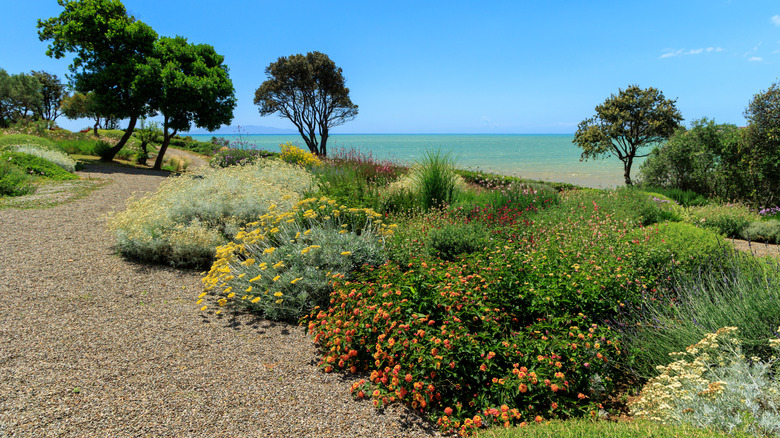
If you live by the coast, your garden faces unique challenges. Wind and salt affect what plants will grow and thrive in a coastal garden, and they scour structures and rust metal. Plus, often, soil in coastal gardens is thin, poor, and sandy. So your garden needs to be tough and resilient. Regardless of your hardiness zone, if you are on the coast, this is among the best garden styles you can choose, as it works with the realities of coastal planting conditions rather than forcing you into a cycle of endless maintenance to achieve a lusher, inland style.
To get a good coastal garden going, choose plants that are tolerant of salty air, strong winds, and thinner soil. Ornamental grasses, sea thrift, sea holly, lavender, and santolina are all good choices. They provide structure, color, and softness. But all of them can handle wind and salt, and even poor soil. For pathways, keep it simple, with gravel or paving, usually in a pale, muted, or sandy tone. If the garden is exposed, I recommend using a hedge of something like Japanese mock orange, which thrives in coastal spaces, is evergreen, and dense enough to reduce wind exposure across the rest of the garden. Just be sure to plant the hedge on the windward side of the garden, perpendicular to the prevailing wind, so it intercepts salt-laden gusts before they move across the rest of the space. For structures and hardscape features, go with reclaimed timber or stone rather than metal, as metal will rust, whereas wood and stone will just develop a more interesting patina over time.
Gothic gardens build mood with dark flowers, deep foliage, and strong structure
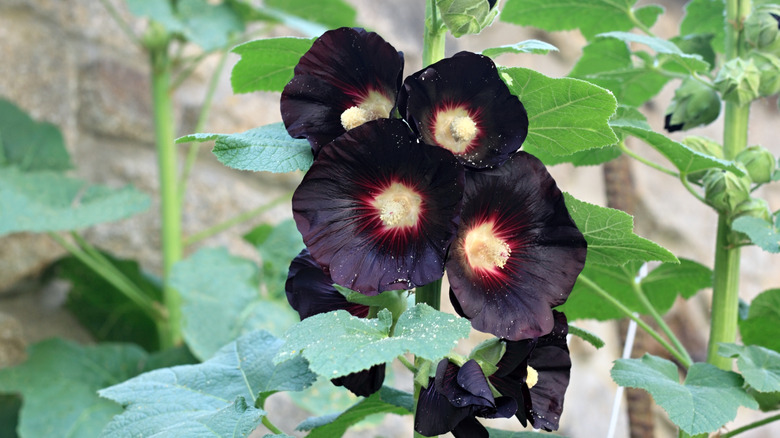
My wild, history-loving soul adores the gothic garden. Here, the medieval meets the Victorian, with drama, symbolism, and mystery. There's just something so special about the dark romance of a gothic garden. Most people think about black roses and poisonous plants, but it's so much more than that. Yes, dark-colored blooms are sometimes a feature, but actually, gothic garden ideas can also include plants chosen for their meaning. Plants have always had symbolism and mysticism associated with them. Yew, for example, symbolized immortality. Iris represented wisdom. Lilies symbolized purity or divine protection. And Victorians had a whole language of flowers, where messages could be passed based on the blooms that were given or received. Hydrangeas, for example, meant heartlessness, and basil meant the giver hated the recipient, and a bouquet of red tulips was a declaration of love. The gothic garden blends the moodiest of this symbolism with an air of mystery, emotion, and drama.
Go for dark-leafed shrubs, like yew. And, for structures and planters, choose aged materials like reclaimed brick, or at least those that age fairly quickly. Embrace moss and lichen, as they show age and give texture. Choose deep-colored flowers, like red and burgundy tulips or dark-colored roses. In mixed beds, situate tall, structured plants at the back, like black hollyhock or crimson delphiniums. Incorporate silvery foliage, like lamb's ear or artemisia, and don't forget the fragrant night bloomers, like night-blooming jasmine, moon flower, or evening primrose. You can add a truly medieval and more intimate feel with a simple clematis or climbing rose covering a wall or fence, too.
Rock and alpine gardens depend on crevices, slopes, and excellent drainage
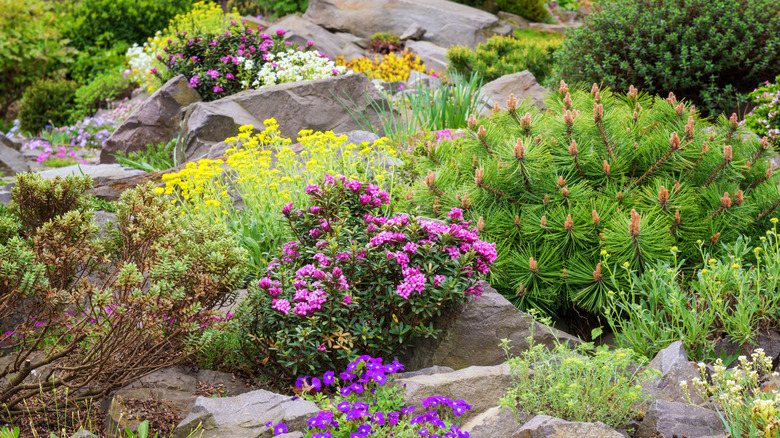
Rock and alpine gardens mimic high-altitude growing. This garden style is well-suited to gardens with poor soil and for gardeners who want a simple, low-maintenance space with drought-tolerant plants. It's also a good option for sunny, sloping yards where homeowners don't want to dig out full terraces. My grandfather turned his entire front yard into an alpine garden, building it from interesting rocks he collected over his years from all over the country, during his career as a long-distance trucker. It was such a pretty garden and needed very little fuss or care.
Create ledges, shallow beds, and beds stacked inside one another using rocks and boulders. The rocks should look like they are part of the natural landscape for a real alpine look. Use a free-draining soil mix to fill the beds or planting pockets. You can get specific alpine compost mixes that are well-balanced and nice and gritty. Choose alpine plants like sedums, rock roses, cobweb houseleek, saxifrage, primula, dianthus, and purple gromwell. You can then mulch with a fine gravel that retains moisture and stops scouring and erosion.