

12 Things You Should Do Before Mowing Your Lawn In The Spring
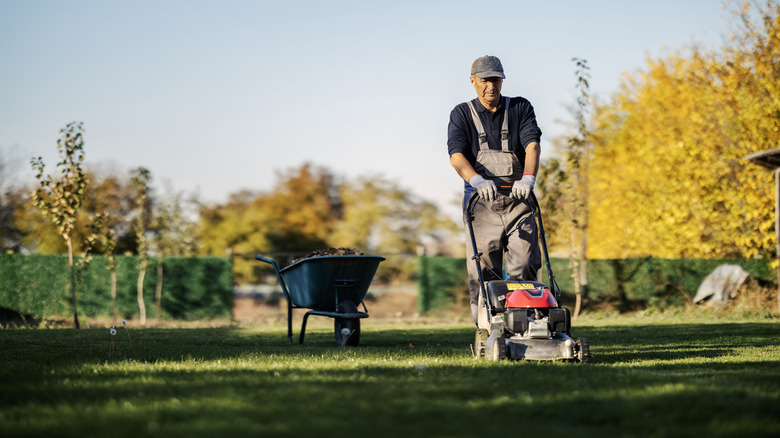
Every spring, I watch in despair as neighbors drag out their mowers on the first warmish day, crank the engine, and plow straight across their lawn even though it's still half frozen. There's also winter debris everywhere, and their mower and blade haven't been cleaned or serviced since last fall or even earlier. Then the poor grass gets scalped and torn and takes many weeks to recover from that first rude shock of a haircut.
I'm a master gardener, so I've learned to be patient, especially with lawns. During the 20 years I have been practicing permaculture, I've helped numerous people turn problematic lawns around via chemical-free methods and best practices. If you're eager to kick things off to a good start this spring, there are a number of things you should do before the first mow. Rushing those first few spring cuts is always a mistake. Early spring fools you with its blissfully warm days, but the soil is often still cold and sodden, and the grass is only just beginning to come out of dormancy, and is still relying on its energy reserves. This makes your lawn vulnerable, so you've got to make the right preparations before you start mowing.
Wait until the lawn is actively growing again
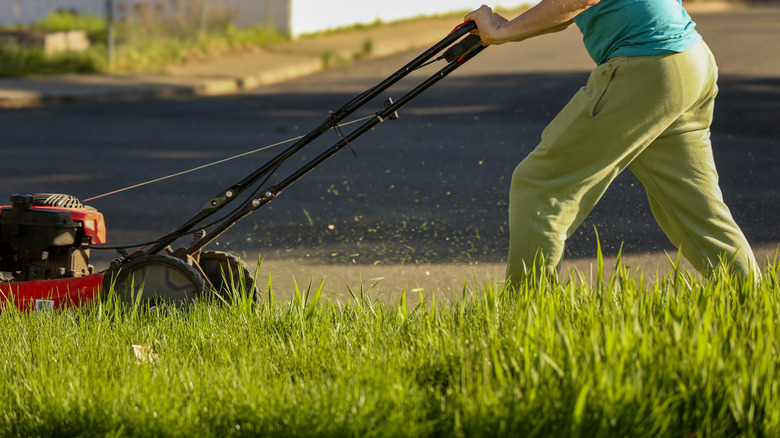
Probably the most common mistake when it comes to spring lawn mowing is being too eager to make that first cut too early. Mowing the lawn causes stress, even when it's actively growing and the days are long and warm. But then it can recover reasonably quickly. Cutting grass while it's still in winter dormancy, or only just starting to wake up, causes a huge amount of stress. The plants can't recover as quickly or easily, as they are still reliant on their already-depleted energy reserves. Plus, of course, the weather and soil conditions aren't conducive to fast healing and recovery, either.
If you've got cool-season grass, like Kentucky bluegrass and fescue, active growth and therefore safe mowing conditions, start when the soil is consistently around 50 degrees Fahrenheit. Warm-season grasses need the soil temperature to get closer to 65 degrees Fahrenheit to fully wake from their dormant period. If you don't have a soil thermometer, watch your grass. Once it stands upright and starts to actually grow, not just "green up", you know you're most likely safe to think about mowing. Just don't rush it. Let the grass get to at least 3 inches tall or so before you fire up the mower.
Hold off if the grass or soil is still wet
Even if you've had a day or two of dry, warm weather early on, that's just Fool's Spring. There's likely another cold snap on the way, and even if there isn't, the ground is still very much cold, saturated, and soft. Mowing soft ground causes real, lasting damage to the lawn. Firstly, the weight of a mower on wet soil, not to mention the weight of the human operating the mower, will compact it. You basically squeeze out all the pore space, which ruins the structure of the soil by removing air pockets and pathways that plant roots, fungal networks, and soil life need to access air, water, and nutrients.
While riding mowers are the most destructive, because they're larger and heavier, push and walk-behind mowers can also cause serious compaction. It's a lasting problem that won't just clear up once the soil dries out. It's difficult to fix and takes a long time to correct. Wait until the soil is no longer spongy when you walk on it. If you can see your footprint in the lawn after you've walked across it, the soil is still too wet. Wait a few days and try again.
Rake off thick leaf cover and winter debris
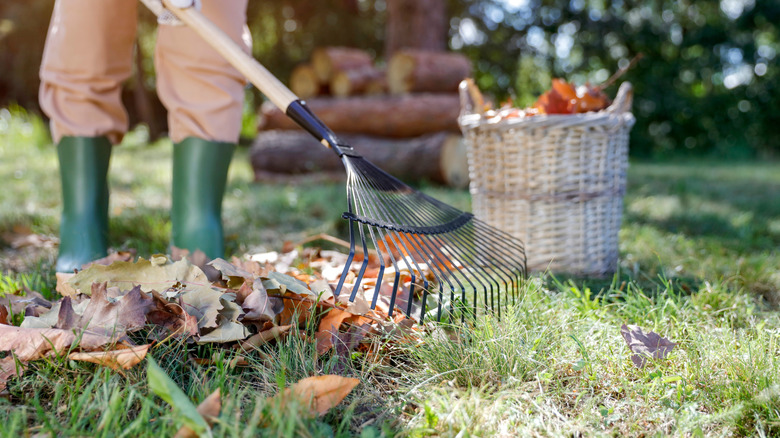
I am passionate about permaculture, so I use finely shredded leaves as part of my fall lawn care routine. However, I do rake off the lawn to remove large leaves, mats, and winter debris. I don't disturb the lawn too much over winter, but in early spring, I like to clear all of the bits and pieces that have accumulated. A heavy mat of debris in early spring blocks light from reaching the grass just as it starts to wake up and needs light to photosynthesize, get energy, and replenish its reserves. Plus, it holds moisture against the soil surface, creating damp, dark conditions perfect for fungal diseases like snow mold.
A good metal rake or a leaf blower should take care of the majority of the leaf litter. Bag that litter up, as long as it doesn't show any signs of disease, and let it rot down into leafmold. Then you can use it to mulch your beds next year. While you're clearing the lawn, take the time to look for sickly spots, bare patches, or any obvious issues. Then let the grass and soil dry off, and, as outlined above, make sure the grass is actively growing before you mow.
Pick up sticks, rocks, toys, and pine cones
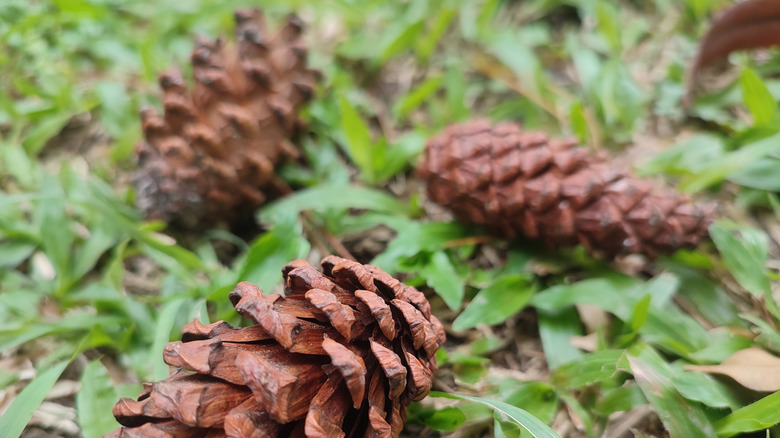
This is one for right before you mow every time, not just for the first time, but generally, there's more stuff to clear away before that first cut. Especially if you've got dogs or kids. My dogs are fantastic at putting every toy, pine cone, and stick they can find on the lawn. They are incredibly helpful and, if I'm not watchful, they'll bring the sticks, balls, and other fun stuff back onto the lawn at the same time as I'm clearing them off. It's a good thing those pups are cute.
Don't skip this clearance. Stray stones, sticks, toys, random pieces of wire, or something else that shouldn't be there can wreck your mower blade. The item the mower strikes can also become a potentially dangerous projectile. Take a slow pass over the whole lawn and remember to check those little dips and nooks and crannies where stuff tends to accumulate. It'll save you a cracked blade, dented mower deck, and maybe even a broken window from a flying stone.
Break up any matted snow mold areas
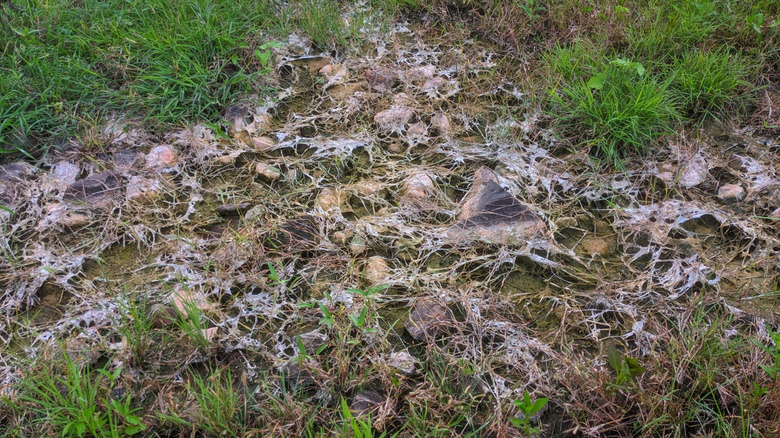
If you have hard or long winters, one of the weird things you may notice on your lawn is circular patches of matted, pale, crusty-looking grass as winter comes to an end. This is snow mold, and it generally looks worse than it really is. But you'll still need to take care of the snow mold before you mow if you want to get rid of it.
Lightly rake the affected area to break up the grass mats. This lets air get in there and makes the patch less hospitable to the fungus causing the issue. Be gentle though. You're only trying to lift and separate the matted blades of grass, so don't hack at them and cause more problems. Pink snow mold is generally more aggressive and problematic than gray. If the patches have a red or pink tinge and don't show signs of improvement within a few days of raking, you may want to overseed those areas. Gray mold is usually just cosmetic and resolves itself very quickly once you separate the matted grass.
Note any sprinkler heads or shallow obstacles
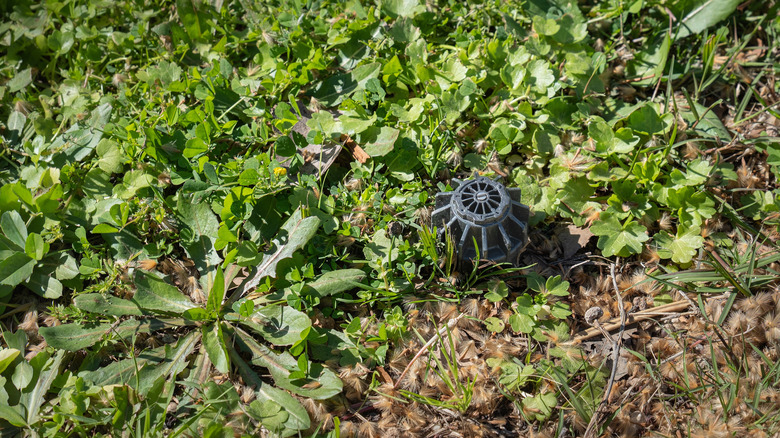
If you're anything like me, you promise yourself you'll remember exactly where your sprinkler heads are, shallow bed edging, sunken solar lights, and other recessed or hidden obstacles are. You know in the back of your mind you never remember this stuff, but you still kid yourself into believing that this time you'll definitely remember. And then, of course, you don't, because you've got so much other stuff crammed in your head. So you confidently fire up the mower, thinking you vaguely remember where everything is, and you end up with a cracked mower blade or a snapped sprinkler head.
Take the time to reacquaint yourself with all of the obstacles. Even mark them with little flags if you need to. Remember things like buried downspout extensions and shallow-set stepping stones or pavers, too. And not just the manmade hazards. Don't forget shallow lateral tree roots which can damage your blade or sustain significant damage themselves.
Clean the mower deck before the season starts
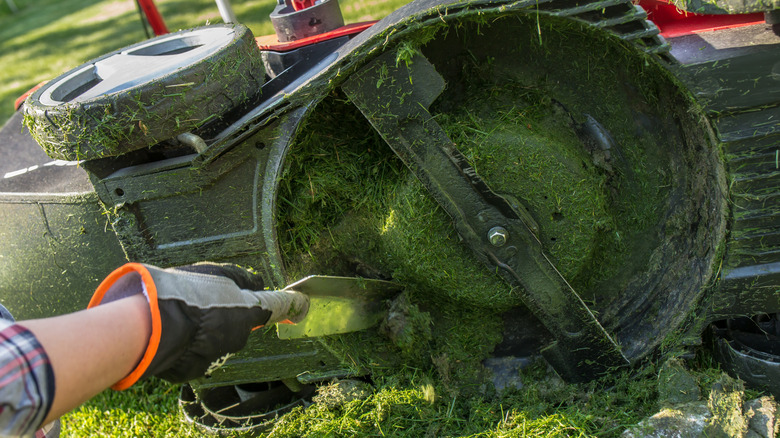
There's a good chance you, like me, and many other people, did not fully (or even a little bit) clean your mower deck the last time you cut your grass before winter. Every year I promise myself I'll clean the deck in fall so I don't need to do it in spring. I never do. And if you're like me, that means, come spring, the underside of your mower deck has a solid, hardened mass of old grass clippings and dirt welded on. This is problematic because the buildup interferes with airflow under the deck. Firstly, it can make your mower engine overheat. Secondly, the movement of air under the mower deck is what lifts the grass blades so the mower blade can make a nice, clean cut. And if that isn't happening, you'll end up with a ragged, uneven cut. Last but not least, this buildup traps moisture against the metal, accelerating rust and harboring fungal spores from last season, which it then deposits across your lawn if you don't clean it off first.
Before you clean the deck, make sure the mower absolutely cannot accidentally start by disconnecting the spark plug or disabling the mower in another way, depending on your lawn mower type. Tilt the mower, assuming it's a small walk-behind mower, or use ramps if it's a big ride-on model. Just remember, if you've got a gas mower, to make sure the carburetor and air filter face upward when you tilt it so you don't end up with oil getting in the fuel system. Once you can safely and securely access the underside of the mower deck, use a putty knife or a plastic scraper to remove the worst of the buildup. Then take a stiff-bristled brush and the hose and clean off the remainder.
Check and service the blade
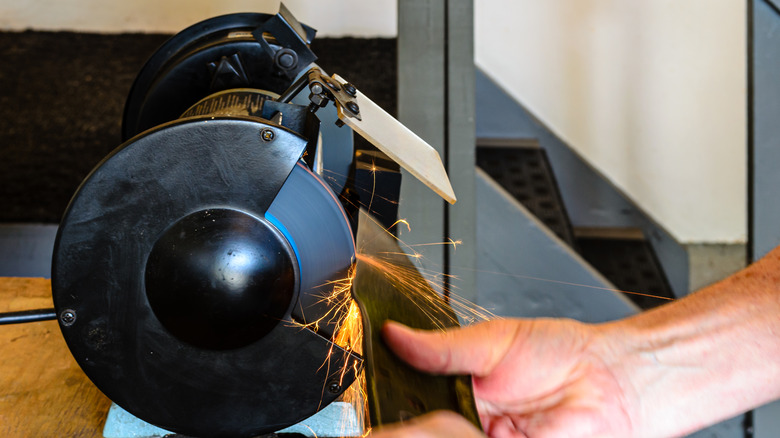
While you've got the mower tilted for cleaning away last year's grass and dirt, take the opportunity to check and service the blade. Everybody's mower blade gets dull. It just happens with use. It happens faster if you hit things that aren't grass on a regular basis. Dull blades or ones with notches and missing chunks tear at the grass instead of cutting it. Torn grass takes longer to recover from mowing compared to grass neatly cut with a sharp blade, and it loses more moisture, causing it to brown faster than well-cut lawns. It's also more susceptible to fungal diseases. And, the more you mow with a dull blade, the more damage accumulates over time. You'll end up with stressed, ragged grass that doesn't tolerate heat, dry spells, or wet periods.
Again, make sure the mower is secure and safe and cannot accidentally start. Examine the blade and carefully check the edge for dullness. Make sure you look for nicks or notches where you've accidentally hit something and taken a little chunk out of the blade. Also look for warping or cracking, as you'll then need to replace the blade instead of just sharpening it. If the blade is just dull, you can detach it and use a mill file or a bench grinder to sharpen it. The factory bevel angle is generally 30 to 45 degrees. You or a professional can grind out small nicks to a blade's edge, but more serious damage means you need a replacement blade.
Handle the basic engine maintenance on gas mowers
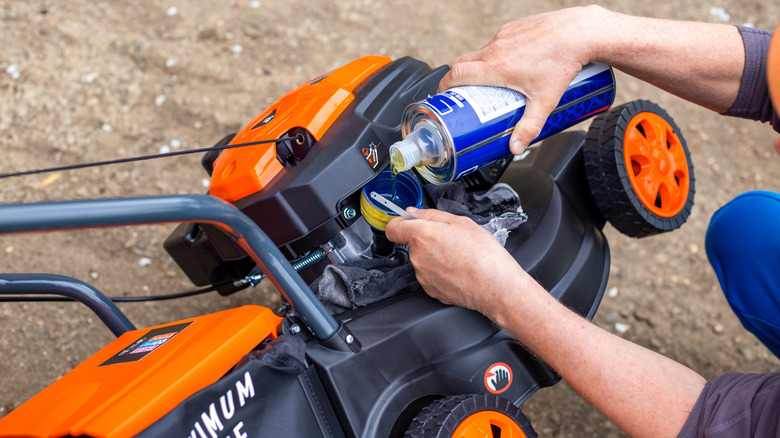
Gas mowers need a bit more maintenance than electric ones. I'm fond of my old gas mower, as it has plenty of power and is most definitely a workhorse that has served me well over the years. However, it does need regular maintenance to stay in decent, workable condition. When it needs maintenance or a service, it won't start, which is super frustrating. So I make it a habit to perform basic engine maintenance every spring to minimize my frustration. Most early-season starting problems tend to be old fuel left in the tank over the winter, a dirty spark plug, a clogged air filter, or oil in need of a change.
If you don't want to learn how to fix these lawn mower maintenance issues yourself, you can find someone to perform a spring mower service for you. It'll save you money on more costly repairs or a mower replacement and keep your gas mower running smoothly for many years. At the very least, you should learn how to check and change the oil and air filter as a routine part of your spring lawn maintenance. I also recommend cleaning your engine's cooling fins to reduce the risk of overheating.
Set the deck higher for the first cut
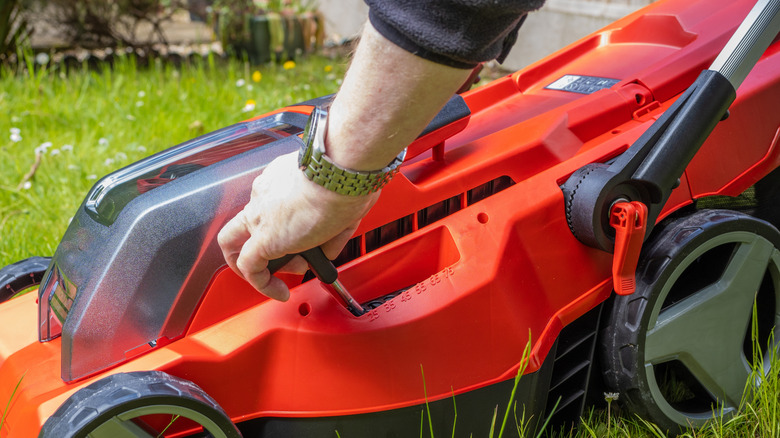
Even if your standard mowing height for the rest of the season is 2 or 2 ½ inches, your first cut should be higher. The first time you mow, the grass has only just come out of dormancy, and it's stressed. It'll be uneven, somewhat vulnerable, and have depleted energy reserves. If you go too low on that first mowing, you can scalp it, which exposes already weak and vulnerable crowns right as the plant is trying to replace its lost energy reserves. Even if you don't scalp the lawn, cutting low adds more stress and increases recovery time. In fact, mowing too low is one of the most common lawn care mistakes that can kill grass.
I like to set my deck to its highest setting for the first cut of the year. You're not really mowing to control the lawn or shape it during this first cut. You're helping the lawn wake up and get healthy. All you're actually doing is taking off the old, struggling tips that have been exposed to harsh winter conditions, and helping to open up the canopy to let in light and air. This creates more favorable growing conditions and reduces the chance of lingering fungal pathogens setting in.
Plan around the one-third rule
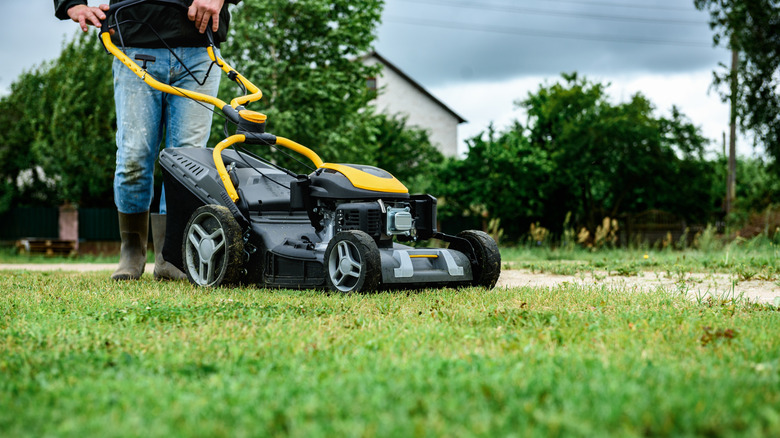
If you're waiting patiently for the soil to dry out, the grass to start growing vigorously, and the weather to be just right, as you should, then the grass is probably going to get a little taller than you'd like before you can make that first cut. A great strategy for getting it down (slowly) to an optimum height is to follow the one-third rule for mowing grass. This removes the guesswork, and ensures you don't ever cut too low, thereby weakening the grass and opening the door to weeds and disease. In spring, when the plant is drawing on stored carbohydrates to fuel new growth, a severe cut can knock it back badly.
Remember that when you've decided it's time to start mowing in spring, the first cut is just a light haircut to help open things up and get the grass moving — even if it's much longer than you'd like. That's okay. Make your first cut, taking much less than a third. Then make a second cut a week later, where you can take a full third of the remaining height, if your grass species can tolerate the total remaining height. Tougher grasses like Bermudagrass can cope with being under an inch high during its active growing season, but cool-season grasses like fescues generally need a bit more height, preferably around 3 inches. And, if the grass gets a lot of foot traffic, it's a good idea to keep it around 3 ½ inches to help it cope.
Decide whether mulching or bagging makes more sense
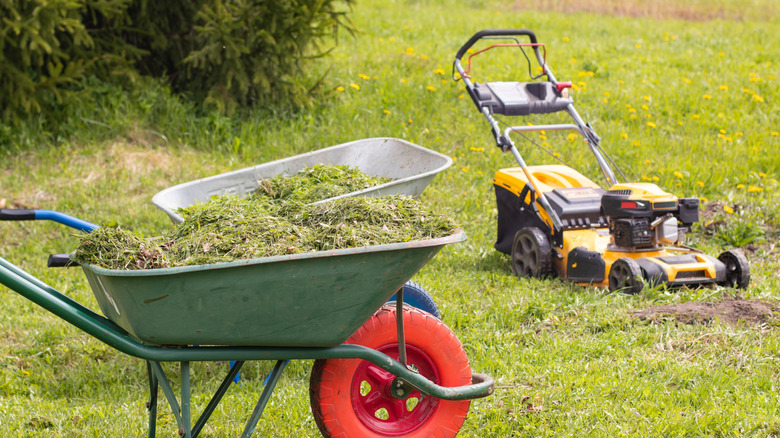
Most of the time, leaving clippings on the lawn is the right call, in my experience. Short clippings break down quickly, returning nitrogen and organic matter to the soil. You've basically got a free, slow, gentle fertilizer. This is mulching. I mulch probably around 90% of my cuts. It's easier because I don't have to empty the mower bag, rake, or bag the clippings, and it helps my lawn stay healthy with no effort from me.
The first mow of spring is a little different. Now, in an ideal world, the grass is dryish, the soil is dry enough to walk on without damage, and you're only taking a very small amount of grass off the tips. If these things are true, then yes, I'd absolutely let these first very short clippings stay on the lawn, because they are going to break down fast and give your winter-stressed grass some much-needed nitrogen and other nutrients. If, however, you are mowing shorter than you should or the grass got too long and you had no choice but to cut more than just the tips, I'd suggest bagging the clippings. Clippings that are too long or those that are very wet form clumps and mats instead of filtering through and breaking down into the soil. This increases the risk of fungal lawn diseases, blocks light, and can inhibit growth.