

10 Low-Maintenance Flower Bulbs That Grow Well In Pots
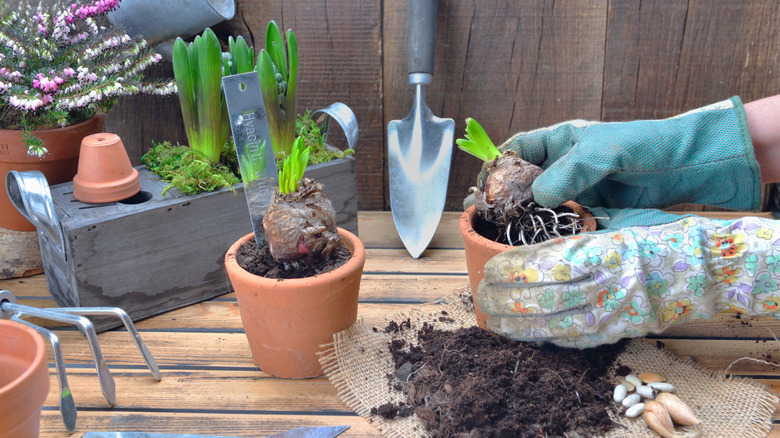
When you're first dipping your toes into the great big world of gardening, growing flower bulbs in containers is one of the best ways to kick the hobby off. Some flower bulbs actually thrive better in planters than in a garden bed. Although you may have to be patient for months before you see the fruits of your labor, lots of flowering bulbs are well worth the wait. To achieve everything you dream for your new container garden, you really need to know which types of bulbs are ideal.
Flower bulbs fall into two distinct categories, and knowing which you're growing is vital. Hardy bulbs are planted in the fall for flowers that arrive just in time for spring. Tender bulbs are planted in spring and bloom throughout summer. If you're hoping for a colorful summer, begonia, dahlia, and calla lily bulbs bring vibrancy to patio containers without any drama. Don't discount hardy bulbs, though. Flowering plants like tulips and crocuses put on quite the seasonal display.
One of the perks of growing bulbs in containers is that they make it much easier to save your precious plants when the weather changes. Plus, planters can be shuffled to other spots when the bulbs aren't doing their best in one area of your garden. With flower bulbs, you basically start from scratch over and over again. The good thing is that each bulb comes preloaded with everything it needs to thrive. This means less babysitting from the get-go. Whether you love the clean lines of calla lilies, the fresh fragrance of freesias (the only flower you need to make your patio smell good), or the bright glow of dahlias and gladiolas, you're almost guaranteed easy, beautiful blooms with little effort.
Calla lilies
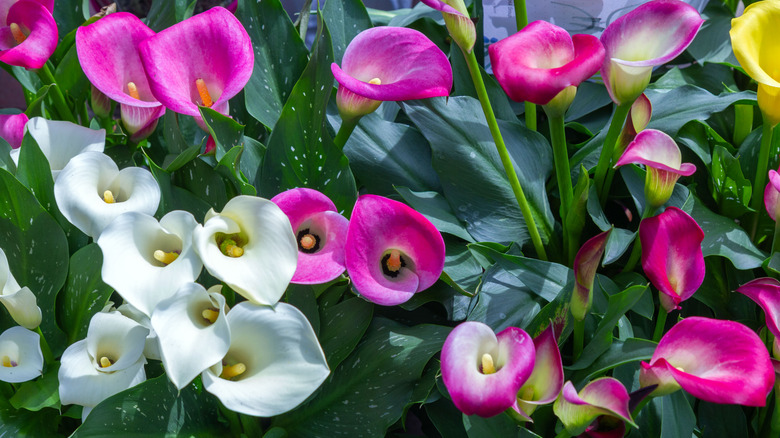
Calla lilies (Zantedeschia aethiopica) bring a tropical-esque look to planters with their trumpet-shaped flowers and glossy green leaves. These easy-going growers can thrive year-round in USDA Zones 7 to 10. Bonus: They are great candidates for container gardening. These summer bulbs (which are technically thick rhizomes) should be planted about 2 inches deep on their sides with the eyes facing up. Then sit back and wait for the shoots to make an appearance within two weeks.
Tulips
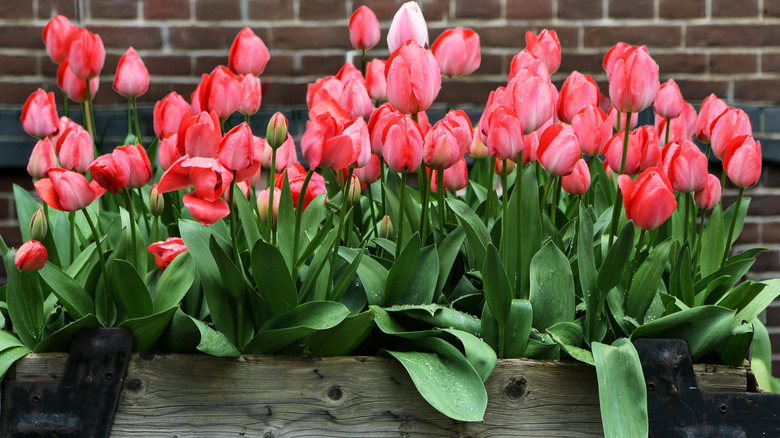
Tulips (Tulipa spp.) aren't a demanding bunch, but they certainly deliver on the drama. Tulips are hardy bulbs that thrive in Zones 3 to 8. They are relatively low-maintenance when grown in containers, something that's perhaps unsurprising since they're often used as border blooms. Tulip bulbs need at least six hours of full sunshine a day and soil with sufficient drainage to grow well. To create a lush container garden, plant several bulbs in one planter. If you're going to safely lift and store tulip bulbs after they've bloomed, be careful not to damage them with your tools.
Crocus
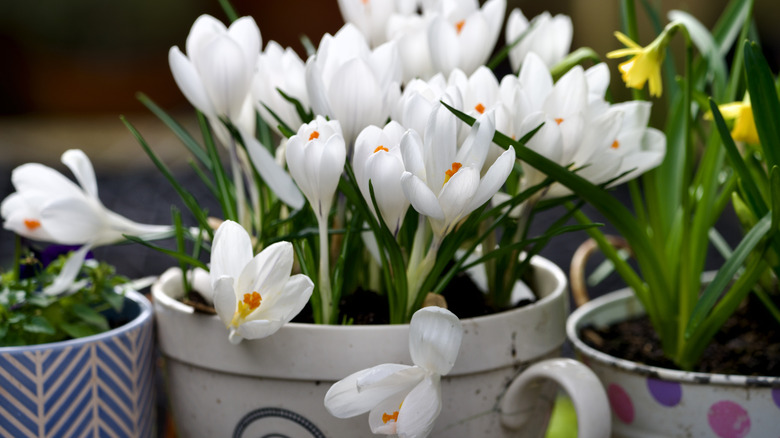
Crocus (Crocus spp.) are low-growing plants; their small stature is exactly what you need if you're growing bulbs in containers in Zones 3 to 8. Crocus are spring (hardy) bulbs that are ideal for pots because they don't require much depth or space at all. Provide your crocus bulbs with a mix of full sun, some shade, and climatic conditions on the cooler side. Maybe throw in a few kind words, too — they can be a little fickle until established. Normally, however, whatever crocus species or cultivar you've chosen to grow will reward you with continuous color season after season.
Begonias
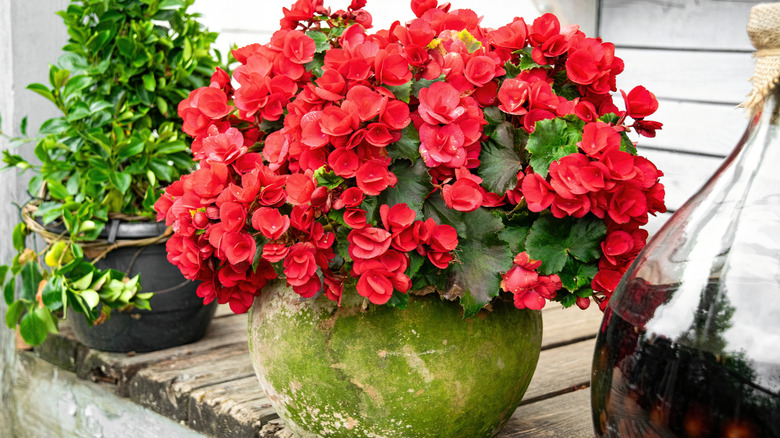
Begonias (Begonia spp.) are the kind of plant that makes you look like you know what you're doing. They are technically tubers rather than bulbs, but they are often broadly grouped with the latter. The waxy leaves give begonias a tropical vibe, and their layered blooms spill dramatically over the edge of containers. These plants survive year-round in Zones 10 to 11, and should be planted in pots with excellent drainage and fertile soil. Pop them in a spot on your porch or patio with shade or partial sun, and your begonias will reward you for years to come.
Irises
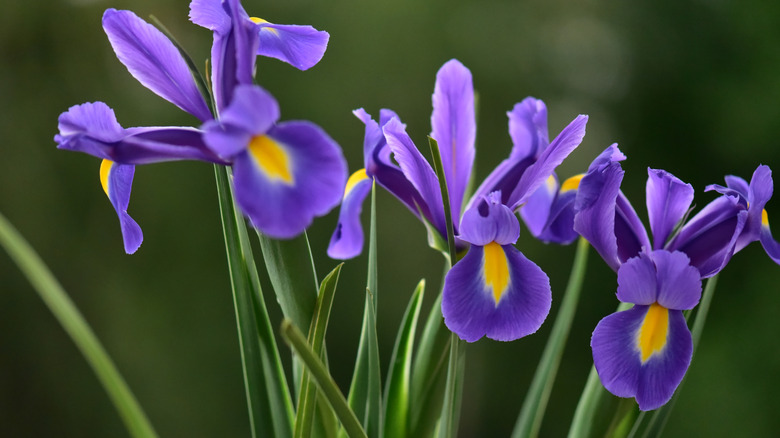
Irises (Iris spp.) bring an architectural feel to any planter with little extra work required. These pretty blooming bulbs thrive in a variety of climates in the lower 48 — surviving year-round in Zones 5 to 9. Once established, irises are highly resilient, require minimal attention, and will return for years. They do, however, need regular fertilizer when grown in containers. As hardy bulbs, irises bloom in spring and summer, and make great companions for other spring bulbs.
Dahlias
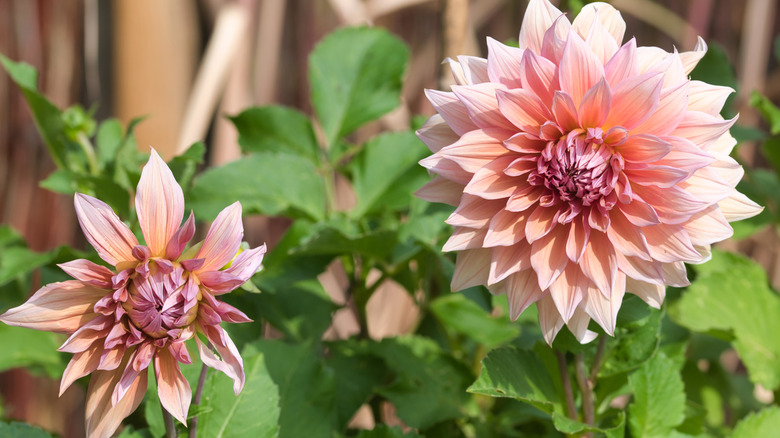
Dahlias (Dahlia spp.) aren't shy when it comes to showing off their bold-colored blooms. These tender or summer bulbs are another species with tuberous roots rather than traditional bulbs. Despite their dramatic appearance, they're not nearly as demanding of a gardener's time as you'd think, especially when grown in containers. Dahlias are hardy in Zones 7 to 10, and they prefer a bit of elbow room between tubers. Give them plenty of sunlight, regular watering, and possibly a stake or cage, and they'll continue to bloom well for you throughout the growing season.
Hyacinths
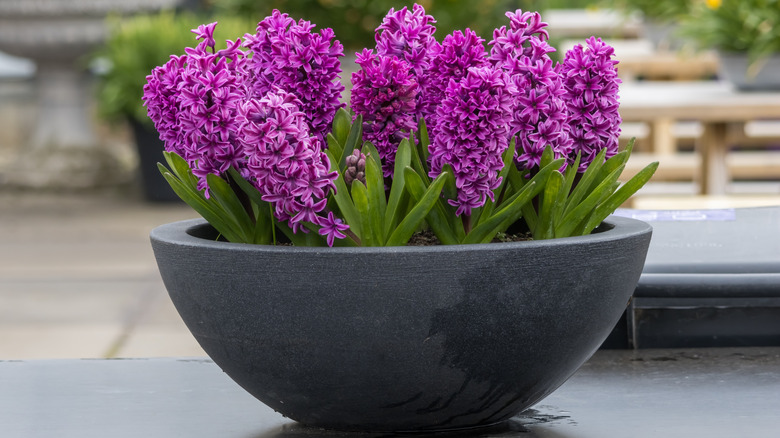
Hyacinths (Hyacinthus spp.) are all about high impact with minimal effort. They grow best in cooler climates — Zones 4 to 8 — and form clustered blooms that release a sweet floral scent. Hyacinth bulbs are spring bulbs that are relatively easy to manage in pots, as long as you give them plenty of sunlight and water (until they die back). Hyacinths come in an array of colors, from pastels to jewel tones. No matter which hue you choose, they are one bulb that won't add extra work to your busy schedule.
Windflowers
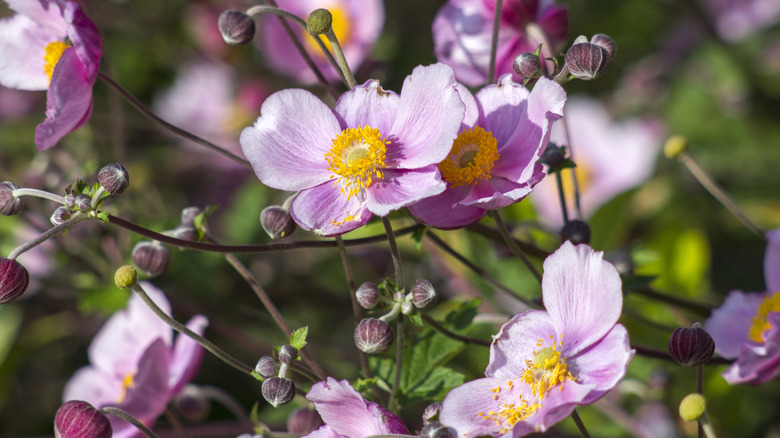
Do you want a potted plant with blooms that pop in early summer? Windflower (Anemone spp.) bulbs offer a balance between prettiness and dependable growth. Thankfully, the cute, daisy-like flowers and spindly stems are way tougher than they look. Hardy in Zones 4 to 9, these native bulbs will fill gaps in planters and add a rainbow of colors to your outdoor space — without ever looking over-the-top or being too high-maintenance. Windflowers can grow up to 4 feet tall, are deer-resistant, and attract pollinators.
Freesias
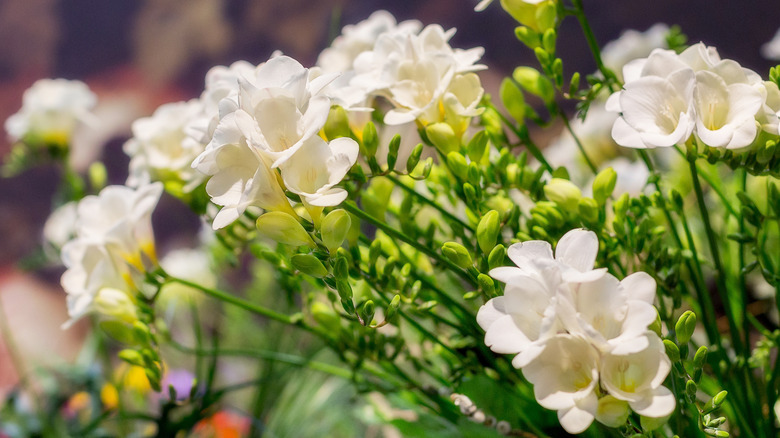
Freesia (Freesia spp.) flowers aren't as showy as some plants, but their understated beauty gives them an effortless feel. Blossoms have clusters of tiny, funnel-shaped petals with a light, sweet fragrance that doesn't overpower the senses. Freesias thrive in warmer zones (9 and higher) and prefer six hours of sunlight a day — making partial shade sites an option. These summer-blooming bulbs should be kept at 77 to 86 degrees until you're ready to plant them.
Gladiolas
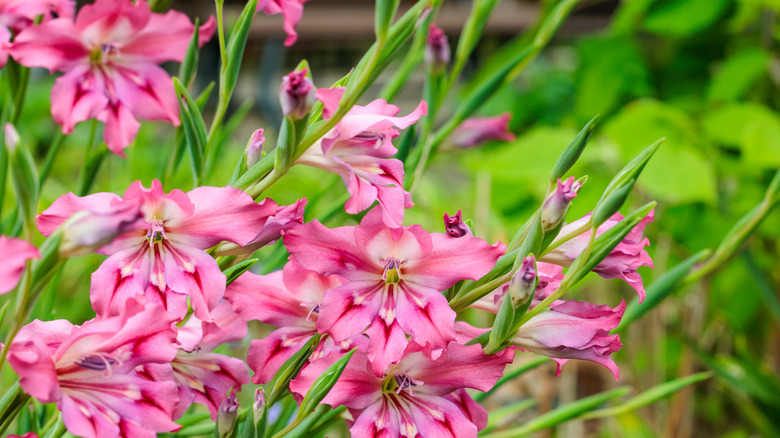
Gladiolas (Gladiolus spp.) bring vertical height and structure to containers and are one of the perennial bulbs to plant in spring for beautiful summer blooms. Though they're often referred to as bulbs, the low-maintenance, super-pretty flowering plants actually sprout from corms. Gladiolas prefer container gardens in Zones 7 to 10, so wait to plant the corms until after the last spring frost. You have to support taller species and cultivars with stakes, so dwarf varieties may be more manageable for pots.