

11 Best Flowers To Start Planting In Pots In April
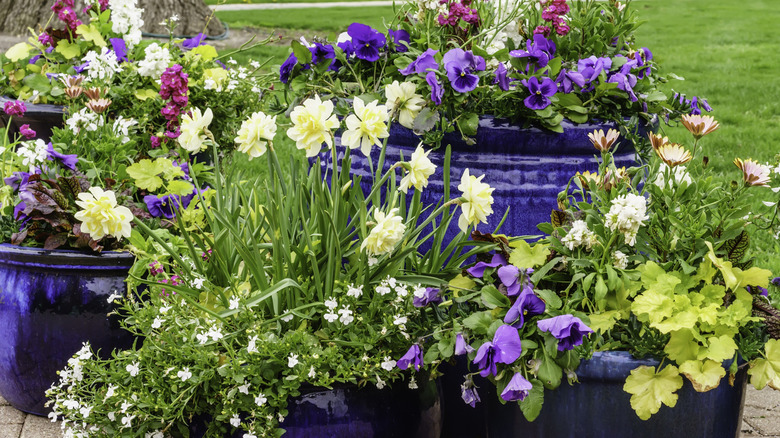
Container garden designing is one of my favorite activities as a professional gardener (and here you thought it was raking leaves! Well, I enjoy that, too). In the spring, the selection of annuals and perennials at nurseries is smaller than in the summer months, but you can still find plenty of gorgeous plants to get your containers going in April. The plants listed here are all ones I've grown many times, and they provide a glorious range of color and texture for your spring pots.
Spring flowers for containers are usually suitable for cooler temperatures, and some of them may not tolerate high temperatures or a lot of bright afternoon sun. This doesn't mean they won't thrive in summer, but you may need to move containers to a spot with morning sun instead of afternoon sun, and water them well in the morning to bolster them against the heat. Pro tip: Some annuals in garden shops look droopy from lack of water and get marked down for quick sale, when all they need is water and maybe deadheading. In my line of work, I am always on the lookout for plant bargains.
Some of the plants recommended here will keep blooming through the season if you deadhead them regularly (like lobelia, geraniums, dianthus, and blanket flowers). Some only bloom through the spring season (like pansies and columbines), but you can trim the spent flowers and enjoy the foliage the rest of the season.
Pansies
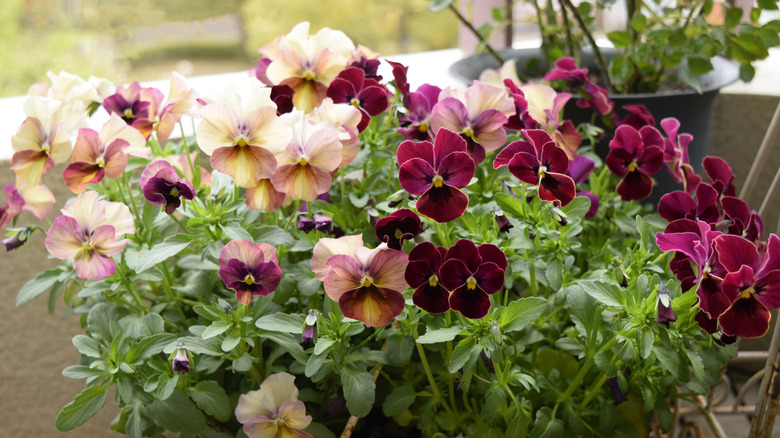
Pansies (aka violas) are a popular choice for spring containers because they tolerate cooler temperatures and are one of the first flowering annuals available in nurseries. There are several varieties, all with distinctive multi-colored petals. The larger variety (Viola x wittrockiana) has flowers 3-4 inches across in a wide range of colors. The smaller 'Johnny Jump Up' cultivar (Viola cornuta or Viola tricolor) may reseed in the garden and is hardy in Zones 4-9. Heavy rains can cause the petals to droop, so if your spring is rainy, consider putting them where they won't get soaked.
Geraniums
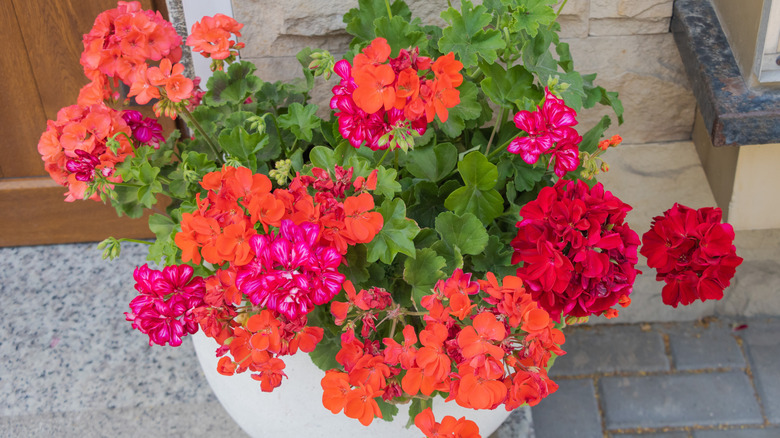
Not to be confused with perennial cranesbill geraniums, annual geraniums (Pelargonium) hail from warm regions and are more commonly grown in containers or as house plants. They like a good amount of sun and regular water. Deadheading helps keep the blooms coming all season: just gently snip off the spent flowers. There's a huge selection of colors available, from pastels to jewel tones. I love the 'Martha Washington' cultivars (Pelargonium domesticum), which come in many rich bicolors.
Dianthus
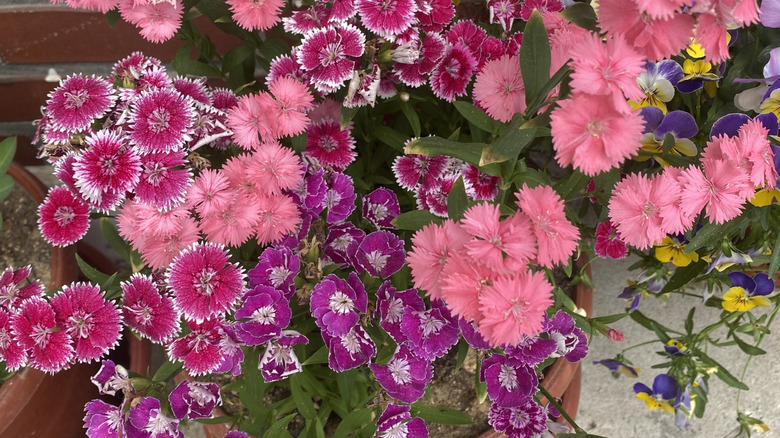
There's a few kinds of perennial dianthus (aka pinks or carnations) out there. In spring, your local garden center will sell Dianthus chinensis (also called Chinese pinks or rainbow pinks) in six-packs or small pots as annuals. Ah, but did you know they make great short-lived perennials (hardy in USDA Zones 6a-9b), in containers or the garden? Shear back spent flowers to encourage fresh blooms. In the second year the flowers will double in number, and they'll come back for 2-3 more years. The color range is huge, including white, pink, crimson, magenta, and lovely bicolors.
Sweet alyssum
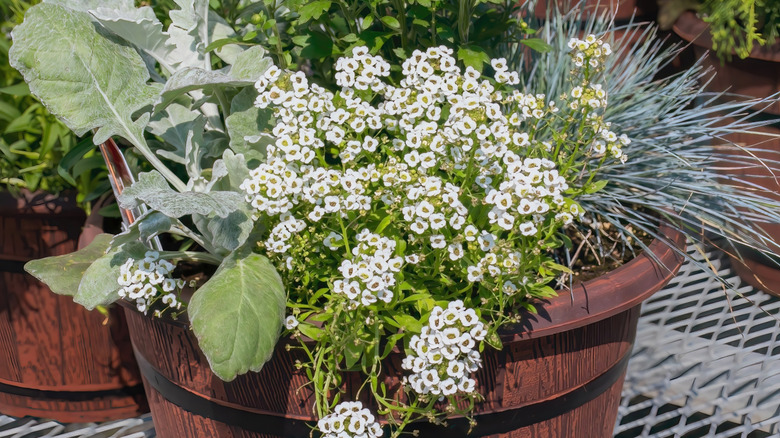
Sweet alyssum (Lobularia maritima) is a great annual plant for containers, with its cascading habit and sweet fragrance. It also attracts butterflies! The white variety is good for adding brightness and contrast, but there are other colors available, including pale pink, rose pink, lavender, and rich purple. Shear off the spent flowers and it will bloom again. Sometimes sweet alyssum will reseed in sunny spots, though normally as a perennial it's only cold-hardy in Zones 9-11.
Blanket flowers
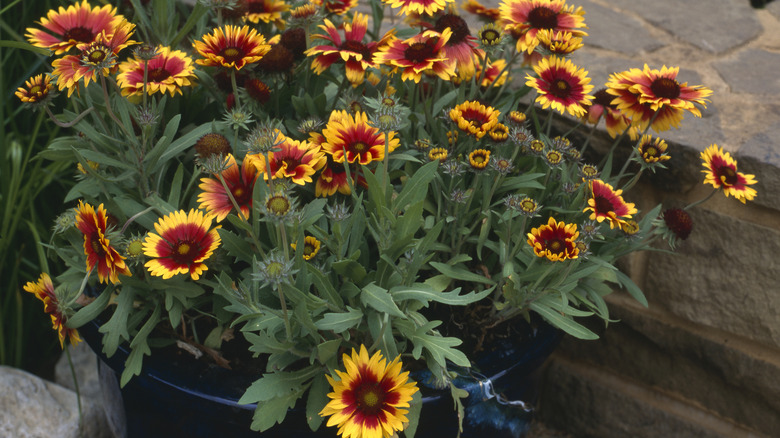
Blanket flowers (Gaillardia) are sprightly, daisy-like flowers in bright, fiery colors. They come in both solid colors and bicolors, mostly orange, peach, red, and yellow. I love 'Arizona Apricot' (Gaillardia x grandiflora 'Arizona Apricot'), which is yellow with peachy-orange centers. They love plenty of sun, attract pollinators, and are fairly low-maintenance in containers. They're hardy in USDA Zones 2-10, and very drought-tolerant once established. Transplant them to a sunny spot in the garden in the fall, and they'll become a reliable perennial bloomer every year.
Creeping phlox
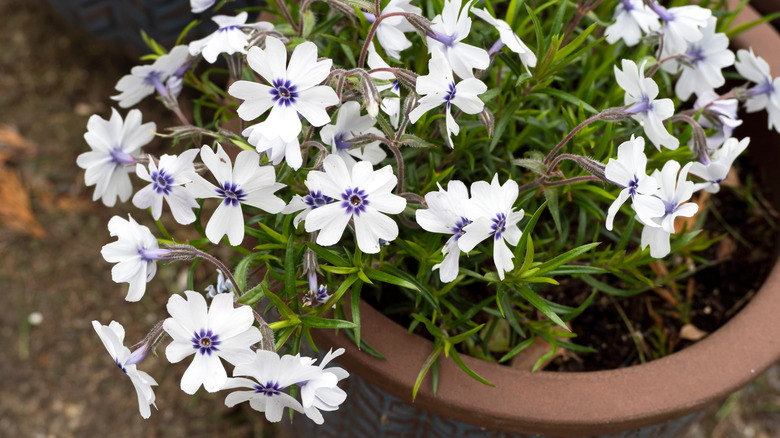
Creeping phlox (Phlox sublata) are popular for slopes and rock gardens, but they make great container plants, also. They will cascade over the sides of the pot for a nice "spiller" effect. Pop them in with your container annuals, then transplant to your garden beds at the end of the season; they're hardy in USDA Zones 3-9. They like frequent trimming to eliminate dried or leggy foliage, and these tough, sun-loving perennials can handle poor soils, too. They come in a range of solid hues and bicolors of pink, white, crimson, pale blue, and lavender.
Scabiosa
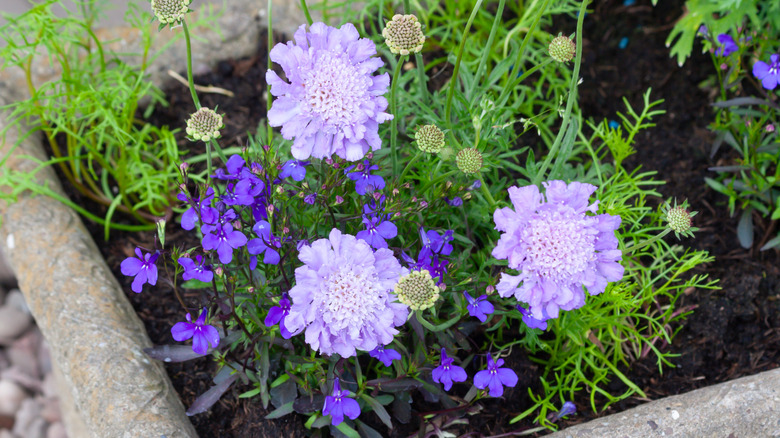
Also known as pincushion flower, scabiosa is a pretty perennial with delicate-looking but sturdy blooms on feathery foliage. Pollinators love these, and their long-lasting blooms make them a great addition to containers as a taller featured flower (20-30 inches). You can grow them from seed or get plants at nurseries; they're hardy in USDA Zones 3-7. I love the blues and lavenders, but there are some other lovely colors not seen as often, 'Salmon Queen' (rose pink), 'Fata Morgana' (pale apricot and cream), and 'Fire King' (deep crimson red).
Coral bells
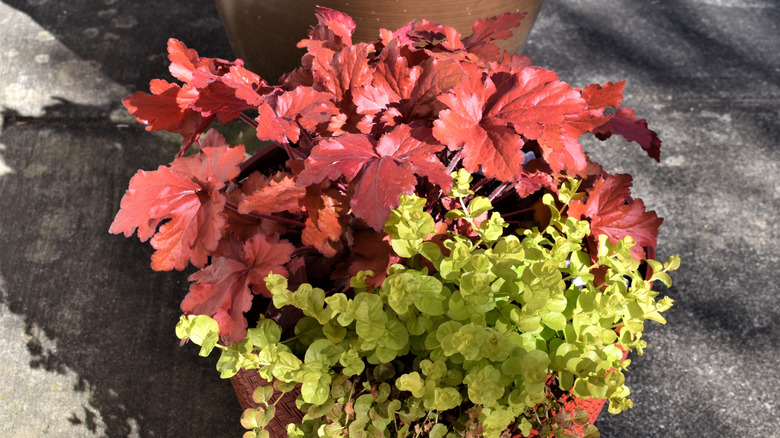
Coral bells (Heuchera) are robust perennials (hardy in USDA Zones 4-9) that thrive in partial shade to partial sun. Heirloom varieties have pink flowers (tiny, delicate blooms on tall, slender stems), which is the origin of their common name. Newer hybrids are all about colorful foliage, though some also have showy flowers. I've had good luck overwintering them in containers with good drainage; plant so the crown is slightly above the soil surface. There are many striking varieties of coral bells in a rainbow of foliage colors with different leaf shapes (rounded, grape leaf, scalloped, etc.)
Woodland phlox
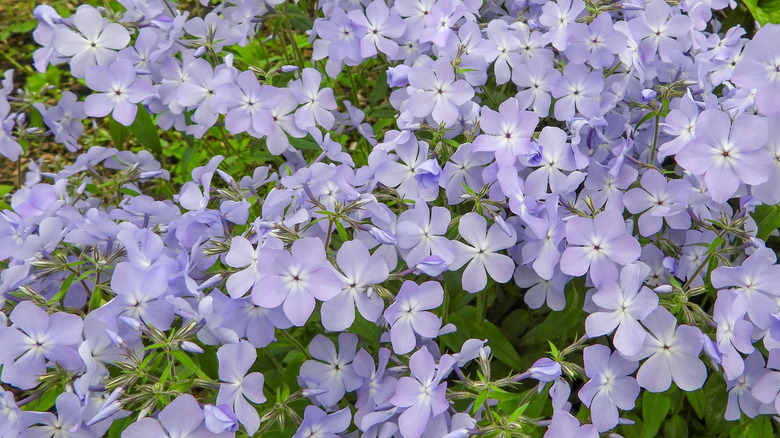
Woodland phlox (Phlox divaricata) is a great spring-blooming perennial, hardy in USDA Zones 3-8, that does well in containers. The colors range from white to pale blue to medium purple, and one newer hybrid bicolor ('Chattahoochee') with lavender flowers and a dark purple eye. The increase in size each year and are easily divided in the fall to add more beauty to your garden beds. They bloom fine in shade, and are happy in partial to full sun, too. They start blooming around May and usually flower for at least a month.
Columbines
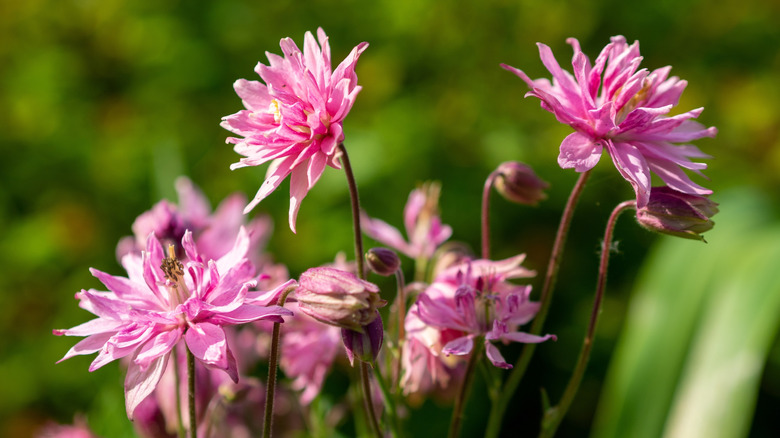
Columbines (Aquilegia) are lovely shade-loving perennials that provide weeks of color in mid to late spring. They reseed readily in the garden, often hybridizing to produce new color combinations (discovering new ones brings me joy). The forms vary from trumpet shapes in a rainbow of colors with single or layered outer petals, to the spiky petals of 'Nora Barlow' columbines in pink, white, dark purple, and crimson. Pollinators love them. In containers, partial shade to partial sun and well-draining soil provide perfect growing conditions for columbines. Trim spent blooms and enjoy the lush foliage all season.
Lobelia
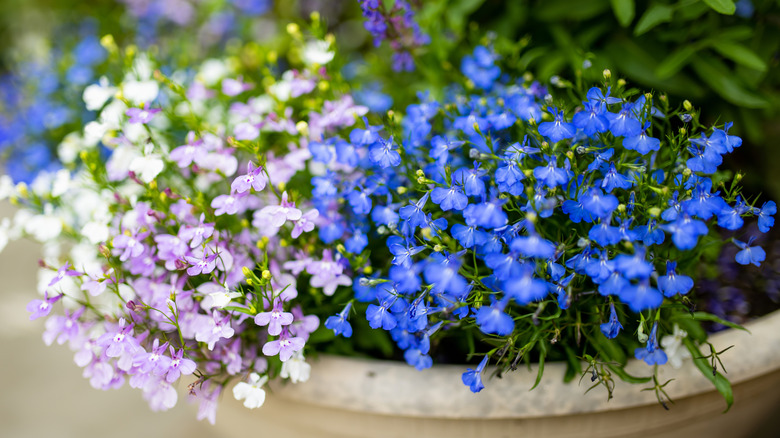
Annual lobelia (Lobelia erinus) is a perfect filler or spiller for containers, with its feathery foliage and delicate, airy cascades of tiny flowers. They come in shades of blue, pink, purple, and white. Give them partial sun, well-draining soil, and regular water to keep them happy. Shear off the spent blooms gently, and they'll form a new round of flower buds. Plant more than one variety so you can have some blooming while waiting for new buds on the others.