

13 Ways To Give An Old-World Feeling To Your Garden
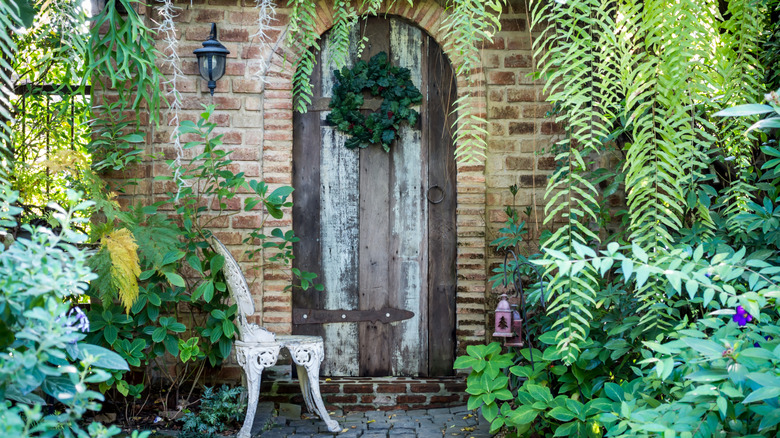
As a master gardener and history geek, I love the wild, slightly feral, romantic look of an old-world garden, and have gotten my hands dirty in more than one. I helped work on the medieval herb garden restoration at Castle Acre Priory. I also volunteer at the Houghton Hall formal gardens and for the National Trust and English Heritage as part of their garden restoration and maintenance task forces — so I get to work on some fantastic old-world projects. And, naturally, I've been cultivating my own old-world garden, which has evolved into a mix of Gothic with a touch of medieval and a traditional English kitchen garden.
There's something magical in creating a feeling that you've stepped back in time, even in a modern, urban space. An old-world garden is less about making everything look artificially old and more about combining the right structure, materials, and planting style so the space feels like it has evolved slowly over time. This is especially important to me as a permaculture specialist, as it leans into a lot of the key principles of working with nature instead of fighting her. I strongly recommend avoiding trying to make everything look falsely antique. It's too obvious and ends up looking tacky and fake. You're better off encouraging faster natural weathering and using plants and reclaimed materials to get that slightly mysterious, intimate old-world feel. Here are some of the secrets to channeling an authentic old-world ambiance through the right plants, features, materials, and more.
Create a sense of enclosure with walls, hedges, or gates
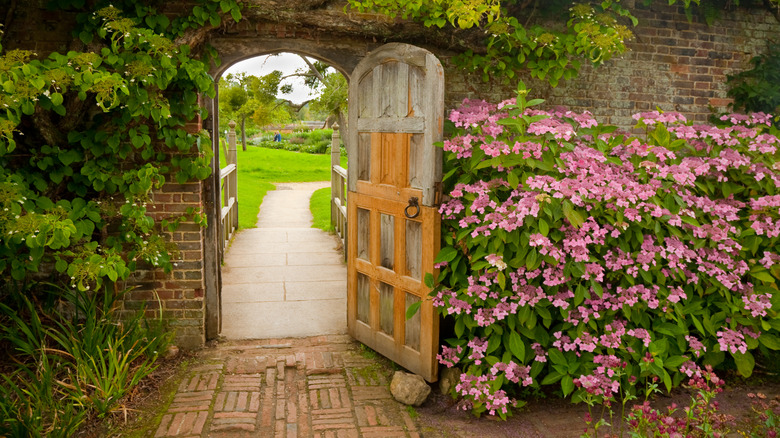
Old-world yards often have that 'Secret Garden' energy. These spaces tend to feel aged and more atmospheric, hidden away from the wider world. Historic gardens invariably feel the same, as if they're tucked away, providing safety and sanctuary from the pressures and stresses of the everyday. And part of that magic is achieved by creating a feeling of enclosure. Even if you can't fully enclose your whole yard, I'd encourage you to create a cozy corner, at least. It gives your garden its own identity, transforming it from a barren, bare patch of grass that's the same as everyone else's into something special and unique.
You don't need towering masonry, although growing lush green climbers vertically up a brick wall definitely helps with the 'Secret Garden' effect. But a clipped hedge, a brick boundary, a trellis, a living screen, and a wooden gate can really transform a bland urban space remarkably quickly. Crossing that threshold, whether through a gate or a visual boundary, helps evoke that feeling of being transported back in time, or into your personal sanctuary.
Choose gravel, old brick, or irregular stone for paths
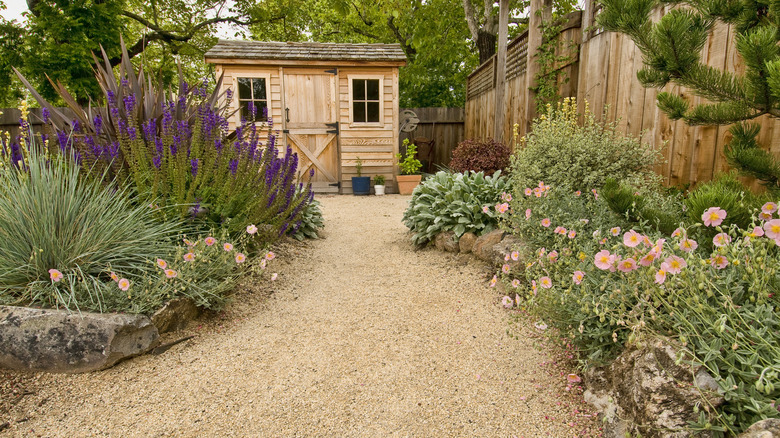
People don't realize just how much a pathway, its shape, and what it's made from impact the overall look of a garden. When you're going for an old-world look, you want to avoid crisp, contemporary paving slabs all precisely uniform — and all that trendy plain gray color. You don't want an overly engineered effect. You're going for something that looks almost like it was already there and you just built the garden around it, or a path that has been meandering through the space for centuries.
Gravel is a nice, budget-friendly choice that's even more affordable because it's easy to install, too. However, gravel paths aren't the best for moving a wheelbarrow across or for pushchairs, mobility aids, and so on. It's also not the safest option for people who may be unsteady on their feet or need a cane or crutches. Therefore, think carefully about gravel if you have any concerns about accessibility now or in the future. In my personal garden, I went with reclaimed natural stone slabs in all different shapes, sizes, and colors. It was surprisingly affordable because I wasn't at all fussy about uniformity. Laid well, stone lasts an incredibly long time, and even hundreds of years of walking across it will barely cause any wear. I also like natural, rough stone or reclaimed brick because it's safer and more accessible for everyone, including me and my wheelbarrow. The imperfections, lack of order, and the uneven shapes and edges as the path wanders through the garden, are ideal for creating a space that feels like it comes from another era.
Add a low stone wall or raised border edge
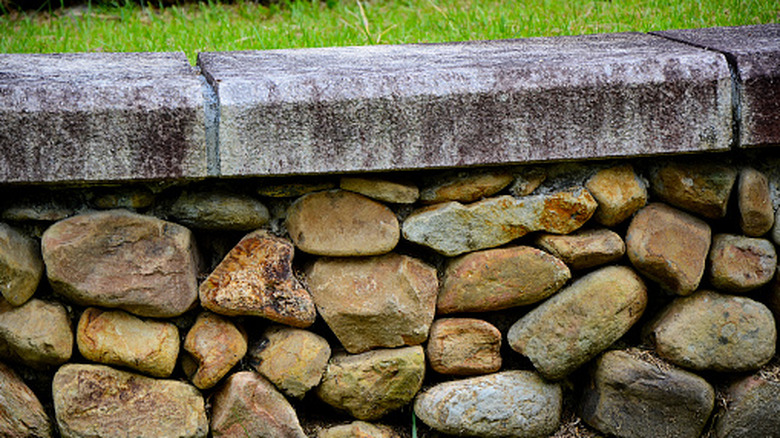
Stone is timeless. It brings a feeling of permanence. And, if you avoid super-modern, totally uniform, carefully engineered stone, you can use rock to help your garden feel like a piece of old-world history. I built a large herb spiral using old stone of all kinds. I even lucked into finding a huge piece of rose quartz and was gifted a few other interesting and colorful stones that I added to the spiral. The whole thing is beautiful, rustic, and perfectly imperfect. It's also super practical. The stone keeps the soil and the plants where they belong and doesn't require any maintenance.
You can create a low bed or border edge with old stone easily and inexpensively. Yes, the stones are heavy and take a bit of time and manual labor to get in position, but there the maintenance ends. Let nature do her thing and weather them gradually. Let moss and lichen grow over them. Let time make the rocks start to look like an integral part of the garden. And, if you're gardening on a slope, think about terracing with a dry stone wall. If you go with a wall, age it pretty much right away by filling the top pockets with soil and planting with things like creeping thyme, alyssum, or campanula that will quickly grow and spill over the side. This softens the visual impact of the wall and makes it look like it's been there for years. And if you're keen to try out a spiral design, here's a guide on how to DIY a spiral herb garden with landscaping rocks.
Let climbing plants cover arches, pergolas, and walls
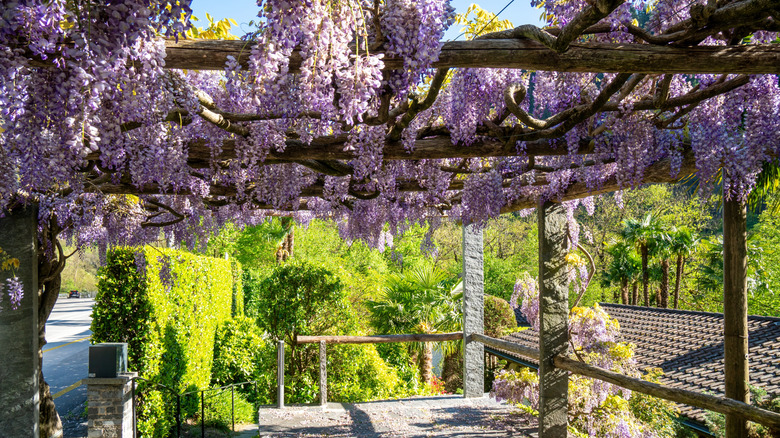
Few things create the drama and romance of an old-world garden faster than at least one garden structure that's been partially claimed by plants. Arches wrapped in climbing roses is a romantic fairytale classic. But a pergola adorned with native wisteria or a wall softened with a gorgeous, mature clematis also brings that classical feel. Climbing plants make use of vertical space and add lushness, texture, and soft structure that people associate with old gardens.
Whatever climbing plants you choose, make sure the structure you anchor them on is really solid and up to the job. Remember, those little spindly plants you get from the nursery are going to grow. They'll get big and really heavy. And some are also pretty destructive in the way their roots anchor in and grab onto any surface. So the structure needs to be able to cope with that and support the constant weight of the fully mature plant. I like wrought iron, as it's unlikely to collapse, but strong timber is also an option.
Plant old garden roses instead of overly modern varieties
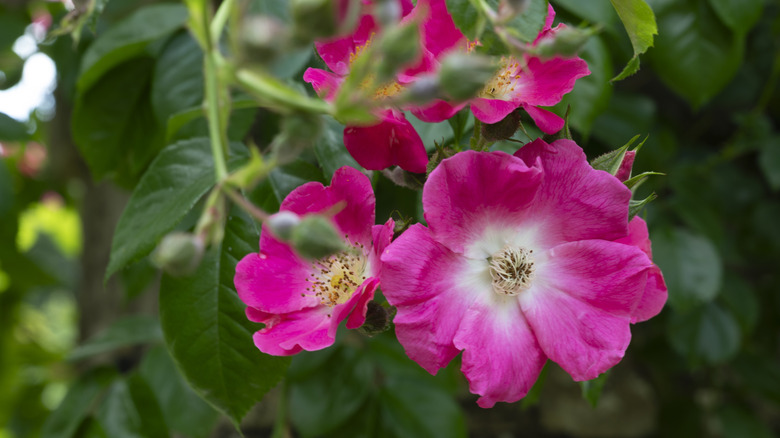
When you're aiming for an old-world feel and you want roses, go with the classics. Roses are quintessential old-magic-garden mainstays. Modern varieties are lovely in their own right, but they don't quite fit the old-school or cottage garden spirit. Contemporary cultivars tend to have big, showy blooms, vivid colors, and again, a lot of uniformity. They've been bred for very specific characteristics, and there's nothing wrong with that. But in an old-world garden, you want classical roses that tend to be a little wilder, with less conformity, softer, sometimes smaller blooms, and headier, distinctive scents.
Gallicas, damasks, albas, and centifolias are all great choices for shrub roses. Then there's rambling roses, with historic cultivars including 'Adélaïde d'Orléans', 'Félicité-Perpétue', 'American Pillar', and 'Rambling Rector', which are ideal for training up walls and over structures. These old varieties usually only have one flush of blooms in a season, but you can layer different varieties that bloom at different times, to extend the blooming season, and pair the roses with other flowering plants.
Fill borders with heirloom cottage flowers
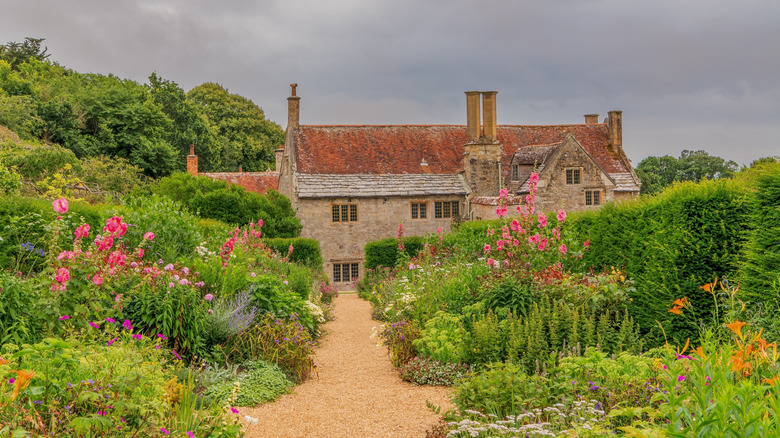
An old-world garden is layered, lush, and interesting, and it's filled with color and structure year-round. It's slightly chaotic and bursting with life and energy in a pleasing, natural way. And that's where your planting choices come in. Hardscaping only gets you so far. For a real old-world garden feel, you need classic cottage garden flowers that thrive in your area. I strongly recommend using native or naturalized species as they'll require less maintenance and fuss, and will better support the local pollinators and other wildlife. To fill borders with color and interest, mix them in with classic garden favorites like hollyhocks, foxgloves, delphiniums, peonies, mums, and sweet peas, combined with soft low-growers like lobelia or phlox.
Don't try to control these flowers too much. The whole point of an old-world garden is that it runs slightly rampant without too much interference from you. This is my kind of garden. Practical, sensory, and unrestrained. There is so much life and beauty in these gardens. Let things tumble over bed edges. Plant wildflower mixes that feed pollinators and need no maintenance. Break away from the hard lines, symmetry, repeating patterns, and monoculture trends of recent years. Work with nature. Accept you'll have some self-seeding and spreading, and only remove and cut things back when you really need to.
Add evergreen structure to give the garden bones
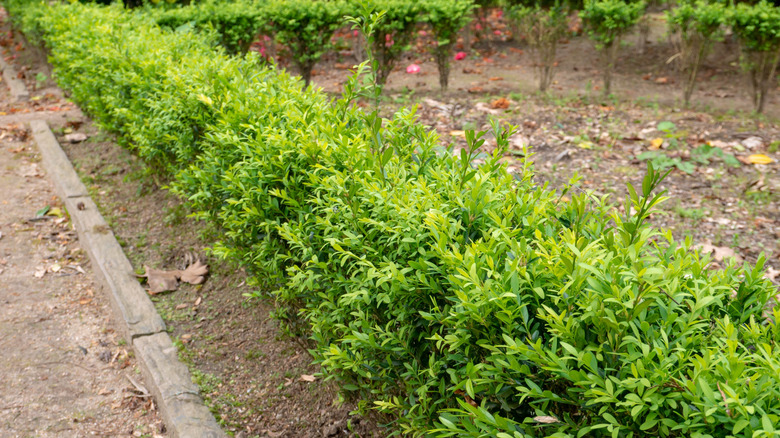
I let as much of the garden be in its natural state as possible, but to keep things steady and interesting year-round, evergreens are the way to go. They provide structure and habitat all year. Plus, they act as wind breaks, can be used to define your old-world space, and can act as privacy screens, too. While there are many tall, dense evergreen trees to choose from, you can also mix things up by reserving those for hedging or screening, and using more interesting evergreen shrubs, like mahonia, boxwood, or juniper.
Evergreens provide visual anchors and give your eyes somewhere to rest. They help stop a slightly chaotic garden from feeling messy and loose. I'm a big fan of using reasonably small evergreen shrubs in mixed borders, as it helps the space look more mature and established, and provides essential structure.
Choose terracotta, stone, or lead-look containers
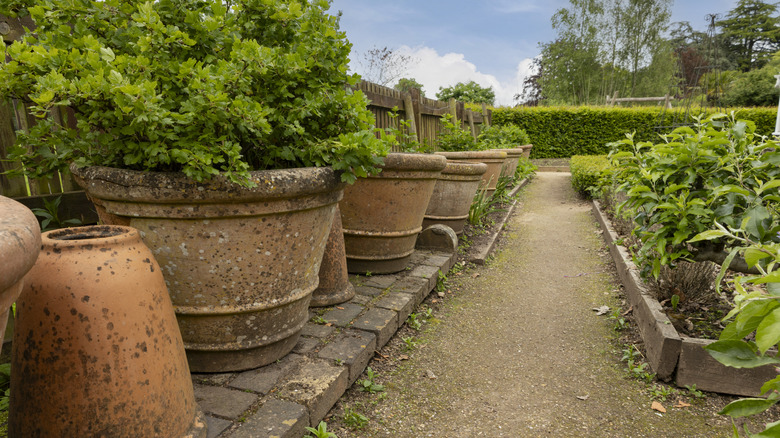
If you're incorporating containers in your old-world-style garden, whatever you do, avoid plastic. Even the terracotta lookalikes don't actually look like terracotta if they're made from plastic, and they won't weather the same, either. Go with real terracotta pots for your plants. You can also get some stone pots with a lead-effect finish. These materials have a weighty look to them and a permanence. They last a really long time, don't go brittle like plastic, and they develop a lovely patina as they age.
I'd also suggest avoiding fiberglass, bright glazes, metallic-effect finishes, and other lightweight, ultra-modern containers. You don't have to spend a fortune or buy new, either. These kinds of pots turn up for free in buy-nothing groups or as curb finds. You'll also find them super-cheap at thrift stores and yard sales. The other bonus of buying them secondhand is that they already likely have moss, wear, and weathering — instantly making your garden feel like it's got a bit of history to it.
Mix herbs, flowers, and edible plants together
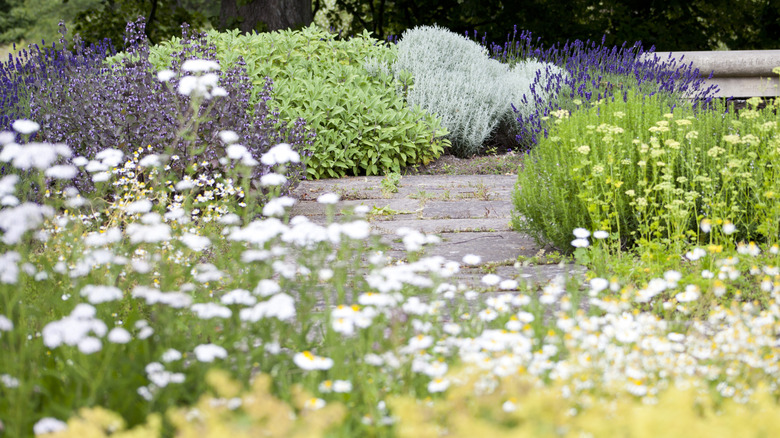
Permaculture is my specialty, so mixing ornamentals and edibles in the same space is second nature for me. And it used to be the norm. Many people had one space where they'd grow their food and their flowers out of necessity and practicality. Some of the ways companion planting can benefit your garden are through helping with pest control, soil health, pollination, and disease resistance. Plus it increases biodiversity. And your fruit and veggies can be pretty as well as tasty. A wall of climbing beans, for example, is a sight to behold when they flower. Herbs also produce lots of small, pretty flowers, and some, like rosemary, are evergreen. Then there are edible flowers. I use nasturtiums as trap crops for aphids to get them away from my squashes, roses, and a few other at-risk plants, and I also love to eat the flowers. They are peppery and spicy and really brighten up a salad. Plus, nasturtiums love flowing over bed edges, perfect for creating the slightly undone feel of an old-world garden.
As long as you know what you're growing, because you don't want to accidentally eat something bad for you, it's a really great idea to mix practical food plants in with your ornamentals. Marigolds are excellent companion plants, whatever you're growing, as they attract predatory insects like ladybugs, lacewings, and predatory wasps that eat pests like aphids. They also repel certain pests. And their roots release a compound in the soil that fights root knot nematodes. Lavender, sage, thyme, chives, and flowering oregano all fit well in an old-world garden and provide you with scent, fresh herbs, and pretty flowers, as well as interesting foliage. And don't be afraid to add fruit and nut trees and fruit bushes, too. They give free food, varied height plantings, and habitat and food for wildlife. You'll end up with a beautiful, productive, cottage-garden-meets-kitchen-garden space.
Train a fruit tree flat against a wall or fence
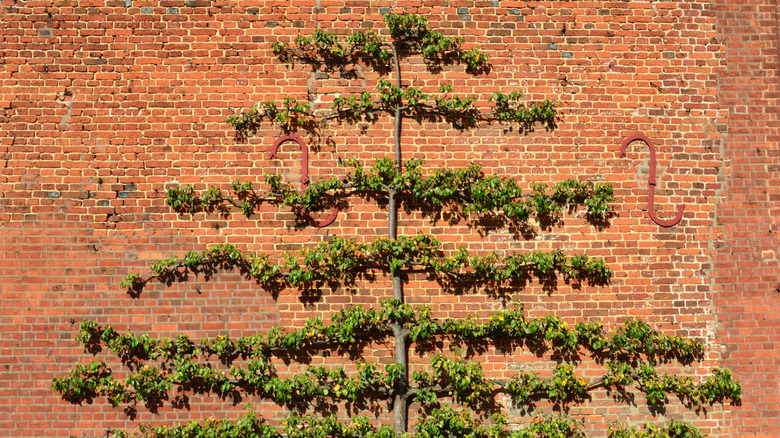
Espaliered fruit trees anchored on a wall add beauty when they blossom, make use of vertical space, give you free food every year, and have a definite old-school look. To espalier a tree, you essentially train its branches to grow vertically along wires. You can also limit its height. It becomes an interesting garden feature because of the shape it eventually makes. Plus, it makes the fruit very easy to pick and ensures there's ample air flow.
Apples and pears are some of the classic fruit trees to espalier. You can even buy young trees with the espalier technique already started, which is the easiest option if you are new to this practice. It's possible to make a deciduous screen with these, too, which is an interesting feature, especially once they leaf out and are full of blossom, then fruit.
Add a simple water feature with a timeless shape
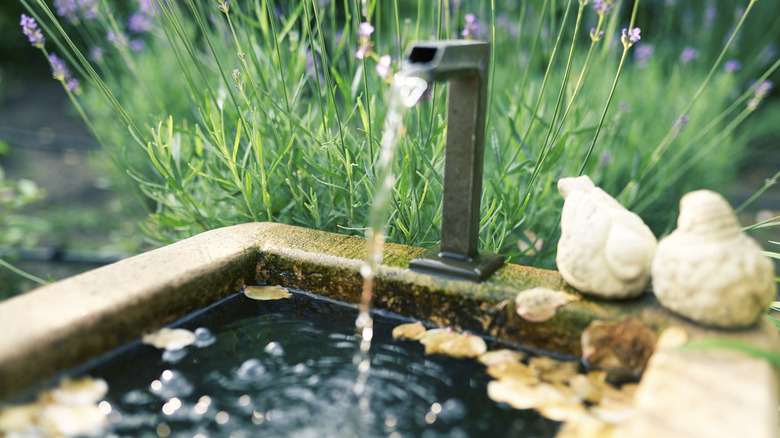
Water has a way of bringing calm and focus, and it's a key feature of many old-world-style gardens. You don't have to go for a grand marble fountain that's bigger than your kitchen. That's a little over the top unless you're creating a large, elegant, formal garden. You can keep it as simple as a stone bird bath if you really want, which supports wildlife while fitting into the wider theme of old English cottage gardens.
I have a wildlife pond with a small fountain pump creating a waterfall that gently cascades over a craggy stack of slate back into the pond. It really looks very natural and gives me a little corner of extra tranquility. Plus, of course, it supports all manner of birds, mammals, and insect life. One end is shallower than the other, so creatures can easily escape if they fall in. And the shallow end also has a collection of large, flat pebbles where insects can sit to safely drink without getting submerged. Other options included a classical wall-mounted stone head fountain, or a standard pond full of fish. If you like a project and enjoy repurposing, you can even make a DIY yard fountain out of terracotta pots.
Use statuary and ornaments sparingly
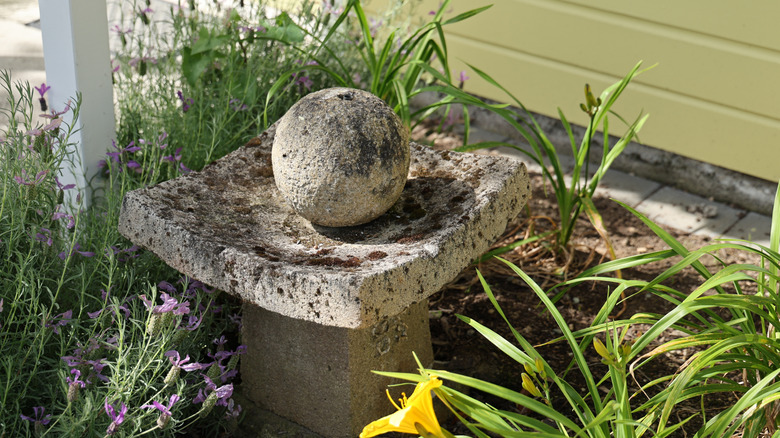
It's true that a few well-chosen garden ornaments can bring a classical or wonderfully whimsical, old-fashioned charm to your garden. I have a few dotted around that I've rescued from landfills or have been gifted over the years, and they really do add a little something special. But too many statues and stone features everywhere you turn looks cluttered and overwhelming.
Choose a few pieces that you like and that fit your space and overall theme. A modest sundial, for example, works well in most old-world gardens. Or, if you are a fan of whimsy, how about a cute frolicking puppy, a cheeky gnome or cherub, or something mystical, like a fairy or a dragon? I have a concrete dragon named Talluhlah and a puppy named Freya, who hide among the flowers at the edge of the patio. I like a little fun and whimsy in my garden. I also have a classical Green Man mounted on the wall, and a few other pieces scattered around the yard, including a random, fairly weathered but fearsome knight resting on his sword, guarding the entrance to the shed. He's called Jeremiah and he was another landfill save. You can often thrift these or pick them up for free locally. And at most, they'll need a bit of a clean, but actually, the weathering, moss, and patina fit beautifully with the old-world style. Ageing requires time and patience, so if you can skip that slow process with a ready-aged piece, I'd say, go for it.
Let plants soften edges
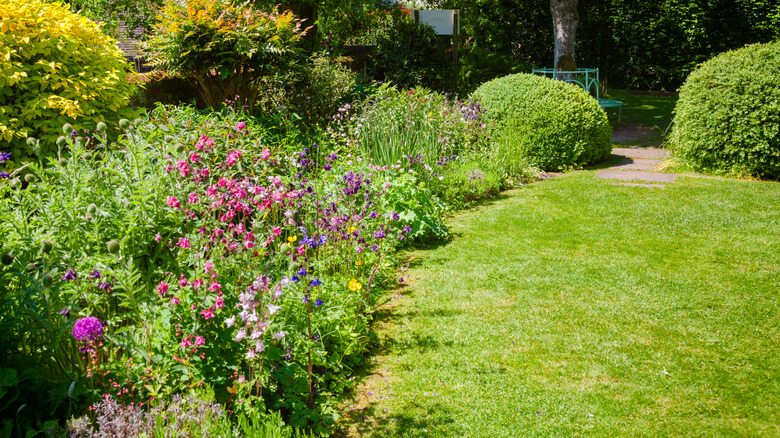
One of the things that makes an outdoor space feel old-worldy is the lack of hard edges. Contemporary design often calls for hard, very defined edges and stark, clean lines. Older, more traditional gardens have much less harsh definition. Edges are softer and a little blurred. Paths wind and meander instead of following rigidly straight lines. Plants and flowers hang out of beds and borders and may even spread a little onto the outer edges of pathways. They creep, spill, and tumble, softening the overall look as they do so.
Embrace it. I love to see the plants I've chosen slowly break free from the confines of their beds, filling up space and giving landscape borders a lush, natural look. This makes the garen feel established, lived in, and welcoming. Letting the plants run a little rampant gives your garden real character and reduces the amount of maintenance you need to do.