

The Cardinal-Attracting Shrub That Provides A Safe Canopy For Birds
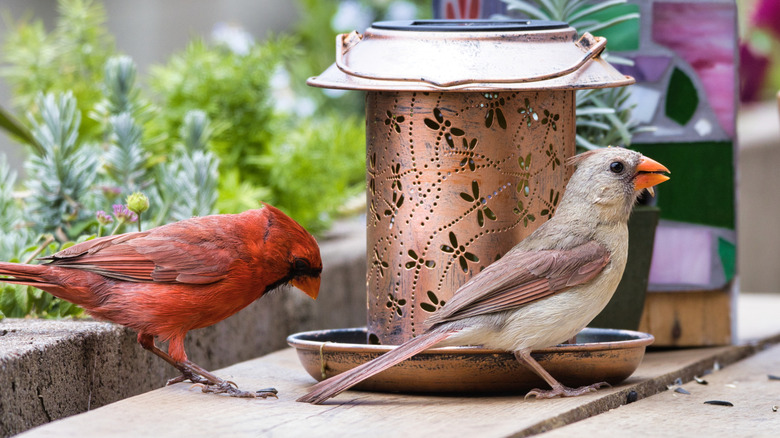
There's nothing quite like looking out your window and spotting a cardinal or two in action. From the male's bright red plumage to a pair's cute antics, such as courtship feeding, these little birds have a big personality and bring life to your backyard. While there are many ways to attract cardinals to your garden, there's an eye-catching shrub that pulls double-duty. Viburnums provide cardinals with food while also offering shelter for them and many other bird species.
Viburnum is a genus of flowering shrubs. While each species differs slightly, most viburnums bloom in mid to late spring before the flowers give way to berries that are eaten by songbirds, including cardinals, as well as gamebirds. Whether your shrub is in bloom or simply sporting its usual cloak of green foliage, your favorite backyard birds can use viburnum as a safe haven where they can rest their wings and hide from predators.
In other words, if your goal is to ditch the feeder, there's a better way to attract cardinals: planting viburnum. While these shrubs aren't maintenance-free, they definitely require less care once established than a bird feeder, with all that regular cleaning and refilling. However, even the most low-maintenance plants benefit from the right care, particularly if you want to create a habitat that cardinals and other birds can't help but flock to.
How to grow viburnums to attract more cardinals to your backyard
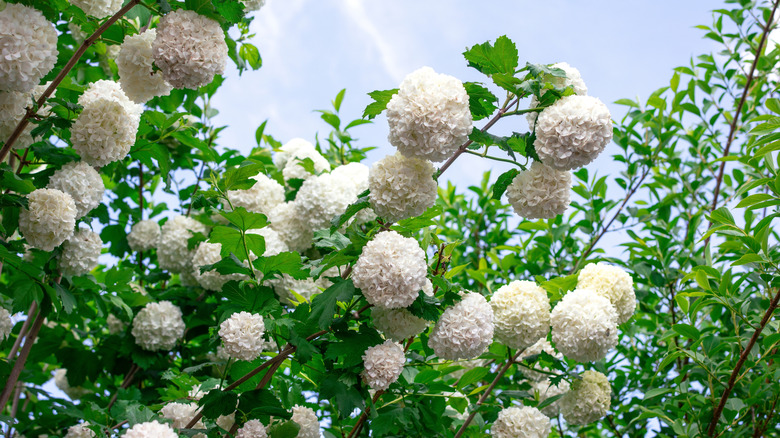
When you're growing viburnum to attract cardinals, one of the main factors to pay attention to is sunlight. It's a vital factor in producing the abundant berries and dense foliage that cardinals love. Just as with bloom times, how much sunlight each viburnum species needs can differ slightly. However, the sweet spot is somewhere between full sun and partial shade. Many species, like sweet viburnum (Viburnum odoratissimum), produce the most flowers and berries in full sun.
Aside from sunlight, all viburnums need soil that is rich, consistently moist, and well-drained. Once established, your shrub will survive without supplemental water in most regions within its wide growing range of Zones 2 to 10. However, if it hasn't rained for a while, you may need to water your shrub once a week to ensure it doesn't struggle. Prune your viburnum right after blooming finishes to ensure lots of flowers the following spring. Older shrubs benefit from the removal of dead wood to reduce stem breakage. Don't cut the canopy back too much or you risk reducing the shelter for cardinals and other birds.
Got the energy for a little more work? Companion planting will benefit your garden, your viburnum shrub, and visiting cardinals. Choose plants that attract birds by offering a dense canopy for nesting or sheltering, or by producing fruit or seeds that backyard birds can make a quick meal of. Just be sure to choose plants that thrive in similar growing conditions. Some of the best companions for viburnums include hostas, coral bells, black-eyed Susans, and cone flowers.