

23 Beautiful Flowers That Will Fill Your Yard With Songbirds
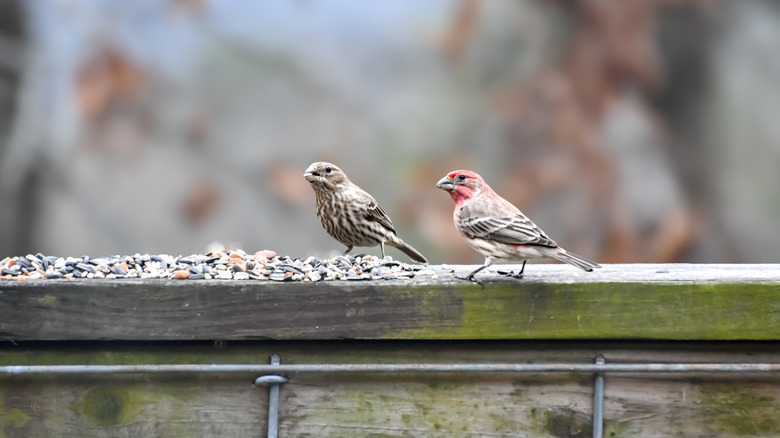
Landscaping doesn't just add aesthetically pleasing plants and built features to your property. It also has the power to attract amazing wildlife to your yard. However, you can't just throw together everything you think looks nice and hope for the best. To attract the right kind of wildlife, you should intentionally plan your garden layout. There are, for example, many foods and seeds that will attract a range of stunning birds to your yard. If you are looking to charm certain species, you'll need to get specific about the plants you grow.
Songbirds are great garden guests. They help maintain the health of your backyard ecosystem by controlling pests and pollinating flowers. Plus, they serenade you with beautiful tunes. These beneficial birds can be coaxed into your yard with the right plants. Flowers that bloom early in the season, like black-eyed Susans, marigolds, and daisies, attract tasty insects. Late-season bloomers, like asters, sunflowers, and coneflowers, provide a vital source of winter food in the form of seeds.
Not all flowers are perfect for every songbird. You'll want to incorporate a wide collection of species into your landscape that produce food, attract tasty insects, and make songbirds feel protected. Any flowering plant that attracts pollinators creates a bug buffet for your hungry feathered friends. Mix in some fall and winter flowering plants — and leave the seed heads intact — to provide a vital source of food for some of the songbirds that stay put during the coldest months of the year. They also add additional interest to your yard after summer flowers fade and provide birds with shelter from predators when everything else is bare.
Asters
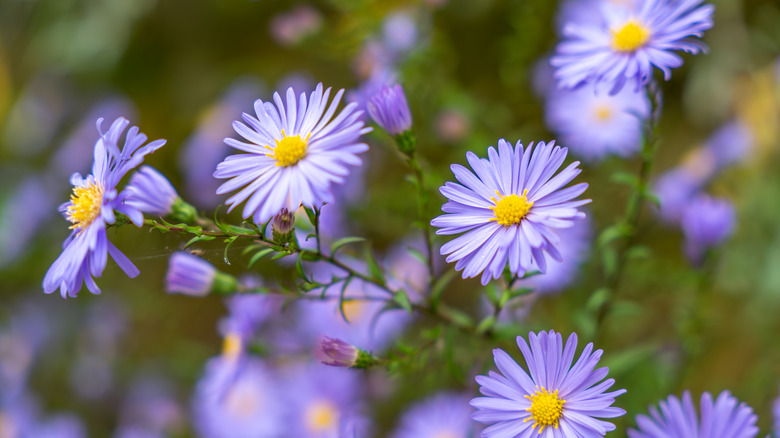
Finches love aster (Symphotrichum spp.) flowers. There are more than 100 species of asters that can grow as annuals or perennials in USDA Hardiness Zones 3 through 8. Small songbirds will feed on the seeds of aster flowers, especially late in the season and into the winter. They grow best in full sun and will tolerate a variety of soil conditions, as long as the soil is moist with good drainage. Asters are also very easy to care for. You could even plant this no-fuss flower near a birdbath for songbirds to enjoy.
Bearded beggarticks
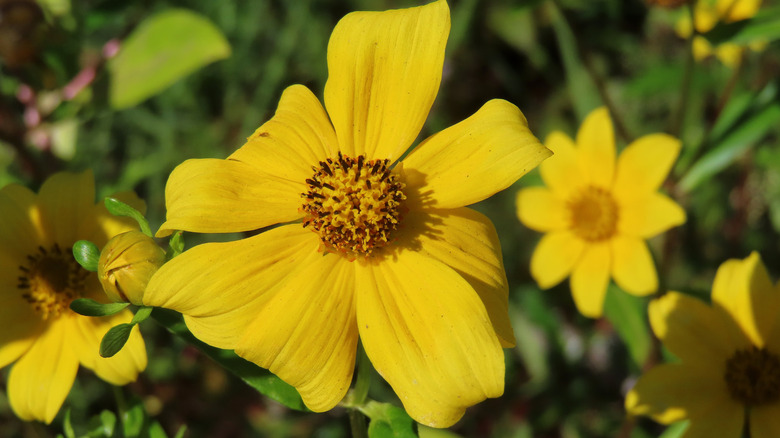
Bidens aristosa goes by many common names, including bearded beggarticks, tickseed sunflower, and swamp marigold. The plant grows between 2 and 4 feet tall and has yellow blossoms. This annual or biennial flower adds late-season interest to your yard, creating lots of impact with its height. Best of all, the seeds attract songbirds in the fall. This plant prefers neutral soil with a pH between 6 and 8 and full sun for best flowering, but otherwise isn't picky. Bearded beggarticks can tolerate shade and dry or wet soil, though it is best to provide it with good drainage.
Black-eyed Susan
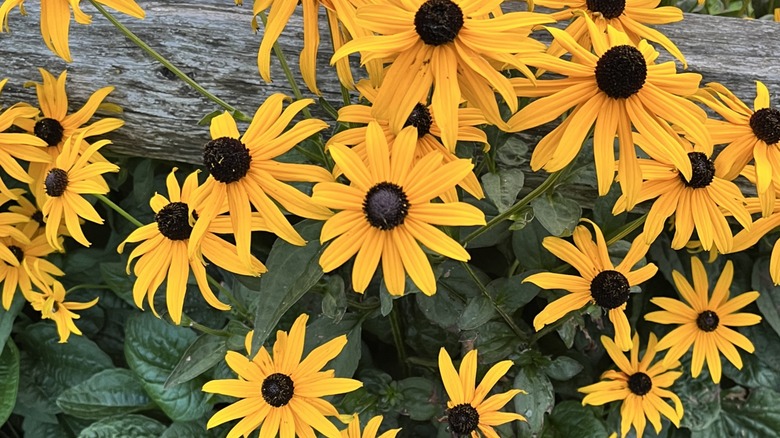
Many gardeners choose black-eyed Susan (Rudbeckia hirta) as a star flower in their landscape design because it has lots of benefits for your yard, including attracting songbirds. These golden perennial flowers grow best in Zones 3 to 8 and can tolerate a wide range of soil conditions and sunlight hours. Black-eyed Susan seeds are a favorite for finches, but the plant's clumping nature and abundant seeds attract most songbirds seeking food or shelter. Black-eyed Susan is generally considered low-maintenance. Expect it to spread about 1 to 2 feet — perfect for creating neat yet inviting visual impact.
Blanketflower
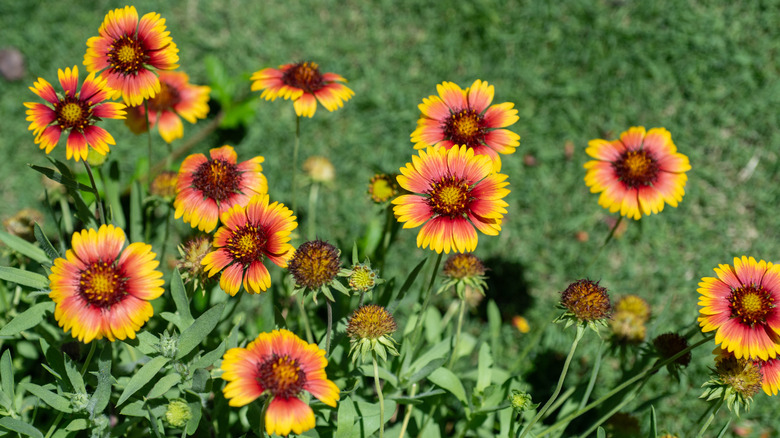
Blanketflower (Gaillardia pulchella) is an ideal addition to almost any garden, from pollinator or cottage gardens to border and rock gardens. It can be grown as an annual or a perennial in Zones 5 to 9. Blanketflower does best when planted in well-draining soil in a full sun spot. Most gardeners deadhead blanketflowers early in the season to promote more blooms. However, if you are looking to attract songbirds to your yard, you'll want to leave spent flowers alone in the fall. Birds like goldfinches, chickadees, and nuthatches enjoy feasting on the seeds late in the season.
Blazing star
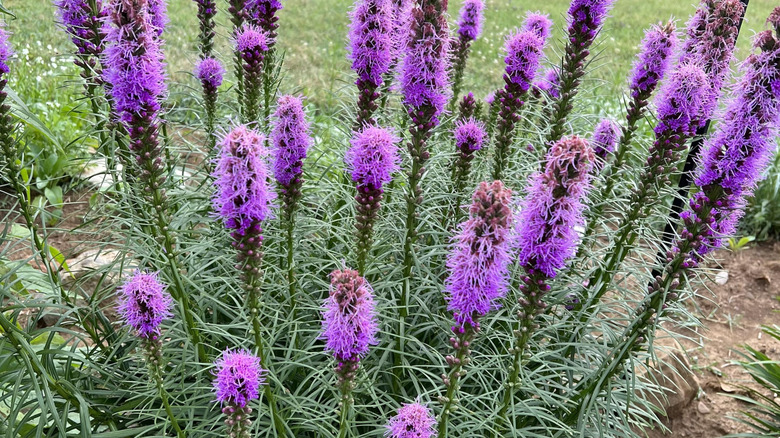
Another stunning flower that provides a food source for songbirds in the fall and winter is blazing star (Liatris spp.). The winter seeds are great for attracting goldfinches, but they can draw in chickadees and sparrows, too. Blazing star also adds interest to your landscape with tall flowers that bloom on spikes standing between 1 and 5 feet tall. This late-blooming native perennial grows best in Zones 3 through 9 in full sun, but does okay in partial shade. Succession-plant blazing star with early-season bloomers to fill your landscape color and attract songbirds as long as possible.
Common cosmos
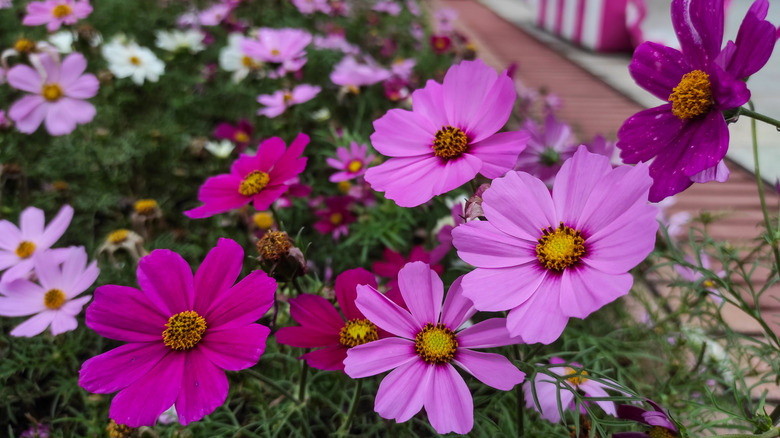
Common cosmos (Cosmos bipinnatus) is one of the most favored flowers for songbirds; the seeds attract finches, sparrows, and nuthatches. You'll likely find it easy to grow and care for cosmos plants. In fact, they will spread quickly if not monitored and controlled. Cosmos are even considered invasive in some regions like West Virginia, so check with local authorities before planting. These clumping annual flowers can grow 4 feet tall and spread 3 feet wide. They also have a long blooming season, from spring to fall, which is perfect for attracting songbirds almost all year long.
Coneflowers
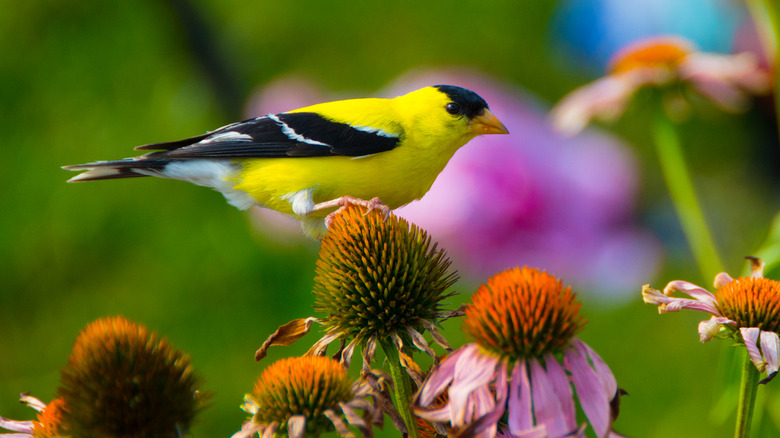
There are many reasons why gardeners may want to include coneflower (Echinacea spp.) in their landscape design. Not only does coneflower make an attractive and beneficial companion plant, but it also attracts a wide range of pollinators and songbirds later in the growing season. In spring, they will attract bees and other insects, which some birds may feed on. In fall, when the flowers die, they become a favorite food for finches and other seed-eating songbirds. Coneflowers are a long-blooming perennial that grow best in full sun in Zones 3 through 9.
Cornflower
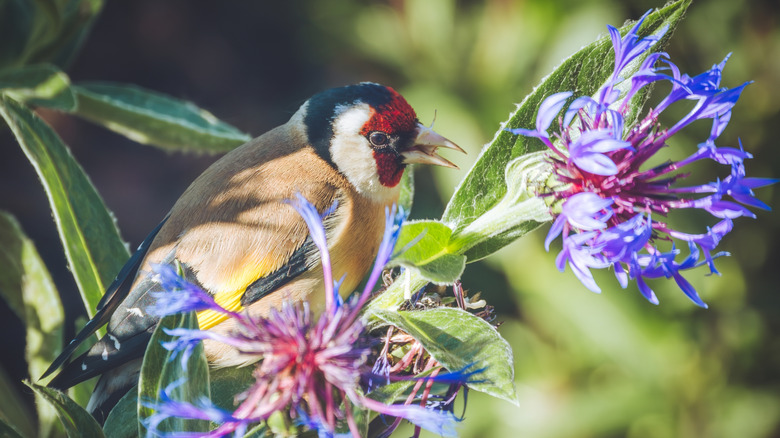
Cornflower (Centaurea cyanus) is a beautiful, easy-to-grow annual flower. Songbirds love the fruit the plant produces in summer and fall. In fact, nearly every part of the flower is edible for birds. Plus, the bright blue color of the blooms makes a statement in any landscape. Cornflower can be weedy when not controlled, which has earned it an invasive status in several states and regions, including West Virginia and Georgia. Refer to your local invasive species databases to determine if it is okay to plant cornflower in your area.
English daisy
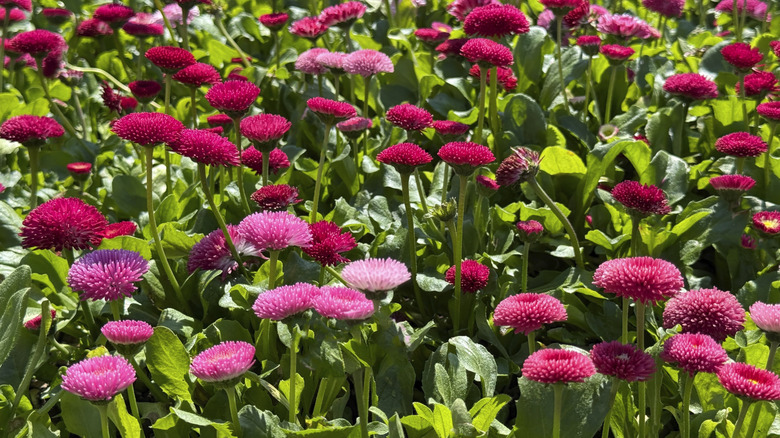
Finches, sparrows, cardinals, and towhees flock to English daisy (Bellis perennis). The plant is a common perennial in Zones 4 through 8. This spring and summer bloomer is perfect for attracting pollinators, which some songbirds will snack on, and it works well in wildflower meadows. You can find English daisies in a range of colors, including blue, yellow, pink, purple, red, and white. This plant is self-seeding, which means it can spread quickly. Check with your local municipality to see if the species is restricted in your area, especially if you live in western regions like Oregon.
Dotted horsemint
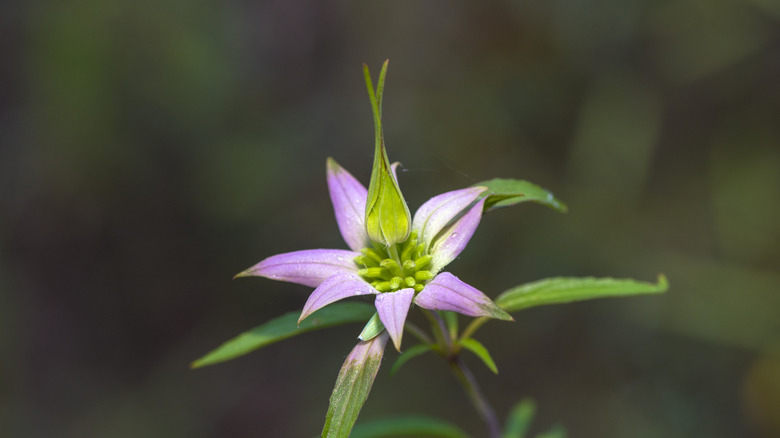
Dotted horsemint (Monarda punctata), also known as spotted beebalm, is a member of the mint family that is perfect for attracting songbirds to your yard in the summer and fall. It can be grown as an annual, but it is an herbaceous perennial in Zones 3 to 8. Dotted horsemint is well known for attracting pollinating insects that songbirds love to feed on. In addition, it provides dense foliage for shelter. Outside of its bird-attracting potential, use dotted horsemint as a statement plant in landscaping — it grows 1 to 2 feet tall.
Frostweed
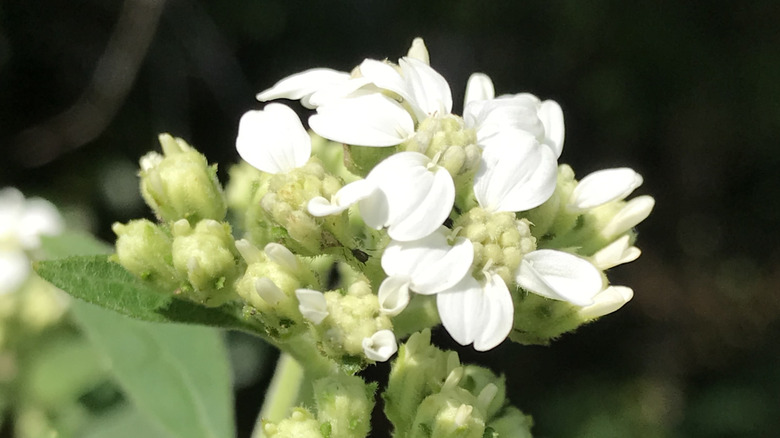
Frostweed (Verbesina virginica) is a unique flower that became popular due to the interesting ribbons of frost that appear on the stems after a hard freeze. This beautiful display isn't the only benefit these flowers offer during winter; they also provide seeds for songbirds. In the summer and fall, small clusters of frostweed blossoms attract pollinators and other insects — another important songbird protein source. These herbaceous perennials grow 3 to 8 feet tall in Zones 8 to 11, making them best for natural landscapes rather than curated designs.
Golden groundsel
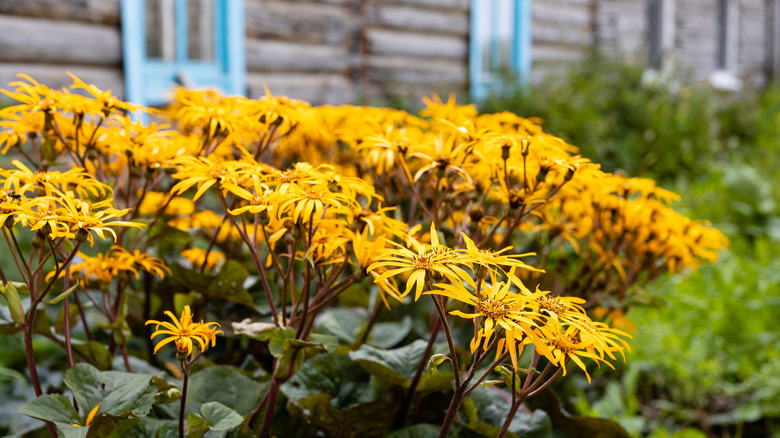
Looking for a shorter flowering plant to fill a bare spot in your garden? Consider golden groundsel (Packera aurea). This yellow-blooming perennial is commonly grown as a ground cover in Zones 3 to 8. Golden groundsel has a long blooming season from early spring to late summer, adding long-term interest to your landscape. Once the flowers die back, they're replaced by seeds that songbirds flock to. Some people cut the blooms back at the end of the flowering season, but it is best to leave them alone if attracting songbirds is your goal.
Goldenrod
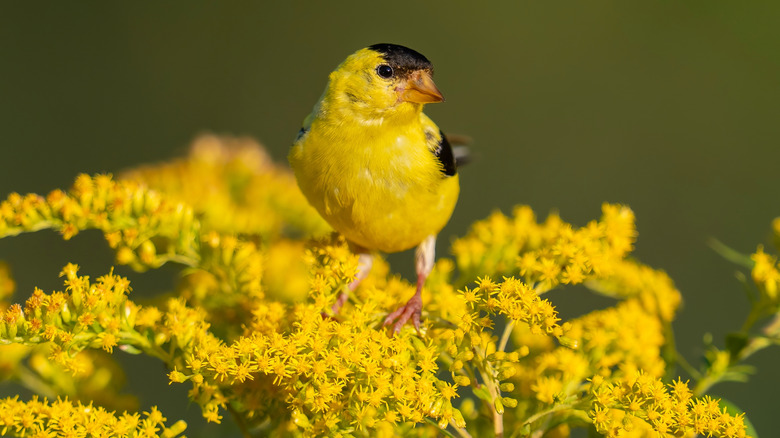
Goldenrod (Solidago spp.) is another finch favorite, making it a great choice to plant with coneflowers for a low-maintenance landscape that attracts songbirds. This easy-to-grow clumping perennial thrives in Zones 2 to 8. Plant it in your natural wildflower garden to get the best out of it. You can choose from over 100 species of goldenrod, each with different heights and growth habits. Luckily, songbirds like sparrows, towhees, and pine siskins love them all. Some birds are attracted to the insects the summer flowers attract, but most songbirds feed on the seeds in fall.
Ironweed
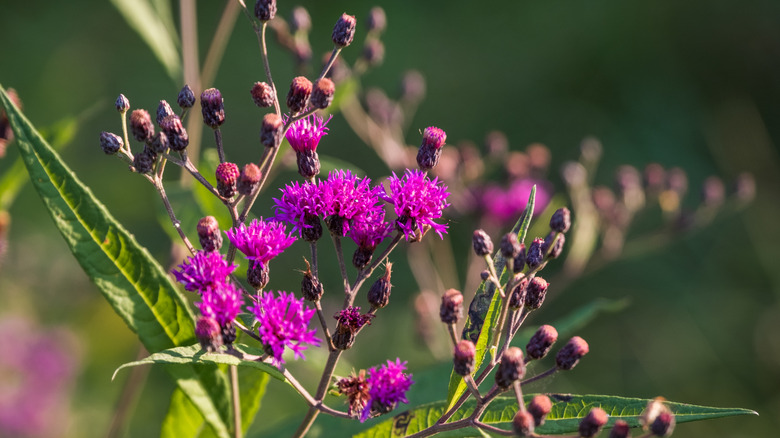
Ironweed (Vernonia spp.) is another herbaceous perennial that produces seeds for songbirds at the end of the growing season. It does well in full sun in Zones 5 to 9. The small purple flowers bloom on tall stalks that look lovely in native wildlife gardens. Depending on the species, ironweed could grow anywhere from 4 to 8 feet tall. Flowers bloom in 3- or 4-inch wide clusters atop divaricated stalks. You can deadhead this plant early in the season, but in the fall, songbirds thrive on ironweed seeds, so it is best to leave them alone.
Marigolds
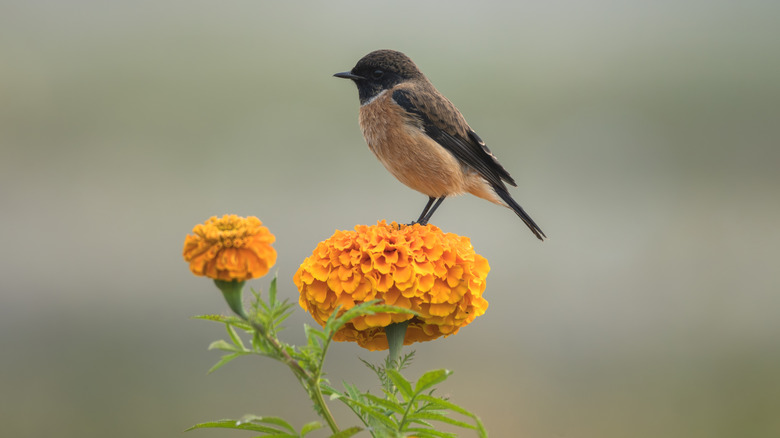
Marigolds (Tagetes spp.) are well-known for their impressive pest-deterrent capabilities, but the dried seeds are also great for attracting songbirds to your yard. Grackles and crows will even eat the flowers! The small, neat appearance of these plants, coupled with their minimal care requirements, makes them the perfect addition to almost any backyard. In fact, because marigolds are usually grown as annuals, you can grow them in nearly any climate, as long as you have lots of sun. Some species are perennial in Zones 2 to 11.
Mistflower
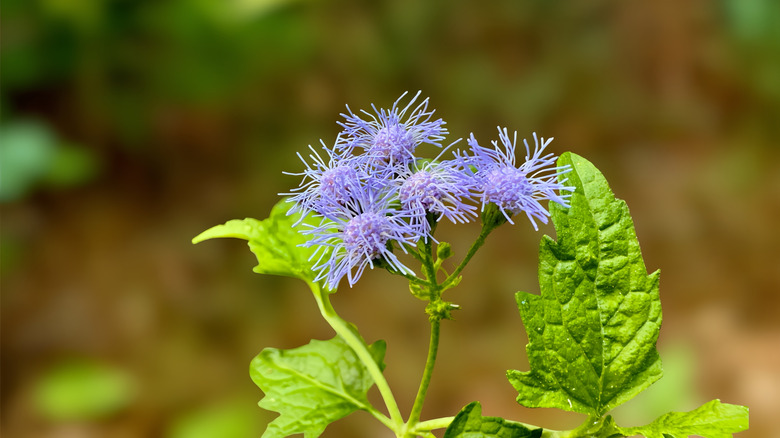
Flowers that drop nutritious seeds when they are done blooming are perfect for attracting songbirds to your yard. Mistflower (Conoclinium coelestinum) is among them. Songbirds like sparrows, warblers, finches, nuthatches, titmice, chickadees, catbirds, and grosbeaks will snack on fluffy mistflower seeds starting in fall. Mistflower is a native wildflower that grows as a perennial in Zones 5 to 10. You may see it growing in ditches or meadows, but it can also be a welcome addition to a wildlife garden, especially if you are looking for a food-bearing filler plant.
Sage
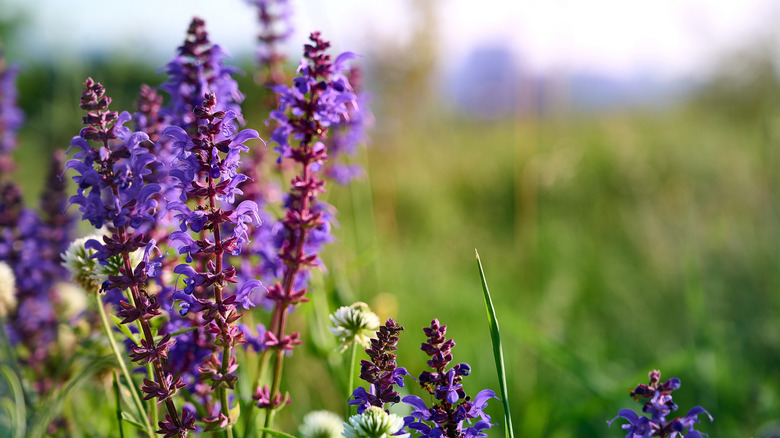
Sage (Salvia spp.) is commonly grown as a culinary herb, but there are plenty of ornamental sage varieties to consider for your space that goldfinches and other songbirds seek out for a nutritious snack. In fact, there are more than 900 sage species and around 100 are native to the U.S. — most of which are hardy perennials in Zones 4 to 10. In addition to the flavorful foliage, sage produces small fruit called nutlets that seed-eating birds can't resist in the spring, summer, and fall, making sage perfect for both songbird food supply and visual interest.
Sneezeweed
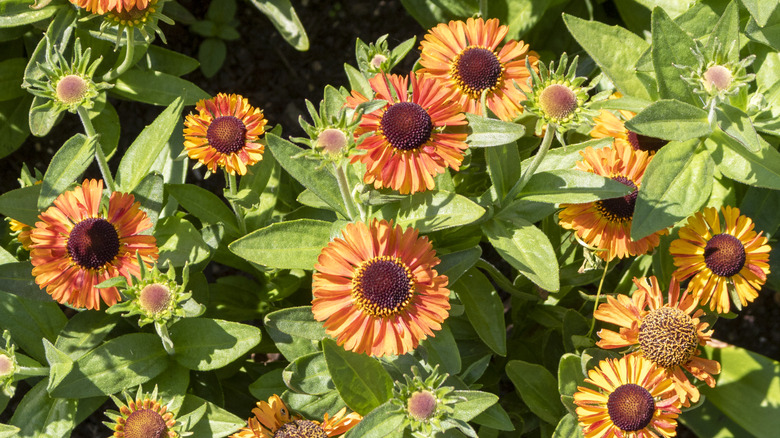
Sneezeweed (Helenium autumnale) may not sound like the most appealing flower to add to your landscape, but don't let the name keep you from using it to attract songbirds. Eating the flower can cause mild toxicity, but the plant actually got its name from a powder made from the blossom that induces sneezing. This native perennial grows best in zones 3 to 8 in moist or wet soil. You can use sneezeweed to add height to your garden with blooms between 3 and 5 feet. Songbirds collect insects from the blossoms in the summer and fall.
Sunflowers
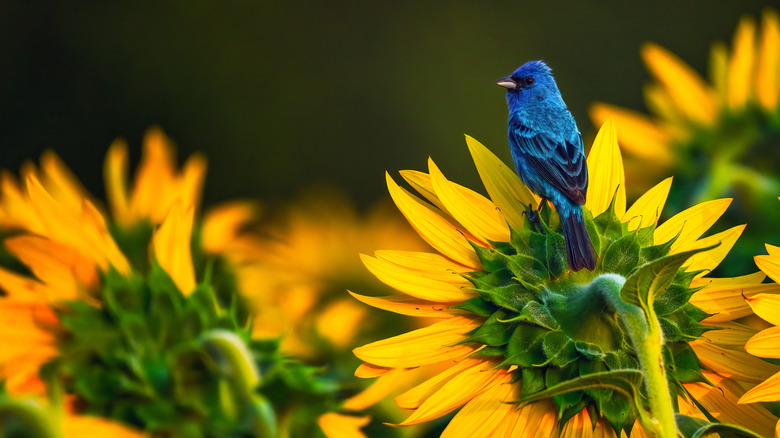
It should be no surprise that songbirds love sunflowers (Helianthus spp.). After all, sunflower seeds are included in most quality birdseed mixes. You can plant sunflowers near a window in place of hanging a bird feeder, then sit back and watch all kinds of songbirds flock to the dried blooms, enjoying the natural abundance of seeds. Most gardeners grow sunflowers as annuals, but some species are perennial in Zones 6 to 9. You can provide ample food for birds and enjoy continuous sunflower blooms all season with one simple gardening tip: succession planting.
Thistle
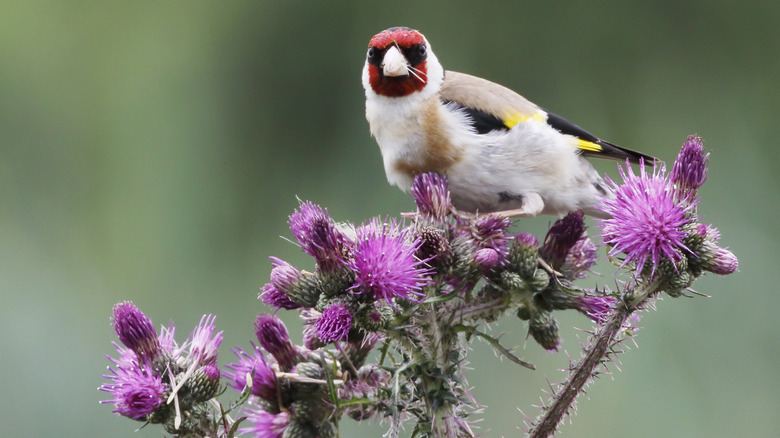
The word thistle (Cirsium spp.) is commonly associated with something negative — visions of poky, weedy plants that take over your yard spring to mind. Indeed, thistle is considered invasive in some states, such as Iowa and Arkansas. Before you pull all those pesky thistle plants, consider what purpose they could serve in your landscape. For one, they might be key to attracting more songbirds to your yard. These prickly perennials produce summer and fall blooms in Zones 2 through 10 that attract songbirds wanting to eat the seeds. Plus, they're not half bad to look at.
Tickseed
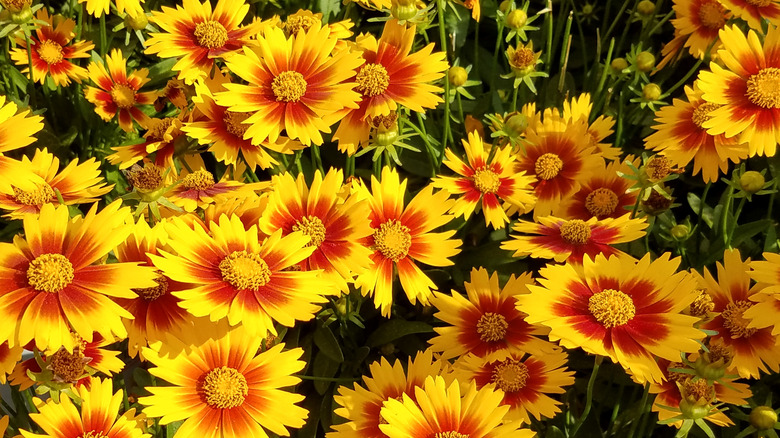
Tickseed (Coreopsis spp.) has a deceptively concerning name. Luckily, this pretty plant was so named because the seeds look like ticks, not because it attracts this unwanted pest. Instead, you can count on tickseed bringing in songbirds, such as goldfinches, once the seeds appear on the early-blooming, many-hued flowers in fall. There are over 100 different varieties of tickseed to choose from. Some species are annuals and some are perennials hardy in Zones 3 through 9; some are a few inches tall and some are several feet tall. With such a wide range, you have lots of aesthetic options.
Trumpet honeysuckle
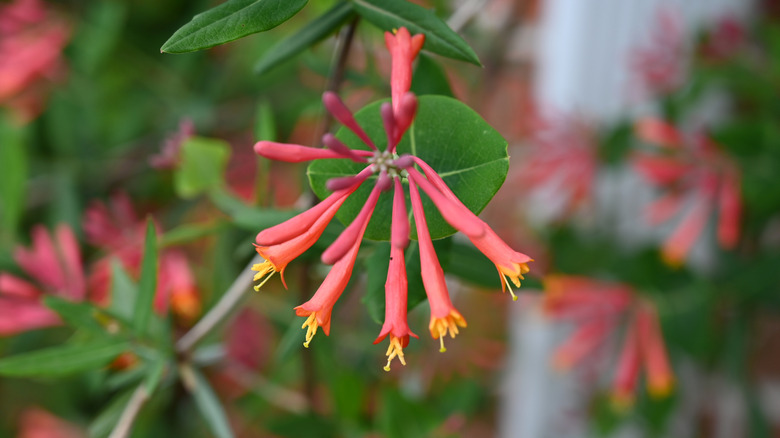
Most gardeners know that trumpet honeysuckle (Lonicera sempervirens) will attract hummingbirds to a yard, but songbirds are also interested in this sweet flowering vine. While hummingbirds feed on the nectar in the tubular flowers, songbirds like purple finch, goldfinch, hermit thrush, and American robin will feast on the small fruit that appears in summer and fall. This mid-year sweet treat makes the trumpet honeysuckle ideal for your wildlife garden. Plus, this perennial vine is versatile in garden design. It will sprawl across the ground as cover or clamber over fences and trellises in Zones 4 to 9.
Zinnias
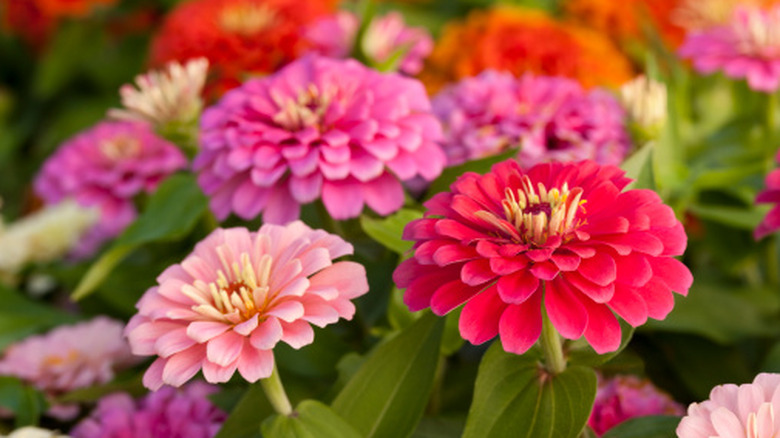
Zinnias are a common sight in gardens because they are easy to grow and boast long-lasting blooms in yellow, orange, pink, purple, red, or white — and sometimes even variegated. The value of these colorful annuals goes beyond just aesthetics, though. Songbirds enjoy eating the seeds at the end of fall, when the blooming season peters off. They grow best in full sun with well-draining soil. The bushy foliage also provides cover for songbirds looking to hide from predators, which makes it ideal for planting near birdbaths or other bird-friendly features in your yard.