

The Essential Gardening Task For Healthier Strawberries This Summer
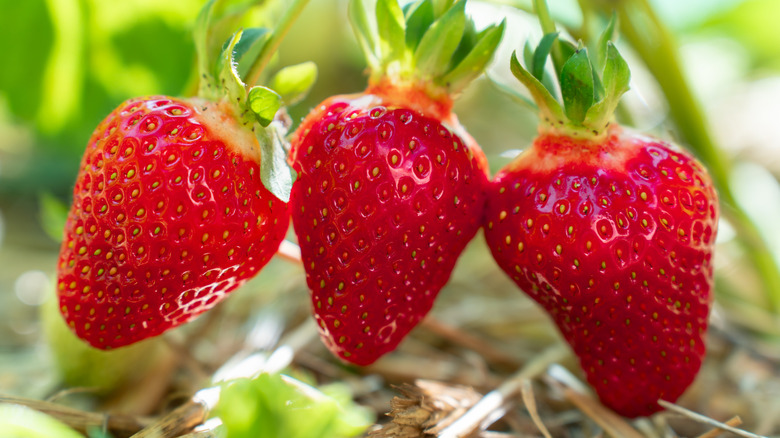
Many gardeners plant strawberries with the anticipation of lovely, juicy red berries in early summer. You've most likely planted them yourself with plans for large harvests perfectly suited for jams, jellies, tarts, and delicious glasses of strawberry lemonade to enjoy on hot summer days. That's why it can be extremely disheartening to go out to your strawberry patch in June to find only a few sad-looking berries. You thought you did everything right. You made sure to lay down a thick mulch in the fall to protect your plants from the harsh cold of winter. The problem is that same mulch may be causing your summer frustration. This is a common mistake people make when planting strawberries. The trick to healthier plants and better berries is refreshing mulch in the spring.
Replacing winter mulch around your strawberries is the solution not only to keep your strawberries from rotting in the garden, but also to set them up for success in the summer. Leaving the mulch in place when temperatures start to rise creates an environment for moisture, disease, and unwanted critters. Old winter mulch also creates the perfect environment for mold, and nobody likes moldy strawberries. This soggy environment is also an invitation for every strawberry lover's archnemesis — the slug. Laying down fresh mulch in the spring will prevent these issues as well as help with weed suppression. Removing winter mulch also signals plants to come out of dormancy and begin growing. It's not only important to know when to change out your mulch, but also how to do it properly so that you have tons of large, healthy plants full of delicious red fruit.
Replace your winter mulch for healthier summer strawberry plants
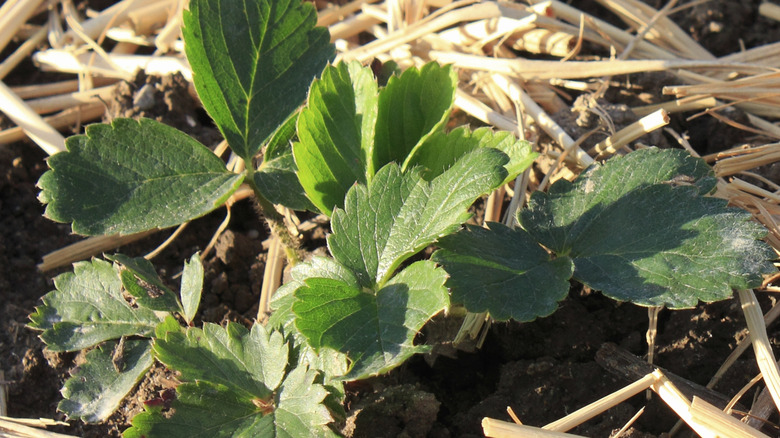
The key to replacing the mulch around your strawberries at the right time is temperature. Remove it too early and plants may be damaged by frost; too late and growth can be stunted. Once the soil temp around your strawberries is 40 to 50 degrees Fahrenheit, it's the perfect time to refresh your mulch. It's also important to pay attention to the weather. If there is colder weather in the forecast, you should hold off. While pruning tricks can help your strawberries thrive and produce bigger harvests, getting the mulching right can promote earlier, bigger harvests, and better growth as well.
Once soil temperatures are right and new growth appears, it's time to remove the old mulch. Gently remove the old mulch from around your strawberry plants. You can toss it in a compost bin to repurpose it if you like. Add a fresh layer of mulch about 1 inch thick, leaving space around the plant crowns. You can use straw, pine needles, or wood chips for your summer mulch. When laying the mulch, be sure that you gently lift the leaves so they sit on top and are not trapped under it; this will ensure your plants stay clean and protected from disease and nefarious slugs. You should then only need to replace the mulch again in the fall to keep your strawberries happy, healthy, and supplying you with tons of berries.