

The Woody Perennial Vine That Will Add Privacy To Fences And Trellises
Privacy can be a hard thing to come by, especially when you have an open backyard space. Whether you're looking to add some shade and respite to your patio away from the kids' play area or trying to create some distance from curious neighbors, choosing a privacy feature can literally change the landscape of your lawn. Of course, there are plenty of options to choose from, including wooden fencing, shrubs, and even stone dividers. But most of these options require significant effort and investment. If you're looking for a more enchanting, less expensive, and easier solution to your privacy problem, consider climbing plants that will make you feel like you're living in a fairytale. Grapevines are one such plant that provides privacy, style, and more without breaking the bank.
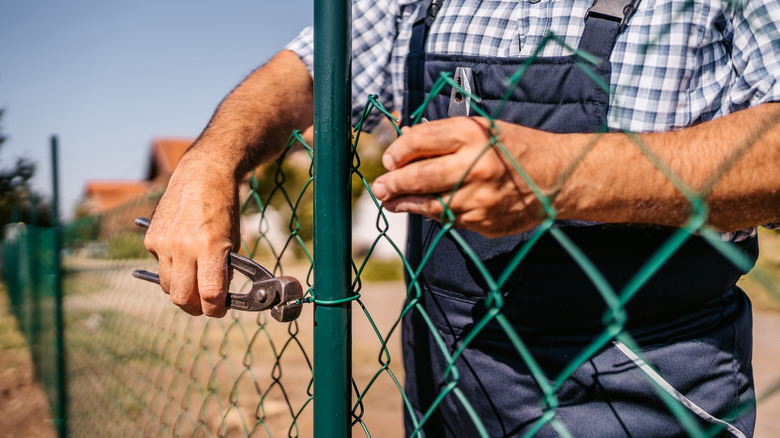
Grapevines are known for their climbing habits and large leaves, so why not put those features to work for privacy in your yard? Grapevines are fast-growing, dense vines that are easy to train, which makes them great for creating separation in your yard with trellises or privacy on border fences. Plus, they are affordable, especially if you're using existing structures. You can expect to pay less than $10 per grapevine cutting. They can even grow on existing structures, like chain-link fencing. While you can select ornamental varieties if you want minimal upkeep, many of these underrated and fast-growing perennial vines yield edible fruit. If you're adventurous, you can even try some creative recipes using grape leaves to make full use of the plant.
Types of grapevines that work well for privacy fences and trellises
Before diving into how you should train your grapevines on a trellis, you'll want to select a variety that works for your yard. Of course, the exact variety will depend on your personal preference and whether you want to harvest fruit from these vines or keep them strictly ornamental. Also, consider how much work you want to do. Planting grapes may be less work than installing a large, obstructive privacy fence, but only when paired with ample research and care. Each type of grapevine requires specific care, pruning, and support practices that may or may not work for your space.
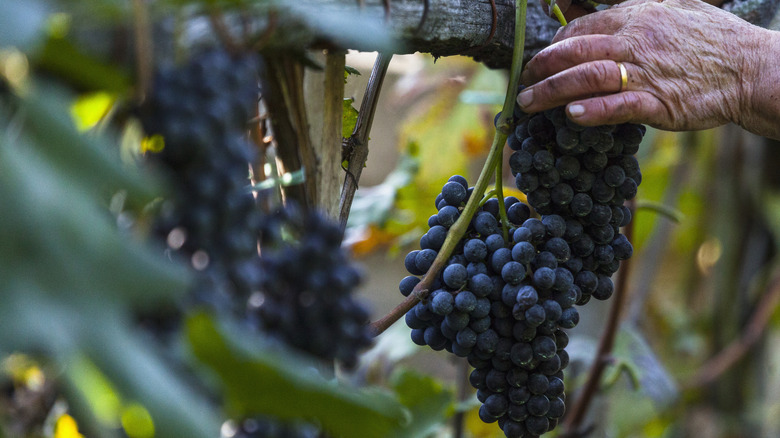
Start by becoming familiar with the types of grapevines available. Think about your space and consider how each variety will work with your soil, climate, and trellising method. For fruiting varieties, consider common producers like 'Frontenac,' 'Leon Millot,' 'Niagara,' 'Concord,' and 'Catawba' in moderate climates. Cold climates are generally limited to hybrids that fruit within a short period and can survive through winter. Warm, dry climates do best with European varieties, but warm, humid climates are better for muscadine (Vitis rotundufolia) varieties.
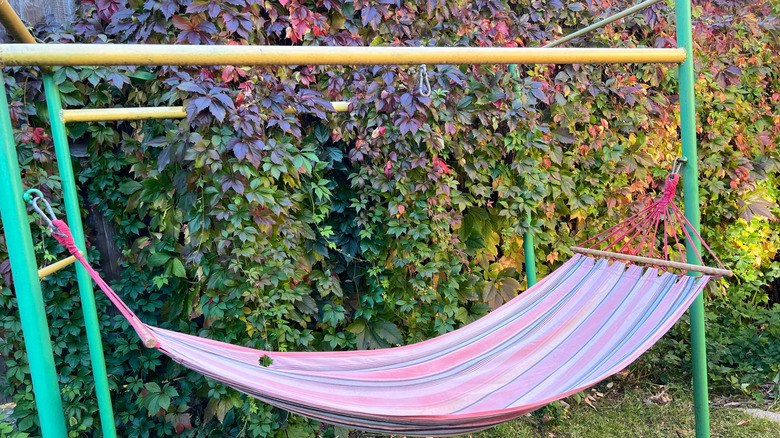
If you're not interested in harvesting your grapes, you can opt for ornamental varieties that will produce fruit for the birds and other beneficial wildlife that may frequent your yard. One of the most common ornamental varieties is known as the 'Crimson Glory Vine.' Depending on your climate, other options may include 'Purpurea,' 'Roger's Red,' or fox grapes (Vitis labrusca).
How to turn grapevines into a privacy screen
Obtain cuttings of your selected grapevine variety in the spring, and prepare them for planting by soaking the ends in water for 12 to 24 hours. Then, plant them in potting soil, and maintain a temperature of 75 to 80 degrees Fahrenheit for up to three weeks. Wait another four weeks before planting them in the ground to give the roots time to develop. If you purchased pre-prepared cuttings, you can skip this step. Plant the cuttings by gently spreading the root system and placing it in a hole deep enough so the first bud appears just above the soil. Cover the roots, and water well. If you have enough space for multiple vines, plant them 6 to 12 feet apart, depending on your support method, to give each vine room to spread. You can expect vines to grow up to 12 feet in their first season.
Grapevines will climb up any structure, but they can quickly become heavy. If you are trellising with cables and significant spacing, you can help the canes weave through the support before tying them to the trellis. However, if you are using chain-link fencing or a similar support, tie the canes to one side only to make future pruning easier.
Once your grapevines are established, it is best to plan for annual pruning to keep them neat and healthy. That being said, you don't want to damage the canes or reduce fruit production by pruning carelessly. Practice healthy tips and tricks for pruning grapevines, including pruning at the right time and selecting the right method for your chosen variety.