

The Sun-Loving Hydrangea Variety That Pollinators Won't Be Able To Stay Away From
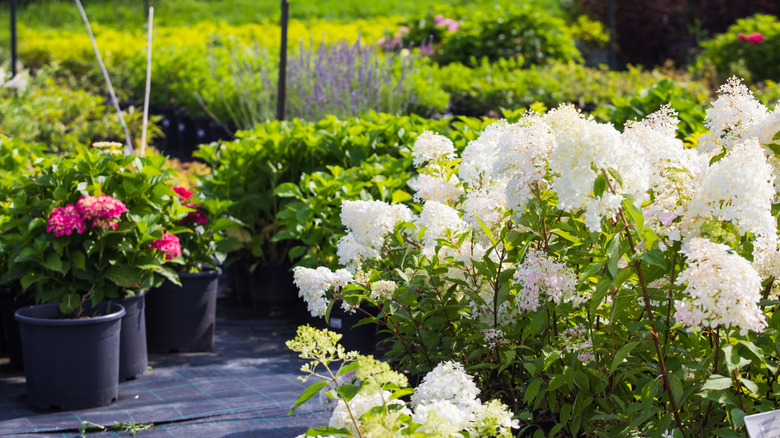
When choosing shrubs for a sunny spot in your yard, you'll no doubt check whether the plant matches your water and soil requirements, and hopefully whether the species is wildlife friendly too. If you're already a devotee of native plant gardening, you may have been leaving hydrangeas off your wish list in favor of alternatives that are good for beneficial insects, but it might be time to reconsider a native type. It's true that the hydrangea varieties with the showiest blooms, known as mophead types, produce mostly sterile flowers that serve no purpose for bees and butterflies. But if you want to get pollinator value in addition out of your plantings, you can grow a lacecap type like ashy hydrangea (Hydrangea cinerea).
Also known as Deam's or gray hydrangea, this pollinator-attracting, deciduous shrub is native to the southeastern and south-central U.S., primarily in the Appalachian Mountains. If you live in that region, you might check any natural areas in your yard to see if one of these shrubs is growing there. Ashy hydrangea can be recognized thanks to the gray hairs on its stems and the undersides of its toothed leaves. It's a medium-sized shrub that reaches up to 5 ½ feet tall and wide. You might want to add this variety to your personal list of plants for a pollinator garden in the sun if you have the right growing conditions.
Tips for growing ashy hydrangea to attract pollinators
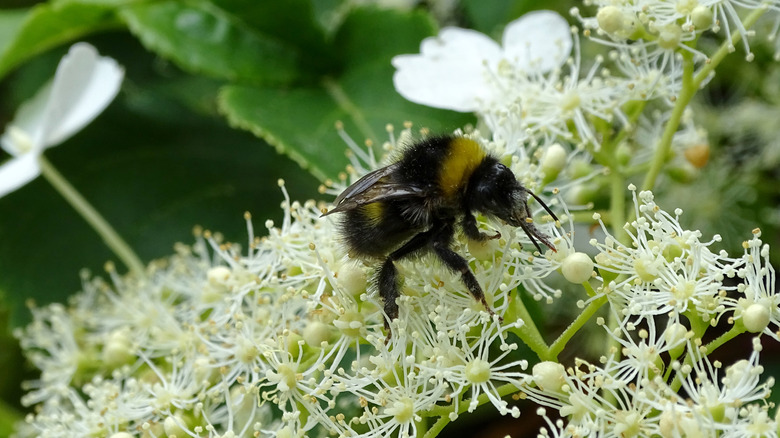
As mentioned earlier, not all hydrangeas are pollinator-friendly, but this one is an exception. This shrub produces two types of white flowers — the larger ones are just for show and to draw in pollinators, while the cluster of small blooms, known as a lacecap inflorescence, provides pollen and nectar that draws in beneficial insects. Blooming starts in late spring and continues all summer long. This variety isn't easy to find at nurseries, but gardeners in USDA Hardiness Zones 5 to 9 should check native plant sales where it may be on offer. Alternatively, consider growing the similar, but easier to find, smooth hydrangea (Hydrangea arborescens) in your yard.
If you find one to buy, you'll want to know that ashy hydrangea is one of the types of hydrangeas that will thrive in your full-sun garden. However, these plants are very adaptable, and can also flourish in part shade. They need good drainage and prefer moist soil, but are drought tolerant and heat resistant. While this species is already very attractive to pollinators, you can boost the wildlife-friendliness of your yard by growing a variety of other compatible trees, shrubs, or perennials alongside it. There are numerous plants to grow next to hydrangeas for a gorgeous garden full of beneficial insects. Beautiful options that pair well with ashy hydrangea and help attract pollinators in sunny spots include dogwood trees (Cornus spp.), Virginia sweetspire (Itea virginica), and speedwell (Veronica spp.).