

The Wasp-Attracting Bush You May Want To Avoid Planting In Your Garden
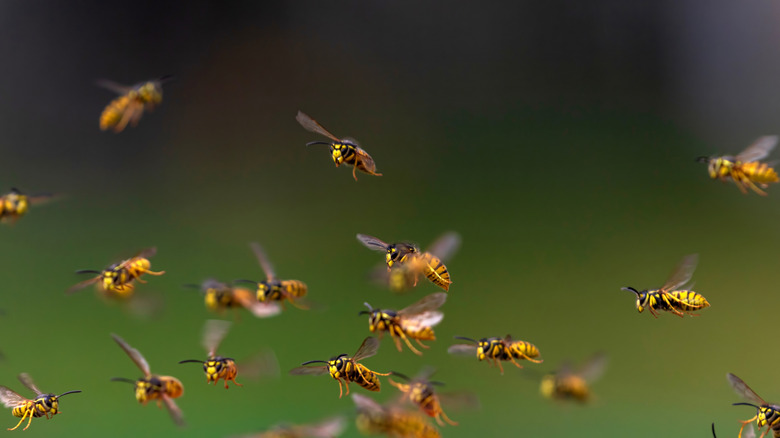
For many people, the garden is a peaceful retreat, but that calm can quickly vanish if wasps are buzzing all over the yard. Unfortunately, a garden has many things to offer wasps, including food, water, and shelter. If you have wasp-attracting plants like raspberry bushes (Rubus spp.), the situation can become even worse. Wasps of many different kinds, including yellow jackets and bald-faced hornets, are drawn to raspberry bushes. They mostly come for their fruit and can quickly become a problem for anyone sitting near the plant. The moisture and sugar raspberries offer are simply irresistible to wasps, especially during dry seasons when water sources are limited.
In addition, raspberry bushes make excellent nesting spots. They have dense and thick foliage, and if wasps love anything when building their nests, it is a sheltered spot where they can stay hidden without being disturbed. It's also important to keep in mind that wasps can sometimes also build their nests in ground-level debris, such as piles of dead leaves, and raspberry bushes, being deciduous plants, shed their leaves in the fall. These ground-level nests in debris are often hidden, and they can easily be disturbed by mowing, raking, or foot traffic, which can cause the wasps to attack in large numbers. To put it simply, if you don't want wasps in your garden, you ahouls avoid growing plants like raspberries.
What if you already have a raspberry bush in your garden?
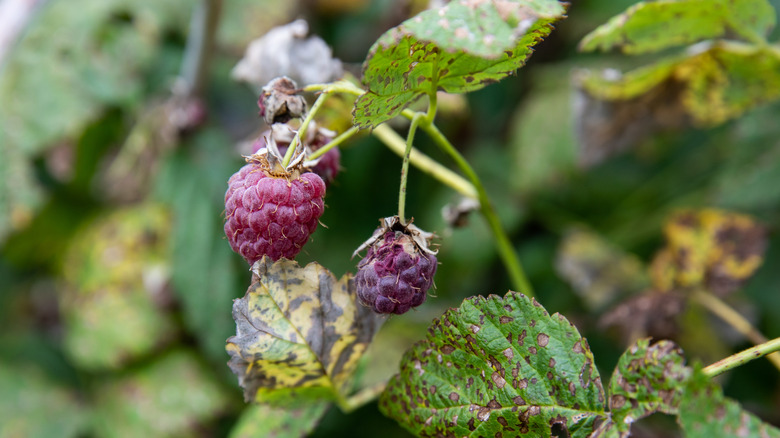
If you already have a raspberry bush growing in your garden, try to harvest the raspberries as soon as they ripen and cover your plants with row covers or plant netting. Remove any rotting, damaged, or fallen raspberries, too. They attract far more wasps than the healthy berries. This cleanup can help make the raspberry plants less appealing to wasps, forcing them to look for food sources elsewhere, away from your yard.
In addition, you can also try growing plants that help keep wasps out of your yard. Some good examples include lavender, mint, rosemary, and basil. Just keep in mind that growing these plants alone will not be enough to keep wasps away. You will need to take some extra measures, too. For instance, you can try using fake wasp nests. Some wasps are territorial insects, and if they see a wasp nest in your garden or hanging from your raspberry bush, they might seek other accommodations.
It is also important to note here that it is not always just the raspberry bush that is attracting the wasps to the garden. Material around your plants, such as debris, old logs, and tall grasses, can also act as nesting sites for wasps, so keep your garden clean and free of debris, regardless of the plants you choose. And lastly, if you can, grow raspberries indoors. Just make sure to keep the windows shut, or wasps may still find a way in!