

12 Ways To Decorate Your Home For Spring On A Budget
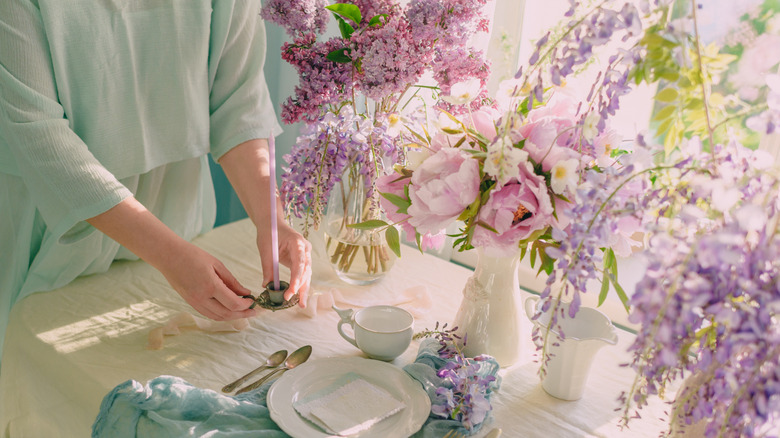
Spring is the perfect time to give your home's decor a refresh. Lean into pastels and bright colors, florals, and organic materials to transition your space from winter to warmer days. All you need are a few seasonal swaps to make your home feel like spring — and you don't need to break the bank to buy (or make) high-quality decor.
From simple, spring-themed DIYs to budget-friendly decor pieces you can find anywhere, adding fresh spring pieces to your space doesn't have to cost anything at all. Add seasonal artwork to your walls, give your dining table a spring makeover, or paint a spring-themed doormat for less than $20. No matter what type of decor you're looking for, we've rounded up 12 different ways you can buy, thrift, or craft spring decor for any room in your home.
Make a dried spring flower wreath
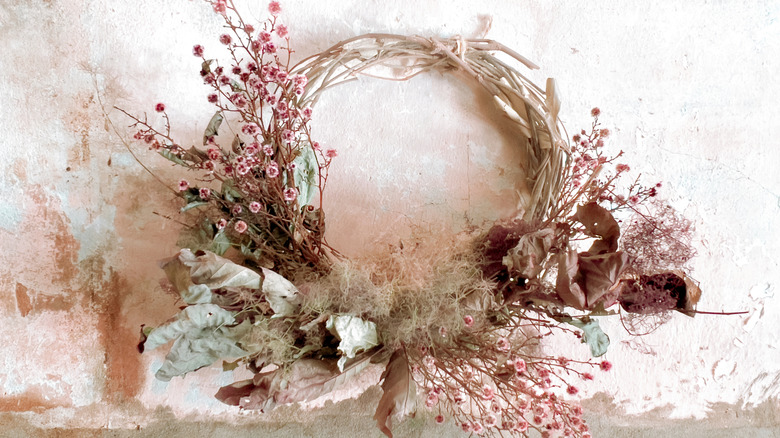
A dried flower wreath using foraged items from your yard is a super affordable way to spruce up your home for spring. Use it to decorate your front door, hang it in your entry hall, or use it as a seasonal display in your living room. A flower wreath can be as inexpensive as you want it to be; you can forage spring flowers for free from your own backyard or from public lands with permission. You can also purchase a bouquet of pre-dried flowers from a local craft store, or grab a bouquet that speaks to you from a grocery store or florist. Hang your flowers to dry in a cool, dark space until all the moisture is gone (usually after two weeks).
Then, it's time to start arranging your wreath. Pre-made wreath bases are usually very affordable, often around $5, but you can always make your own from foraged sticks and crafting wire. Shape your wreath base of choice into a hoop, and weave your flowers into the wreath. Use wire or glue to secure the stems of each flower to the wreath.
Flowers and foliage that dry well for wreaths include baby's breath, lavender, statice, ranunculus, wheat, and willow branches. A dried wreath can last for years, though its color will fade over time (especially when exposed to direct sunlight). A faux flower wreath is another option that is slightly more durable.
DIY a preserved moss bowl — or forage one yourself
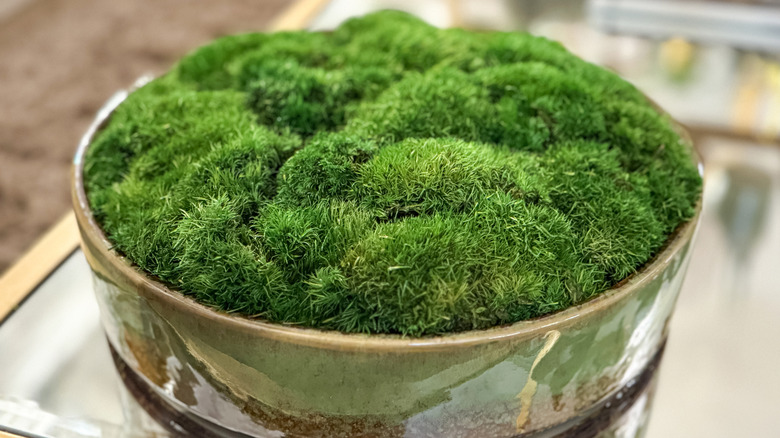
A living moss bowl makes for a beautiful organic centerpiece. If you have moss already growing in your backyard, a DIY moss bowl can be completely free. Find a healthy patch of moss and slide your fingers underneath it, gently lifting it away from the soil. You'll want to gather several clumps of moss rather than a full sheet, so that you can arrange them snugly inside your bowl of choice. Alternatively, you can purchase preserved moss from a craft store; this moss is real, making it soft and vibrant, but is not alive. A bag of preserved moss retails for around $5. It'll be easier to care for than live moss.
Your moss can sit inside any vessel you have on hand — a mixing bowl, serving bowl, wide vase, or planter are all good options. Fill your container with pebbles, so that your moss has something to sit on. Cover them with some soil, and arrange your moss on top, grouping the clumps so that they fill the entire bowl. If you're working with preserved moss, you can arrange it directly on top of your pebbles or on floral foam.
Keep the soil of your living moss very moist, and mist it regularly. When it starts to lose its color or become stressed, simply return it to where you found it outdoors, so it can continue thriving. By then, you'll be ready to swap out your centerpiece for summer decor — or make a new moss bowl to enjoy. For preserved moss, keep it out of direct sunlight so its color doesn't fade.
A paper flower garland will brighten up your banister or doorway
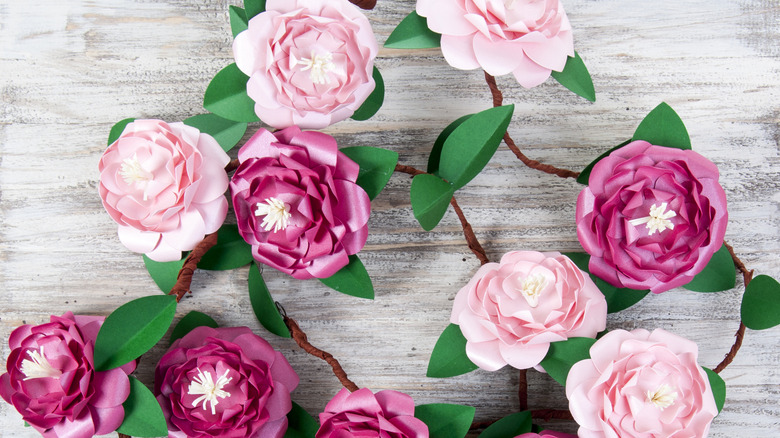
With a few sheets of construction paper and some string, you can create a spring garland that will spruce up any stair railing, doorway, or bed frame. Choose a few different complementary colors for your paper flowers, along with some green paper to create leaves.
There are plenty of different types of flowers you can make with just a few simple steps. Try cutting a simple flower shape out of paper, then press down in the center to give it some dimension. Poke a hole through the center of your flower to string it up. You can also cut your paper into a spiral shape, rolling it up to create a layered flower that looks like a peony or a rose. Tissue paper also makes for a fluffy flower garland.
If you're less interested in creating your own paper flowers, you can always grab pre-made faux flowers from a craft store — an affordable alternative to a store-bought garland. Fabric flowers are also a long-lasting option to use. Once you have your flowers, simply string them up; accent them with pastel ribbons, sparkly beads, or even a string of fairy lights.
Customize a blank coir mat for spring
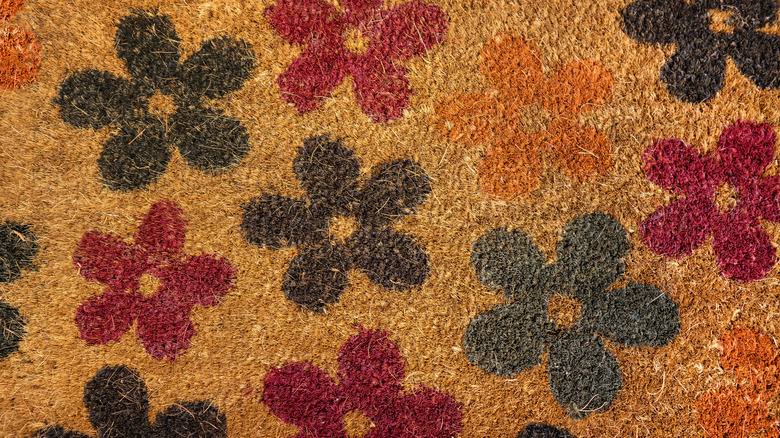
A fancy custom doormat isn't cheap, but painting your own coir doormat can be very affordable. Coir is a classic doormat material because it's water-resistant and durable; best of all, coir is actually pretty simple to paint. A plain coir doormat usually costs under $20 — like this KAF Home Eco Coir Doormat on Amazon. Grab a few outdoor acrylic paints in spring colors, and get ready to paint an adorable spring scene onto your doormat.
A flower pattern is easy to paint; you can even trace your favorite designs onto paper, cut them out, and make a stencil to follow. If you want to sketch out your design before you paint it, use chalk to mark the mat; it shows up well on coir fibers, but can still be wiped off if you need to rework your design. You could also paint the entire doormat a solid spring color, like yellow or green.
Because a coir doormat has thick fibers, you'll want to pat your paintbrush directly down onto the mat rather than using large brushstrokes. You'll need multiple layers of paint to finalize your design on the mat. Once you're done, spray the entire mat down with a sealant to make it waterproof.
Put together a spring potpourri bowl to make your home smell amazing
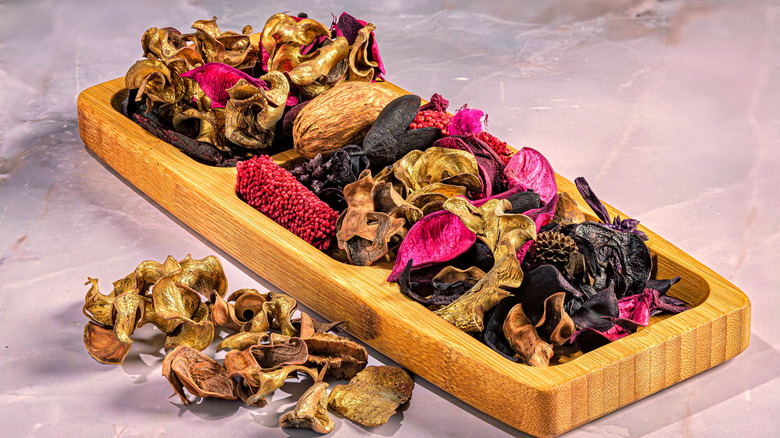
A spring decoration that doubles as a seasonal scent? Sign us up. A potpourri bowl is surprisingly simple to put together (though you can certainly snag a bag of pre-made potpourri at craft and home stores if you please). You'll want to start by gathering together dried ingredients that smell like spring.
Slices of dried lemon and grapefruit, lavender, rose petals, pink peppercorns, rosemary, and thyme will all smell delicious together. Add a few drops of essential oils to help the potpourri smell stronger; lemon, vanilla, or herbal scents smell like spring. From there, you can add extra decorative elements as you desire. Pieces of bark, whole dried rosebuds, or rattan balls are organic-looking additions that are there for style rather than scent.
Grab a wooden tray or decorative bowl, and fill it up with your potpourri mix. Display it on your coffee table, entryway shelf, or living room mantel. Add fresh potpourri and more essential oil whenever the bowl's smell starts to fade. At the end of the season, you can swap out your spring potpourri for warmer fall scents — save your dried flowers in a sealed bag or container for the upcoming transition.
Dried flower coasters will spruce up your dining table
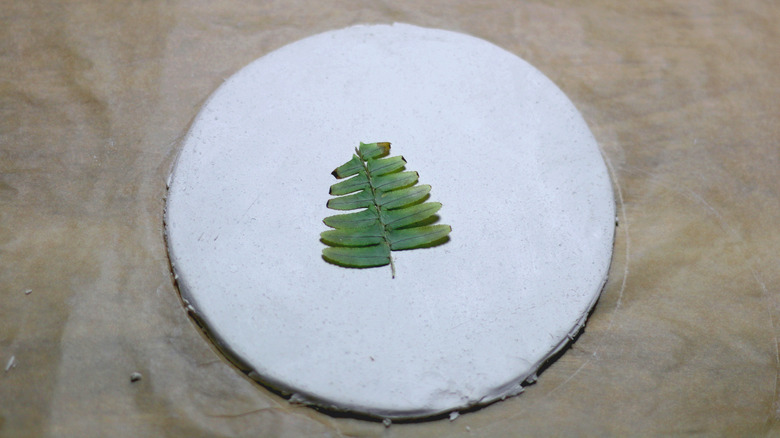
Dried and pressed flower coasters are a sweet way to celebrate the colors of spring. You'll often see these types of coasters in home stores during this time of year. Typically, they're made with resin; a clear material that keeps the pressed flowers inside well-protected.
However, there's another easy way to make your own dried flower coasters from scratch — a good alternative if you can't find affordable store-bought coasters. Rather than using resin, which can be tricky to work with (and often expensive), turn to air-dry clay to show off your favorite spring flowers. You can often grab a bag of air-dry clay for under $10; choose colored clay for vibrant, single-shade coasters, or purchase white air-dry clay that you can paint yourself with acrylic paint.
Use the lip of a drinking glass to cut thin circles into the air-dry clay, then gently press your dried flowers into the clay. You can leave them in the clay and allow the entire thing to dry for a colorful spring coaster, or remove the dried flowers to leave a botanical imprint. Either way, make sure that your flowers are pressed securely into the clay. Spray a sealant on top to waterproof your coaster.
Mix and match thrifted dinnerware in spring colors
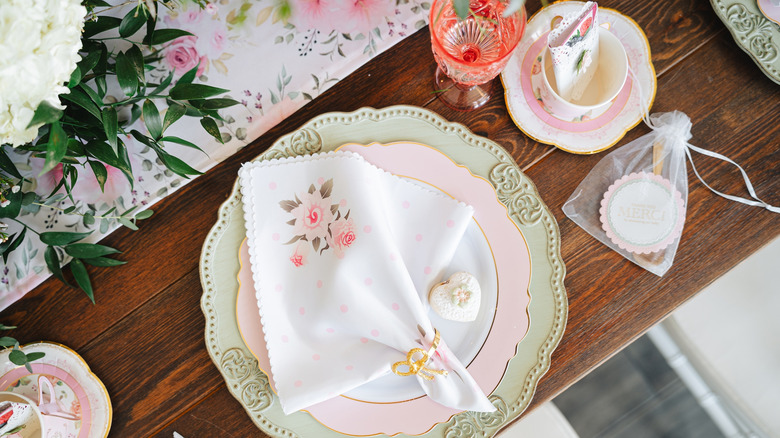
Want to give your tablescape a seasonal makeover without paying for a brand new set of dinnerware? The thrift store is your new best friend. Rather than buying all-new dishes and glassware for spring, you can give your table a fresh look with secondhand options.
Look for vintage plates with floral patterns (fine China sets are a good option here), soft pastel-colored plates, and green or pink-tinted glassware. Mixing and matching your dinnerware will give your table a curated, personal sense of style; don't be afraid to choose a variety of plates with complementary colors and patterns.
While you're at the thrift, you can look for other table elements to display all season long. Floral napkin rings, a colorful table runner, placemats, and cloth napkins will take your dining table to the next level. With a little luck, you could score everything you need for under $50.
Flower tea lights bring a little whimsy to your patio or dining table
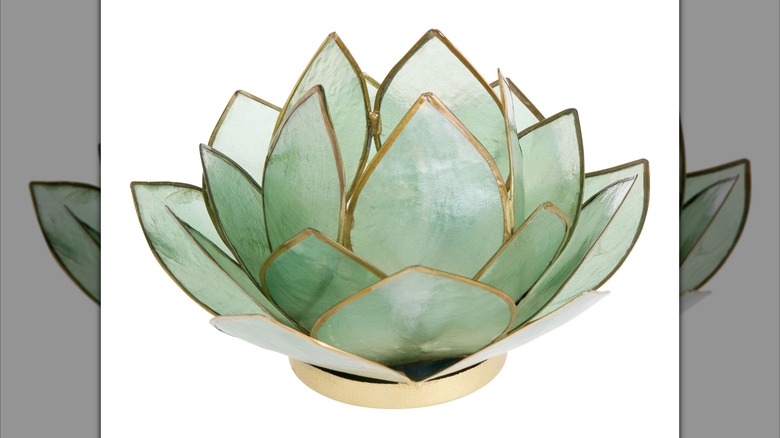
A simple flower tea light holder is a fun way to add ambiance to your outdoor patio or spring-themed dining table. These candle holders will have a small tea light base surrounded by colorful petals, so your tea light becomes the pistil. Craft stores and home decor stores — such as Michaels or World Market — are likely to have a few different candle holder options for you, especially during the spring season. A small tea light and flower-shaped candle holder usually retail for under $10 together.
You can always try making a simple flower tea light on your own, too. We have a simple hack to turn tin scraps into stunning DIY flower decor for a tea light. You can also make a flower-shaped candle holder out of air-dry clay.
Bring your favorite spring flowers and bulbs indoors
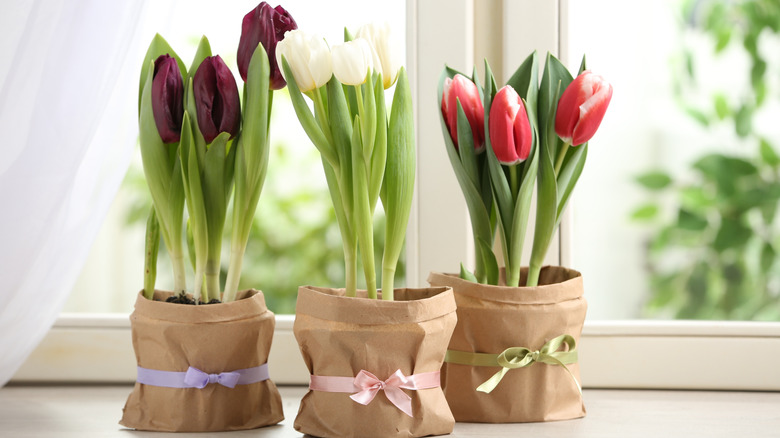
Instead of spending money on a fresh floral arrangement every week, you can use potted spring flowers to achieve the same look. There are plenty of affordable options waiting for you at your local nursery or grocery store. A small pot of pansies, a single marigold, or daffodil and tulip bulbs are usually very affordable, since they're typically purchased in bulk. They'll likely be even cheaper than a regular flower arrangement.
No pot? No problem. If you're not able to find an inexpensive option at your nursery or craft store, then try DIYing an affordable planter that looks way more expensive than it is — all you need is an empty tin and some pool noodles. You can also paint directly onto the grower's pot your spring plant comes in; this isn't a long-term option, but for seasonal plants, it's a good way to make the pot look prettier (only paint the outside, not the inside). Alternatively, wrap your plant pots in brown paper or shiny cellophane.
You can easily keep most types of spring flowers indoors for weeks or even months. Then, simply transition them outdoors or compost them when the season is over. Potted bulbs can be saved and planted again the following year.
Simple embroidery stitches make for beautiful wall art
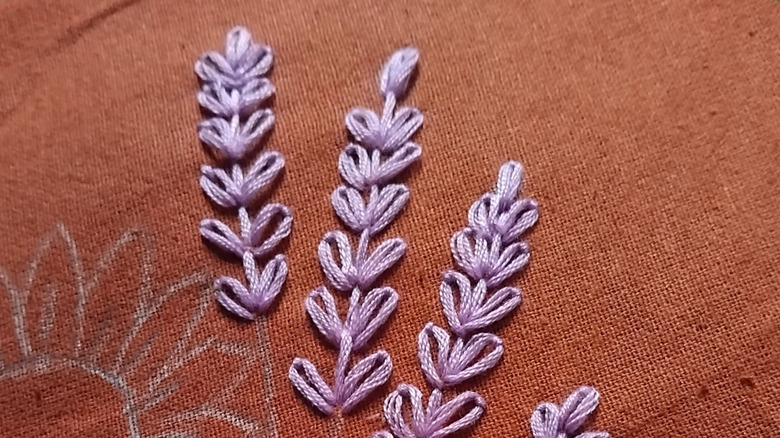
Embroidering spring flowers to use as wall art is even simpler than it looks. For example, you would only need to know two different stitches to embroider a few sprigs of lavender: lazy daisy and straight stitch. The more you expand your sewing repertoire, the more types of flowers you'll be able to make — but you should start small and simple to begin with.
To get started, you'll need an embroidery hoop, some cloth, a sewing needle, and embroidery thread in a few different colors. A small hoop will usually cost around $5 or less at a craft store; cloth and thread can range in price depending on what you choose, but you'll usually be able to grab a few different colors of each for under $10. While it's best to use cloth that's meant for embroidery, you can also use scraps of old clothing; the stiffer the fabric, the better.
Secure your fabric in your embroidery hoop and sketch out your design with a pencil. Thread your needle and sew directly over your design. Alternatively, just look for a beginner-friendly embroidery kit at a craft store; it will come with everything you need, plus fabric with a pre-printed design you can follow.
Use a leftover basket for a spring centerpiece
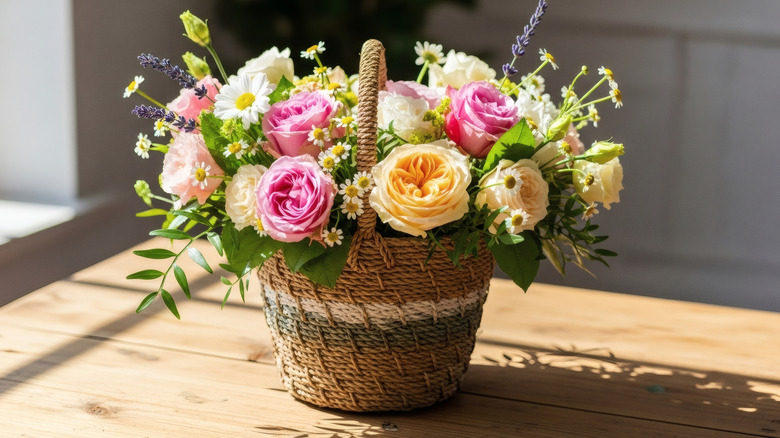
If you're looking for ways to repurpose your old Easter basket (or take advantage of post-Easter sales), then a spring centerpiece basket is a great way to do so. Grab a woven basket of your choice and line the inside with a cloth or old towel. Then, fill the basket up with artificial flowers, branches, or even some produce to create a rustic display. You can stand them upright for a vase-like centerpiece, or use a long basket and lay down your flowers inside to make it look like they've just been harvested.
Utilizing a woven basket on its own is another fun option for farmhouse-style decor. If you want to display the basket by itself, try draping a piece of patterned fabric over the interior. This will make it look more spring-like — almost like a seasonal picnic basket. You could even temporarily swap out your fruit bowl with a fruit basket for garden-inspired decor.
Add a simple silhouette to your lampshade for spring
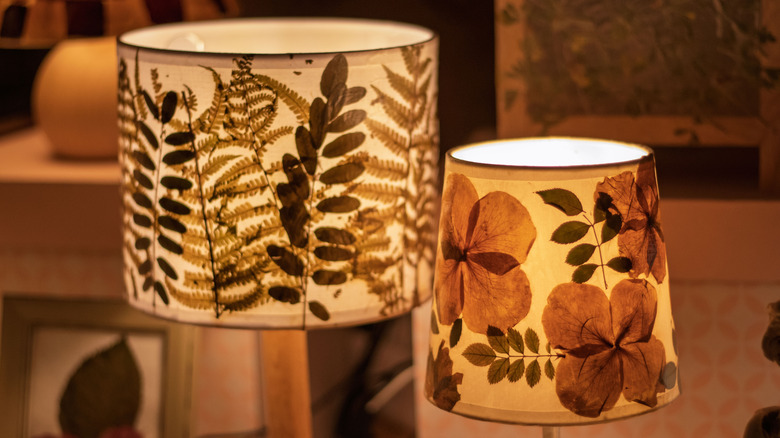
Give your lampshades an easy spring makeover with nothing but a few dried flowers. A DIY pressed flower lampshade is a super affordable hack, especially if you've thrifted a cloth lampshade or have a spare one laying around. All you need to do is glue pressed flowers and leaves onto the inside of your lampshade. You can use whole flowers with stems to create a spring scene, or just arrange your favorite pressed blooms to make a pattern.
A bag of dried flowers is an affordable craft store find, or you can snag bulk pressed flowers from Amazon, like these Nuanchu Pressed Flowers. If you're drying them yourself, speed up the process by covering the top and bottom of your flower with a paper towel and pressing it down with a microwave-safe plate or container. Microwave the flower in 30-second intervals until fully dried.
You can also use paper instead of flowers to design spring patterns. Cut out the silhouettes of flowers, trees, or grass, and glue them to the inside of the lampshade. You can even use double-sided tape if you'd rather be able to change out the design later on. Depending on where you source your shade and flowers from, it's easy to keep this spring decor piece under $20.