

Ditch Concrete: The Eco-Friendly Alternative That Can Prevent Standing Water

Concrete is everywhere these days. From roadsides to fence posts, it seems to be the go-to option for creating a stable surface. While concrete is definitely versatile and has plenty of advantages, it is not always the best option, especially when it comes to dealing with areas where water tends to stand or collect. That is exactly where decomposed granite can help. If you have never heard of decomposed granite before, it is a finely crushed natural material created from weathered granite rock. It is made up of small particles that vary in size, giving it a soft, sandy, porous texture.
This allows water to filter down and move away from the ground surface, making it an excellent choice for use in sites where water often pools. Just keep in mind that if you really want to take full advantage of decomposed granite's permeability, it is important to select the right type. Decomposed granite comes in several options: loose decomposed granite, stabilized decomposed granite, and resin-coated decomposed granite. If your main goal is preventing standing water, loose decomposed granite is the best option.
Also, when you are using loose decomposed granite, you are not just keeping the puddles away. You are helping the environment, too. Decomposed granite has a natural composition unlike concrete, which helps reduce carbon dioxide emissions. In addition, its permeable nature helps decrease runoff and erosion in landscapes. Put simply, if you are looking for an eco-friendly driveway material that looks good and can prevent runoff, decomposed granite is a great option.
Using decomposed granite in landscapes the right way
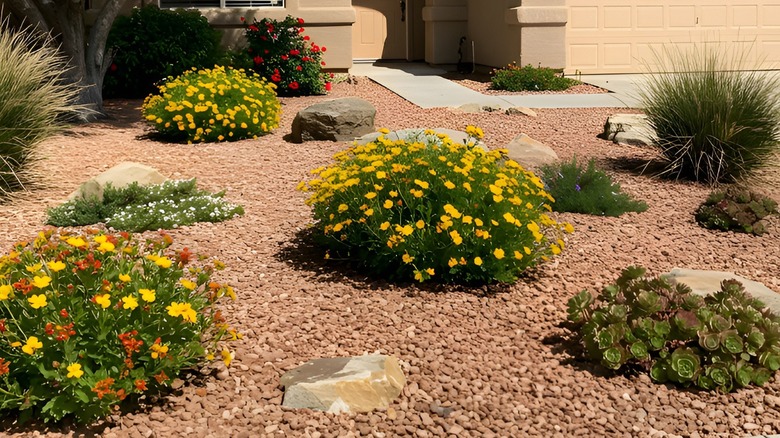
Even though decomposed granite is highly permeable and works well to prevent water from pooling in landscapes, it will not perform properly if there are underlying issues with the soil. Take uneven ground, for example. If an area is not leveled properly or is low, even a highly permeable surface can still collect water. So, if you are planning to use decomposed granite in your construction project, make sure that the ground is properly leveled first. This will stop the water from accumulating, and you won't have to constantly look for tools and methods to remove standing water from your home.
Also, keep in mind that if the soil underneath has low permeability, is compacted, or contains heavy clay, you need to remedy those issues as well. That is because the water might pass through the decomposed granite, but the soil or ground below will eventually become saturated, causing water to pool again. So, make sure you fix compacted soil or address other underlying ground issues first, and then use decomposed granite in your driveway or other areas of your home.
Other than that, it is also important to note here that porous landscape surfaces like decomposed granite can sometimes get clogged due to sediments and soil buildup over time. So, make sure to sweep or rake the surface occasionally. You can even use a blower to clear dust and smaller particles from the area to maintain its permeability.