

The Perfect Plant For A Privacy Hedge That Brings Tropical Vibes
Are you tired of seeing rows of Italian cypress trees punctuating every property line in your neighborhood? Take heart, for you don't have to follow suit. While most people gravitate toward fast-growing trees for a natural privacy screen in their yards, you can utilize firespike, a tropical-looking shrub, to screen your home. Also sold as cardinal's guard, the plant may be botanically named as Odontonema cuspidatum, O. strictum, or O. tubaeforme.
When spaced about 2 feet apart in ideal conditions, firespike grows dense enough to block prying eyes. Moreover, it spreads through underground shoots. Thanks to a fast growth rate, it quickly forms a dense thicket, providing a gorgeous screen. It doesn't grow very tall either, staying well under 10 feet, making it great under utility lines. Another reason you're likely to fall in love with this plant is the flowering. Spikes of gloriously red blooms top the lush, green foliage in late summer or early fall, exuding a tropical vibe. They continue to appear in waves throughout winter, luring in beautiful hummingbirds and butterflies. In the deep south, you may spot crimson flowers throughout the year!
Turning firespike into a flowering, tropical hedge
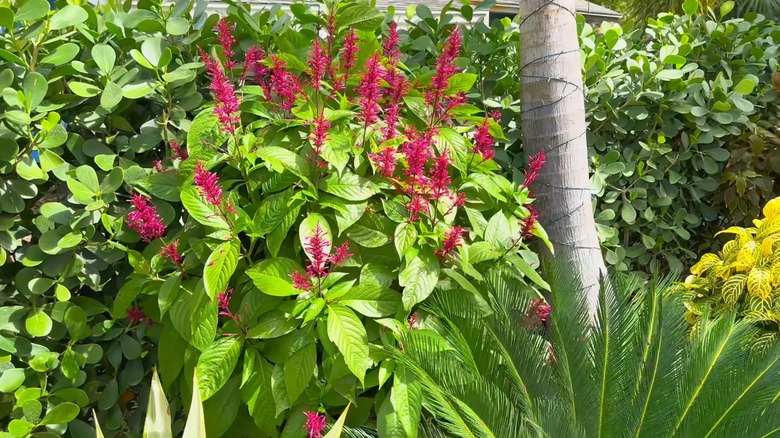
If you're looking to plant evergreen hedges and shrubs that provide privacy even in winter, firespike will do a wonderful job only in zones 10 and 11. Elsewhere, where temperatures plummet below 28 degrees Fahrenheit or where it experiences frost or light freezes, it may struggle to retain its leaves. In cooler climates, that means you'll get more of a seasonal privacy screen rather than year-round coverage, especially after a hard frost. To its credit, though, it does quickly regrow from roots during spring in zones 8 and 9, and may be utilized as a seasonal screen in these regions.
Unfortunately, because of its underground sprouting and self-seeding habit, firespike has escaped into the wild (though not widely considered invasive there) in parts of South Florida. In addition, it is labelled invasive in Hawaii, and accordingly should not be planted there. Also, white-tailed deer enjoy its foliage, so if they're common in your area, avoid planting it, as deer may quickly damage the hedge.
Cultural requirements for the best growth
For a lush appearance, you should plant firespike in a moist site with excellent drainage. Bonus points if the soil is rich in organic matter, though a single feed of a general fertilizer in spring should keep the plant happy for the season. Full sun exposure brings out the best flowering quality, though it can also handle filtered and partial shade, and may even prefer it where afternoon sun is too intense. As for other conditions, firespike is fairly adaptable. It isn't too fussy about pH levels or soil texture, growing well in sand and loam. Plus, it can flower, albeit limitedly, with infrequent rainfall and irrigation. Keeping the beds mulched should improve moisture retention.
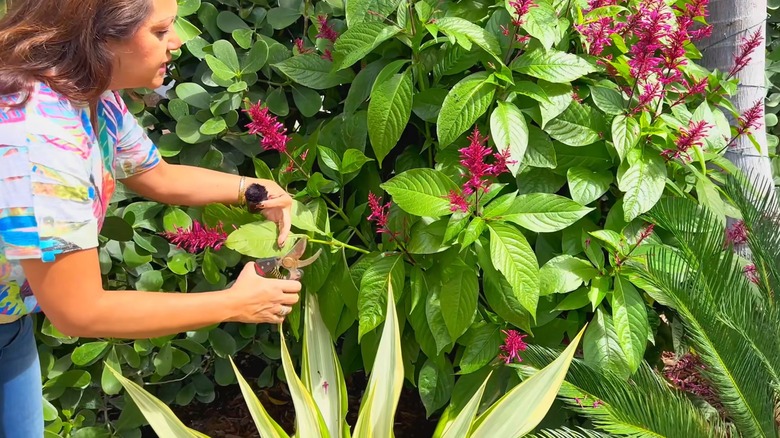
Firespike responds well to pruning, so you may shape it however you prefer, or give it a light trim after flowering anytime it grows out of bounds to keep it looking sharp and tidy. Frost or freeze-damaged plants may be cut back to the ground in spring to encourage regrowth. Given adequate care, you can expect the hedge to last for decades.