

Straw Mulch Does More Than Just Keep Your Garden Watered While You Travel
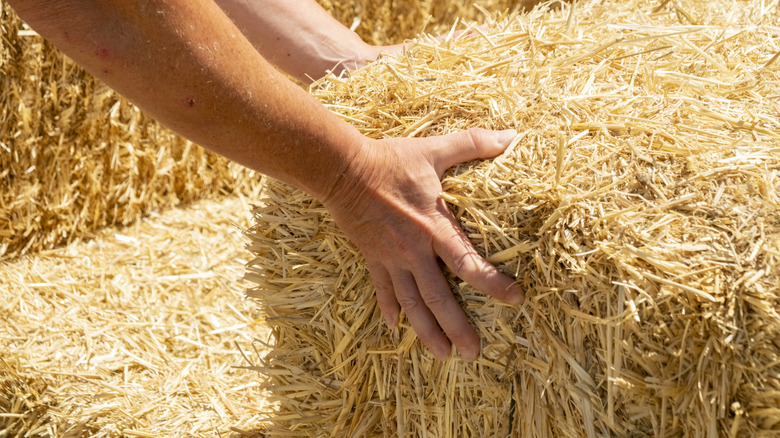
Could your vacation be saved by ... straw? Signs point to yes if you fret about how your garden will get what it needs while you're traveling. Straw mulch has long been known for its water-retaining capabilities by blocking out sun, thus impeding evaporation. A 2025 study in the journal Environmental Pollutants and Bioavailability notes that straw mulch can prevent water loss by 50%, compared to bare soil. Thus, straw mulch covers your plants' water needs for a week of travel — but you may not be aware straw mulch can provide lots more help while you're away, especially in the areas of weed prevention, temperature regulation, and overall soil health.
Straw consists of the stalks of cereal-grain plants, such as wheat and barley, with chaff and most seeds removed. In addition to its ability to step in and serve as your vacation gardener, straw is inexpensive and easy to work with because it's lightweight. You'd probably be surprised by all the ways you could be using straw in your yard and garden, such as adding to compost or creating garden paths. It's not as attractive as other mulches, which is why gardeners are disinclined to use it as mulch beyond growing vegetables and supporting new lawns, although they do use it in the winter landscape to protect plants. Be aware that straw is not the same as hay, which is full of seeds that lead to weeding.
Straw mulch benefits your plants and soil while you're away
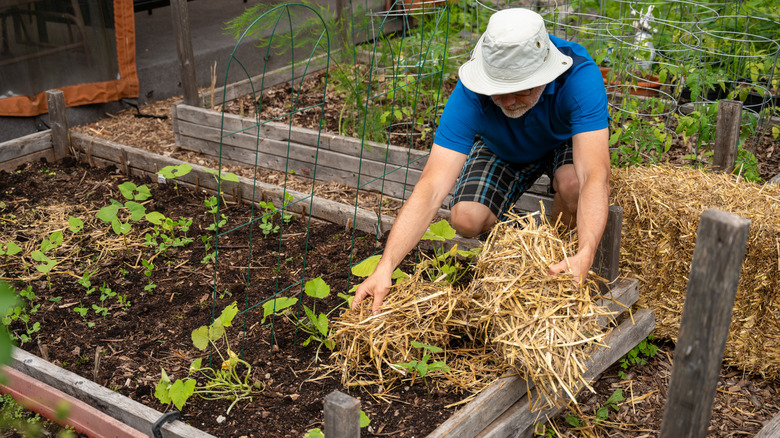
If you use straw mulch, you will likely find you have very little weeding to do when you return from your travels. Just as straw mulch's moisture-retention capacity comes from blocking sunlight, so too does it block significant weed growth. Straw mulch helps your plants compete successfully with weeds because a layer of it makes it difficult for weed seeds to germinate and work their way up through the straw.
Worried that the soil will get too hot while you're gone and your plants will suffer? Soil temperature is much less of a concern when you mulch with straw, which helps regulate soil temperature so it's warm in cold weather and cool in hot weather. This temperature regulation reduces stress on your plants and can keep veggie plants from bolting (blooming and producing seeds).
Straw mulch even takes care of your soil while you're away and offers several soil benefits. It supports soil structure and provides carbon for beneficial microorganisms. As straw mulch decomposes, it enriches your soil with nutrients. You need not worry about fruits, berries, and vegetables that sit on the ground while you're gone as the straw mulch will keep them off the soil, where they are susceptible to diseases like belly rot. Straw mulch also prevents the fungal spores in the soil from splashing up on plants due to rain or overhead watering.
Using straw mulch in your garden
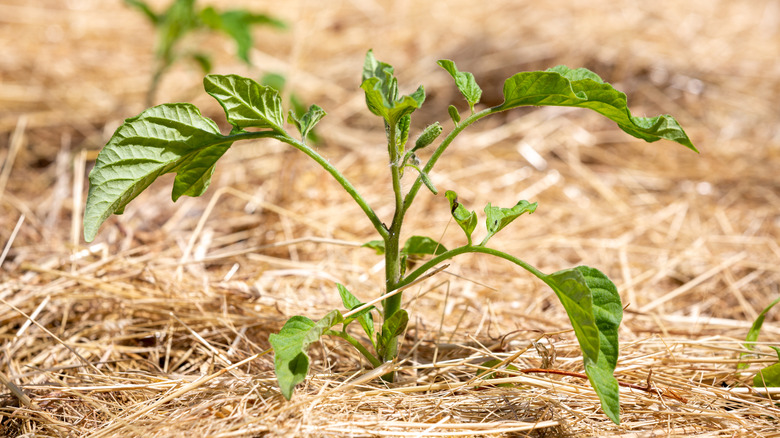
To use straw mulch in your garden, apply a layer of about 2 to 4 inches. Be careful to avoid the straw mulch mistake that will damage your vegetable garden – applying it too early, before seeds have germinated. Just as weed seeds have a challenge poking through the straw, so would your garden plant seeds. You'll find that a bale goes a long way and will give you significant coverage, depending on how thickly you layer it.
You may wonder if you should toss used garden straw at the end of the season or let it decompose. Unless you have reason to believe the straw is contaminated with disease or harboring critters (like slugs, which seem to especially like straw mulch), it's fine to allow it to decompose and add more next season. Other options include mixing it into the soil or adding it to your compost pile.