

Scientists Say Your Dishwashing Sponge May Be Harming The Environment. Here's What To Know
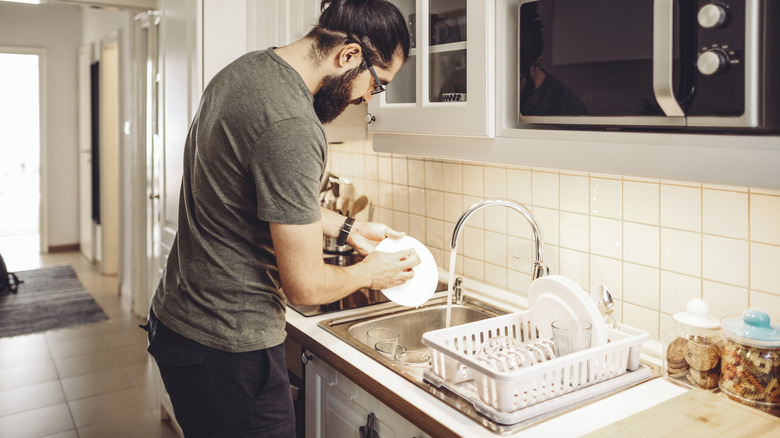
Everyone wants a clean and healthy kitchen, whether you're making a salad or baking a dessert. A large part of kitchen hygiene maintenance involves washing dishes, as germs and bacteria can grow rapidly on dirty plates, cups, and silverware and contaminate other surfaces. Unfortunately, if you are using the wrong sponge for washing dishes, you may be contaminating the environment. Many sponges are made from plastic materials, and during the dishwashing process, tiny pieces of plastic, called microplastics, can come off of the sponge. Microplastics are thought to affect both human health and the environment, so it is important to determine if your sponge could be a culprit, what the effects may be, and how to prevent the shedding of microplastics during dishwashing.
If you follow the recommended methods for handwashing your dishes, it is pretty likely that you are scrubbing with a sponge. A good sponge creates a lather with the dishwashing detergent, is gentle enough not to scratch fragile dishes, has a scouring side for pans and tougher messes, and is simply convenient to use. However, most sponges, unless you specifically choose natural, eco-friendly sponge alternatives, are made of synthetic materials and plastics that contribute to the amount of microplastics in the environment. As you scrub your dishes, small fragments of the plastic from the sponge break off and are washed down your drain. It may only be a gram or so of microplastics released per person per year, but when you consider how many people use a dishwashing sponge every day, the pollution is significant.
What are microplastics, and what are their effects?
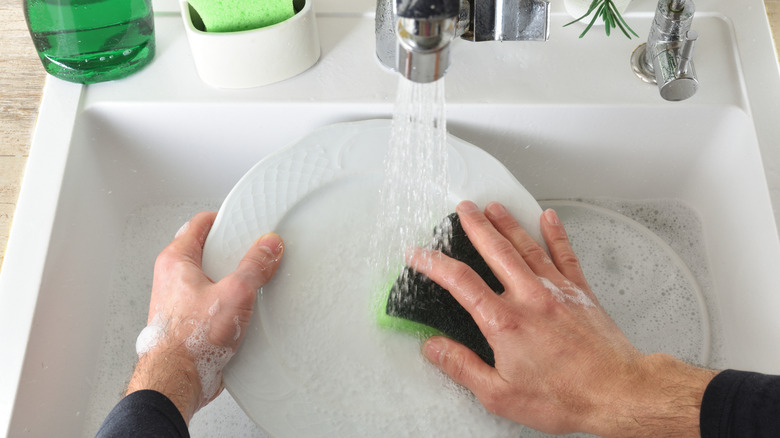
Microplastics are tiny bits of plastic that can be as large as 5 millimeters long or smaller the width of a strand of hair. Some microplastics are manufactured to be small, such as the plastic beads in exfoliating scrubs, while others are a result of larger plastic items slowly breaking down over time. Plastic does not biodegrade in the environment and instead just breaks down into smaller and smaller pieces that end up in our food, water, clothes, air, and soil. There are ways to know if your tap water has microplastics in it so that you can try to reduce the number of microplastics that end up in your body, but avoiding consuming microplastics completely is impossible. You almost certainly have them in your blood already from all kinds of daily activities and items used, and the number of microplastics in the environment is expected to continue to rise.
Many microplastics are collected at wastewater treatment plants, but the ones that aren't are linked to negative health effects, though research on the topic is somewhat limited still. For animals like birds and fish, microplastic exposure has be associated with increased vulnerability to infections, and microplastics are also thought to be associated with harm in digestion, reproduction, and respiratory systems. With their presence in every ecosystem in the world, they are being consumed by and perhaps harming the health of you and every other animal. It has also been suggested that microplastics may speed up the melting of ice, which can have a major impact on global warming.
Reducing the release of microplastics when washing dishes
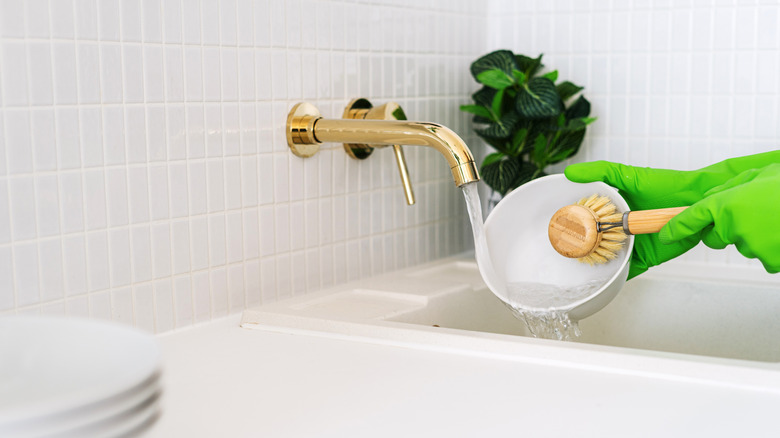
If this is the first you're hearing of microplastics, their impact and pervasiveness can be scary. Luckily, there are small changes you can make to reduce your contribution to their release. While changing out your dish sponge or adjusting your dishwashing habits may not make the biggest difference to your exposure to microplastics, easy swaps are a good place to start. For example, when you need a new sponge, opt for one that has a lower amount of plastic in it. Ideally, you may even switch to one that is plastic-free or natural. Rags or wooden dishwashing brushes can also be good swaps. Check out the best eco-friendly kitchen products you should own for some inspiration before shopping.
Also, remember not to rush out to buy a new item if your sponge is still in good condition, though, as just throwing away your current sponge won't help the environment much, either. While the abrasive scrubbing of dishes is what sheds microplastics from sponges in the home, microplastics are also released in landfills as plastic items slowly break down over time. So, switching to an eco-friendly option will help, but you should take proper care of your current sponge, even if it is plastic, and wait until you actually need a new sponge to reduce overconsumption-related environmental impacts. As other items in your kitchen age, it may also be time to ditch these plastic kitchen items for safer alternatives to further reduce potential microplastic shedding and consumption in your home.