

Grow Summer Squash And Possibly Say Goodbye To Skunks
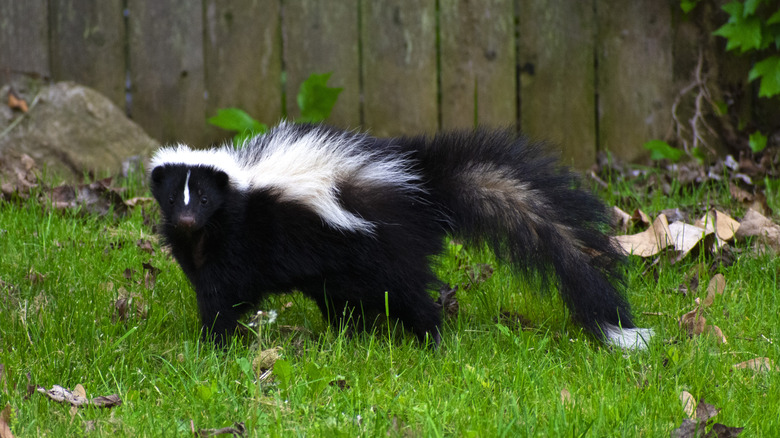
One thing that can be said about skunks is that their appetite for grubs can mean a lot fewer bugs in your yard. Some gardeners even consider skunks to be a garden helper, especially when they demolish underground wasp nests or control beetle populations. But the truth is, skunks are scavengers and they can become problematic pests when they dig holes in your lawn, eat all the earthworms in your compost, or make themselves at home under your porch. For anyone wanting a humane approach to pest control, planting summer squash to deter skunks is an unusual method that some say works thanks to the tiny, prickly hairs on this plant that skunks can't stand.
While skunks are a very common animal, there's a fact about skunks that surprises many people: they have sensitive feet. Although using plants to keep skunks out of the garden is not a scientifically proven method, the prickly leaves and stems on squash are meant to make it uncomfortable for a skunk to dig or even pass by, and it's a low-risk, potential solution that's harmless to the animal. Sprawling vines that act as ground cover can block access to places where skunks like to dig, such as in your compost pile or the fertile soil where your tomato plants are thriving. As part of an edimental gardening trend, planting your zucchini and patty pans with zinnias and marigolds is a great way to bring color, texture, and pollinators to your yard.
How to use summer squash as a skunk deterrent
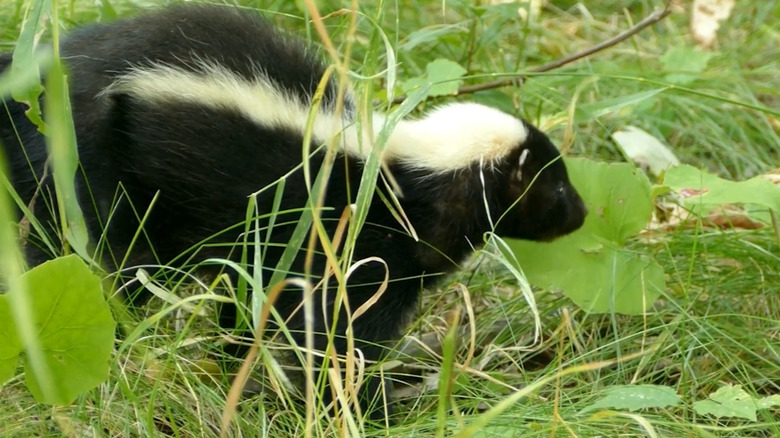
Using summer squash as a skunk deterrent requires no traps or chemicals, and it has the side benefit of producing food. To use this approach effectively, consider planting them along the perimeter of your garden, as a border rather than clustered in a bed. You can even use them as a foundation plant around your shed, as long as they can get full sun, which is a key tip for growing zucchini and other types of summer squash. This approach to pest control is likely to be just as effective with any type of squash plant, such as pumpkin, which also has spiky leaves. Just be sure to harvest your squash as soon as possible. Many skunks like to eat this fruit, which can undo the work of those prickly vines.
Cucumbers, watermelons, and cantaloupe are all members of the cucumber family and have spiny leaves. From gourds to winter squash, there are many members in this genus that you can try, but keep in mind that this method calls for summer squash, so the others may be less reliable. However, all of these plants have beautiful foliage and bright white to golden yellow and orange flowers that pollinators love. The main drawback of this method is that squash are annuals, so you'll have to plant them every year as part of a broader pest control plan. Be sure to harvest the squash regularly to avoid attracting other pests. Summer squash are prolific producers, proving that the beauty of gardening in alignment with the powers of nature instead of against them is that you're rewarded with abundance.