

11 Kitchen Remodel Trends That Homeowners Are Obsessed With In 2026
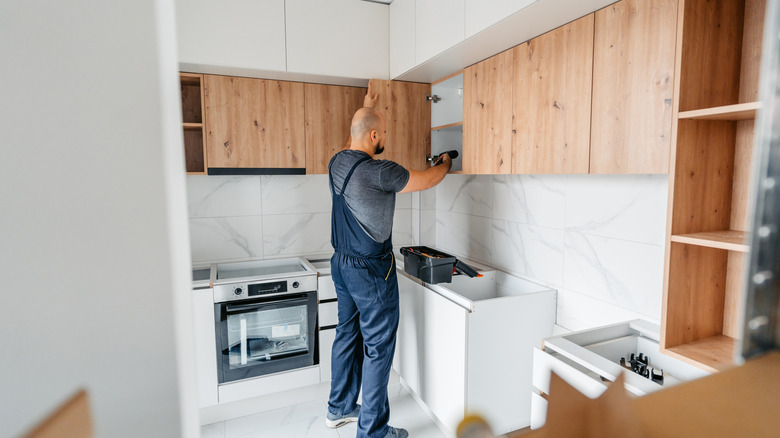
Generally, people remodel their kitchen to improve functionality and optimize the available space so it better fulfills their requirements. But why stop there when you can explore unique styles, jump on hot trends, or attempt a bespoke spin on pre-existing designs? Wondering how? We reached out to five experts for exclusive interviews on what's catching the eye of design-obsessed homeowners in 2026.
Their consensus? Homeowners are becoming experimental with the heart of the home and no longer regarding it as a utilitarian workhorse. They're bringing in moody colors, wood tones, or tonal contrasts to cabinets, or extending them to the ceiling for an expansive look. Chic furniture is standing in for kitchen islands, while layered lighting is enhancing the room's depth. Of course, they're also introducing smart technology features or secondary, purpose-driven spaces to take the load off the main kitchen zone. As you can imagine, there are plenty of changes happening. These are the trends shaping the heart of the home in 2026.
Colors are upstaging white in cabinetry and islands

White kitchen cabinetry has been the 'classic' norm for as long as one can remember. Highly versatile, it works well with most design styles and infuses a sense of calm and brightness into the space. However, those remodeling their homes in 2026 may be keen to retire white and bring in more color, according to Ryan Fitzgerald, real estate expert and the owner of Raleigh Realty. "We're moving beyond all-white kitchens and into a world of richer and thoughtfully chosen color options," he explains exclusively to House Digest. "Deep green, moody blue, warm gray, and even soft, earthy reds are now making their way onto base cabinetry or islands to create kitchens with character, not cookie-cutter kitchens."
People are embracing darker tones and shades that bring in drama and warmth, as white can sometimes read sterile. That way, you can also create mini-zones in your kitchen, which is particularly valuable to break the monotony in open layouts. If you plan on installing bold-colored cabinetry, Fitzgerald advises offsetting its heaviness with lighter shades on the walls and countertops.
Mixed materials, tones, and finishes are gaining prominence in kitchen hardware
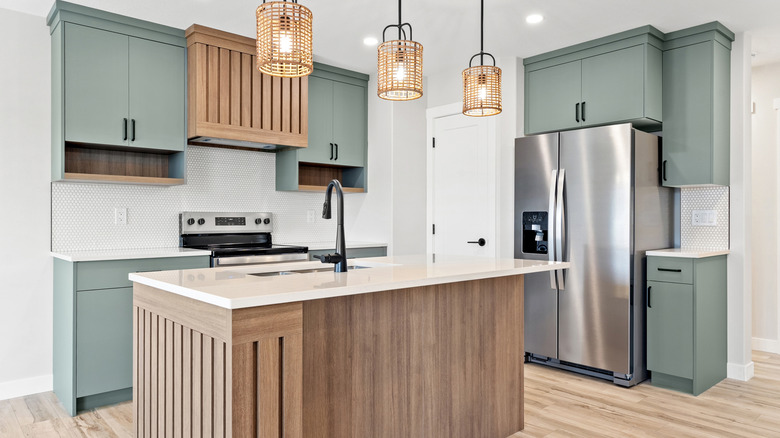
Years back, it was cool to have a 'matchy-matchy' kitchen, with the same materials and finishes throughout. But Ryan Fitzgerald insists that isn't the case anymore. "People tend to be stepping away from perfectly coordinated appliances, fixtures, and hardware," he opines. In a way, this change seems to reflect the current shift in mood, where people are choosing personalization and artful craftsmanship over clean minimalism.
Besides, if done right, such a tonal shift makes the space come alive with little effort. Upgrading kitchen hardware is arguably the easiest change to make during remodeling. To nail the mixed material kitchen trend without making your space feel cramped, Fitzgerald recommends pairing wood tones with stone. You can also mix up metals like brass and black hardware and light fixtures. Want to take this a step further? Play on scale, recommends our expert. Adding "differently-scaled islands that complement each other in tone but not necessarily in size" is one way to do this. "This all makes for a more interesting look without being chaotic," adds Fitzgerald.
Seamless integration of technology is gaining pace
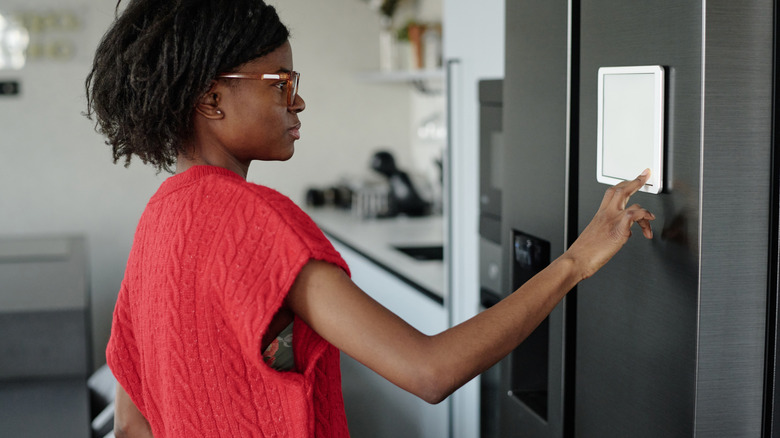
When the National Kitchen and Bath Association (NKBA) released its annual kitchen trends report for 2026, it foresaw the adoption of smart, intuitive features that would raise 'the kitchen IQ.' Turns out, Fitzgerald shares the sentiment. In his experience, homeowners are increasingly integrating technology into their kitchens for greater efficiency. Options that don't detract from the aesthetic of the space are especially desirable additions. "Examples of these include speakers that perform well without dominating interior design, touchless faucets, lighting that switches on automatically, and charging stations that remain out of sight," he elaborates.
As you may have noticed, the focus is not on splashy equipment that screams, 'Look at us, we're smart.' Instead, the assimilation of smart features is near-invisible. This means they're hidden in plain sight, but offer real benefits that greatly improve functionality. "What homeowners appreciate most is when their technology helps them solve problems without bragging about it. The trend in technology is not about acquisition; it's about how it assists people in their lives in a smooth way," he clarifies. Such smart tech integration also entails greater energy efficiency, as your appliances can make certain executive decisions. For instance, AI-controlled refrigerators can adapt the device's cooling cycles based on when and how often you open and close the door. Similarly, smart dishwashers analyze the load size and how dirty the dishes are to optimize water and energy usage.
Dedicated prep spaces on the side are trending
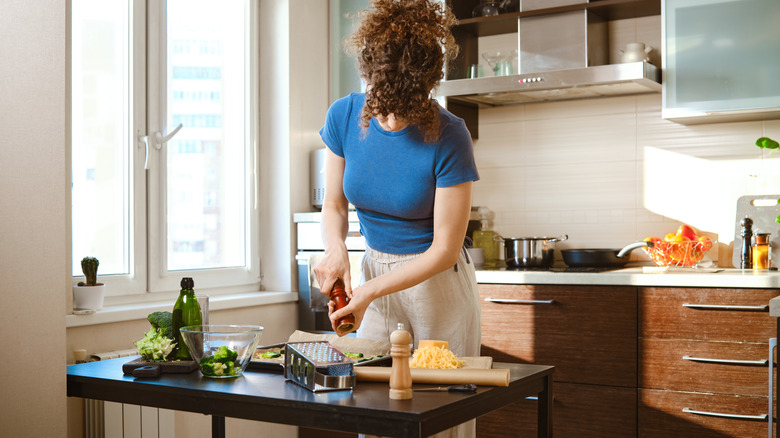
2026 brings in a shift in how people view the heart of their home. "Kitchens are no longer the 'everybody gather in the island' spaces," says Fitzgerald, "but spaces that accommodate multiple cooks at one time." Due to increasing living costs, especially during the pandemic, many people moved back in with their parents, turning homes into multi-generational households. With everyone donning a chef's cap, preserving the kitchen's overall flow has become paramount. Consequently, Fitzgerald feels that homeowners are eking out dedicated spaces, in addition to the main kitchen, during a remodel. "Secondary prep areas, beverage zones, and microwave drawers outside of main work zones are on-trend because they make the kitchen function smarter," he adds.
There's an uptick in demand for built-in, purpose-driven features like prep (or dirty) counters and butler's pantries. The main objectives are to increase storage and mask clean-up clutter so the main kitchen can be used freely to entertain guests. As such, this design trend of 2026 is perfect for open-floor kitchen plans. "People want flow, not congestion, when it comes to meal prep. Smart layout planning and attention to task zones are what homebuyers are noticing and getting the most excited about this year," Fitzgerald concludes.
Integrated materials and surface continuity are the new obsession
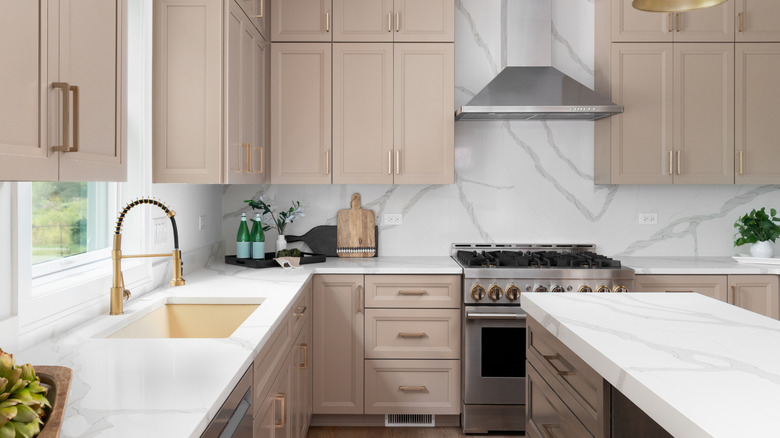
Rather than taking a piecemeal approach, where each surface is clad in different materials, designers are opting for surface continuity by integrating materials across multiple planes. Speaking on this 2026 trend during her exclusive interview with House Digest, Kerrie Kelly, CEO and creative director of Kerrie Kelly Studio, highlights, "Homeowners are increasingly drawn to kitchens where materials flow seamlessly across countertops, backsplashes, and even appliance cladding." This cuts down on visual noise as well as upkeep, as you have fewer joints and grout lines to deal with. Besides, such a monolithic look tends to read luxurious and is especially great in open layouts where visual cohesion is a must.
To achieve surface continuity, designers and homeowners are opting for engineered materials. Specifically, ones that are available in large formats and can be sliced thinly to easily wrap around different surfaces without adding excessive weight. "Surfaces like Dekton and quartz are allowing designers to create a more architectural look, minimizing visual interruptions while delivering durability for everyday cooking and entertaining," explains Kelly. Plus, they easily translate to different kitchen styles. Choose them in an understated color to add calm to your space and allow other finishes or cabinetry to become the key focal points. Or, go bold with veined marble designs, especially slip-matched ones, to make them the star of your kitchen.
Warm wood cabinetry is garnering much traction
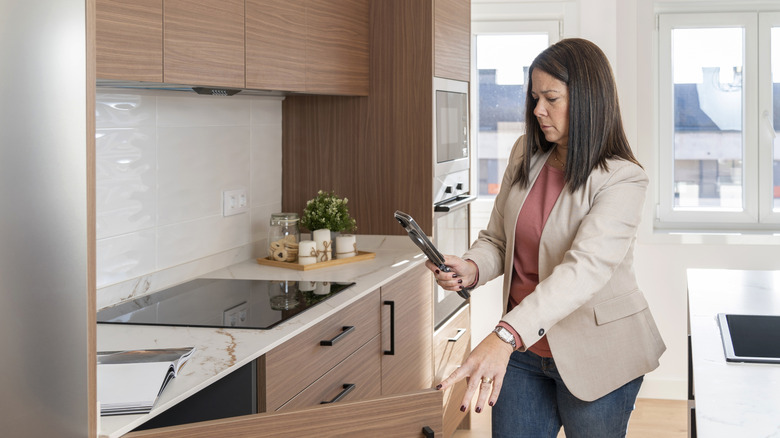
If you're ready to retire 'timeless white' but aren't particularly enthused about colorful cabinetry, consider warm wood finishes instead. This '90s kitchen trend is starting to look surprisingly modern again. Wood has become more popular than white cabinets, with many homeowners choosing medium-toned finishes for their renovated cabinetry. During his exclusive interview with House Digest, Craig Gritzen, founder and principal designer at Curated Style Collective, explains, "After many years of bright white kitchens, homeowners are craving spaces that feel more grounded, natural, and character-rich."
With homeowners increasingly craving balminess and hoping to introduce more organic, sustainable materials into their homes, it's no wonder that wood is experiencing a resurgence. "Wood cabinetry brings warmth, depth, and richness to the kitchen, helping the space feel more collected and timeless instead of overly stark or monochromatic. I think this trend is gaining traction because people want kitchens that feel inviting and lived in, while looking elevated," mentions Gritzen. They're also quite practical and typically easier to maintain. Honey tones, maple look, and burl wood are becoming prominent. If you already have any of these in your kitchen because you haven't renovated it since the '90s, simply update the knobs or crown molding for a much-needed refresh.
Kitchen remodels are making space for layered lighting
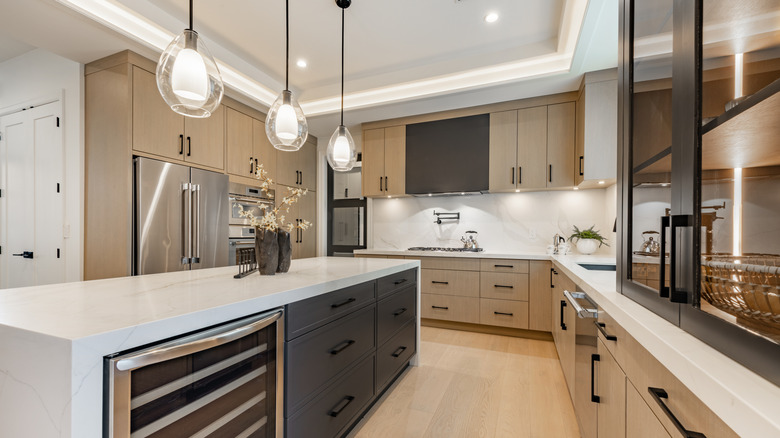
Many are waking up to the fact that bad lighting makes the kitchen look cramped. Strategic lighting allows the kitchen's features, from countertops and cabinets to appliances, to shine. This is why Gritzen says, "Layered lighting is another new build and remodel trend that I see homeowners requesting more this year. In the past, kitchen lighting was approached primarily from a functional standpoint, but I'm seeing more homeowners taking interest in how light shapes the mood and usability of the space."
When you layer different lights, you add depth to the space, making it seem better put together. "Instead of only relying on architectural recessed lighting and pendants, homeowners are incorporating a mix of decorative fixtures, including sconces, decorative task lighting, and under cabinet lighting, to create a kitchen that feels warmer, more dynamic, and inviting," he elaborates.
While natural and task lights hold key importance, homeowners are also leaning into decorative pendant and interior cabinet lights, too. According to Gritzen, apart from improving functionality, layered lighting improves the overall ambience. This allows you to take the room from a functional cooking space to a cozy hangout spot for family and friends to gather.
Tuxedo cabinets continue to gain new admirers
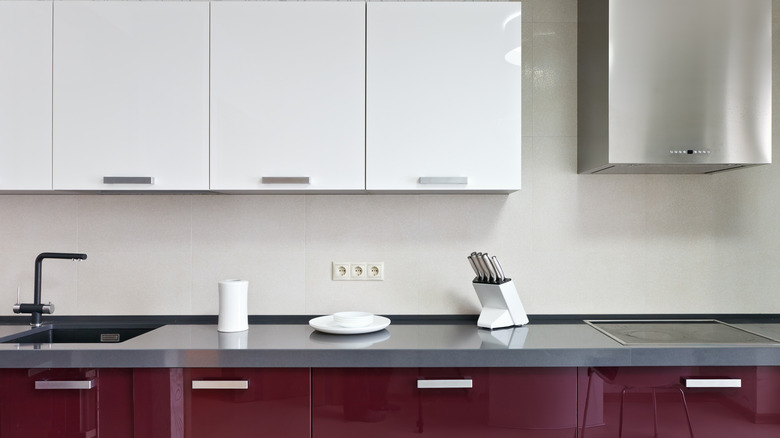
Speaking exclusively with House Digest, Steven Gottlieb, a real estate agent at Coldwell Banker Warburg, mentioned that the popularity of tuxedo cabinets shows no signs of abating. "Another trend we will continue to see, especially in kitchens with a warmer, homier vibe, is using one color for upper cabinets and another for lower cabinets," he mentions. For years, HGTV's Breegan Jane has recommended ditching modern cabinet trends for this classic alternative, as the two-toned contrast helps any kitchen stand out. Better yet, it helps achieve multiple objectives. Darker lower cabinets help anchor the space, but the lighter colors up top brighten it, as they catch and reflect the light.
However, this trend plays out a little differently in 2026. Homeowners are gravitating towards natural materials for added warmth, yet slimming down their cabinetry for clean minimalism. "These cabinets seem to be getting sleeker and more streamlined, less like the shaker style, but with warmer, more natural materials, like wood with a matte finish," elaborates Gottlieb. Some are matching gray upper cabinets with wood-toned lower cabinets for that warm, organic, earthy feeling. However, if your heart is set on a veiny stone backsplash, you can still make color-contrasting cabinets work in a minimalist kitchen, feels Gottlieb. Just opt for "less hardware, more panel integration, and warmer finishes to complement the cleaner lines."
Statement islands that feel like standalone features are in
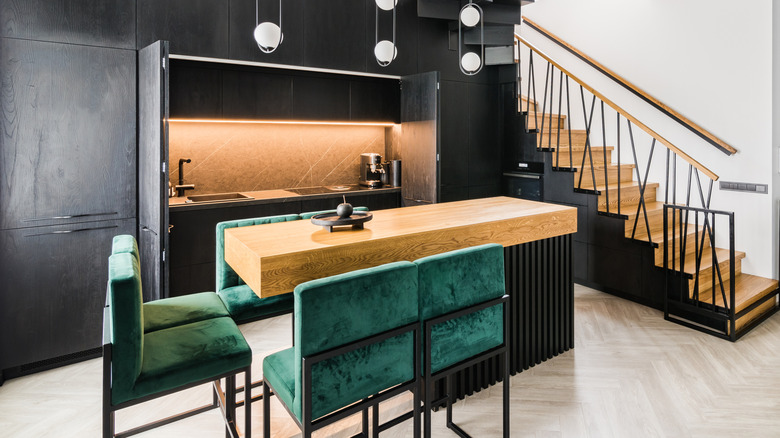
In 2026, designers hope to turn kitchen islands from purely functional hubs into statement makers. Gottlieb explains, "Having an island in the kitchen is a luxury in smaller kitchens, but having an island that makes a statement has become a trend that can be quite visually exciting." While he doesn't discount utility, stating they will continue to offer extra storage, seating, or double up as a workstation, all of this will be done stylistically. Expect to see more sculptural forms, including waterfall edges, that help streamline the look. Similarly, free-standing, chic furniture of notable vintage or decorative pieces raised on ornate legs may also become popular as standalone features.
Apart from style, he also expects a play on detailing for that oomph factor, with islands featuring fluted and reeded textures. "Traditionally, kitchen islands may have matched the rest of the kitchen with uniform cabinetry and countertops, but details like fluting or other textural elements add visual intrigue," he clarifies. Creative island extensions will also likely take off as they read more luxe and help squeeze out more utility from the same square footage. Rather than fully matching the countertop, he expects the extended area to be clad in complementary materials that add a subtle contrast.
Broken floor plans are coming in hot for open layouts
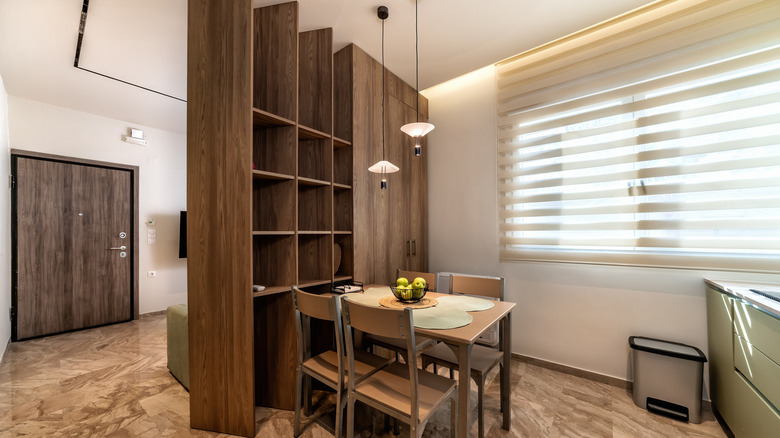
If you haven't gotten the memo, designers are giving up open concept floor plans. An open, expansive area that must offer multi-functional zones for cooking, work, and hosting limits design choices. The incessant noise that you can't escape and the lack of cozy pockets of privacy further make them inconvenient. So, to strike a happy medium, designers are turning to broken or semi-open floor plans. Echoing this sentiment in her exclusive interview with House Digest, Abigail Godfrey, a real estate agent at Coldwell Banker Warburg, states, "Don't be afraid of a broken floor plan. The traditional kitchen layout need not apply. 2026 homeowners are dynamic and seek spaces that mirror their lifestyles."
At their core, broken plan layouts aim to connect the kitchen and living area without putting up solid walls. Enclosures are created creatively in ways that retain the airiness, yet clearly demarcate the area. "A glass partition in the kitchen is the perfect way to slightly divide the cooking area from the entertaining space, while still allowing you to be in both places at once," adds Godfrey.
Homeowners are extending upper cabinets to the ceiling
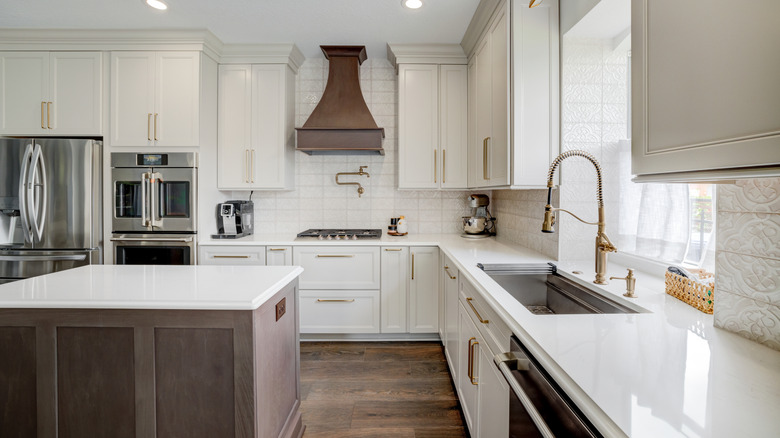
Frankly, there can never be enough storage in the kitchen. From thrifted wares to heirloom sets, there's plenty to display, and it's nice to have extra room. So, why not make use of the dead space between the upper cabinets and the ceiling? Abigail Godfrey finds that many homeowners are looking to extend their cabinets upward.
Besides offering extra storage to house items that you utilize sparingly, full-height cabinetry also transforms the kitchen's vibe and overall appeal. "Lift your cabinets as high as they can go and be amazed at how much larger your space feels." As your eyes follow the cabinets upward, the space feels airy. To add more depth, punctuate the top with decorative crown molding. If you're worried about the extra cabinetry reading monotonous or cramped, use open shelving or glass-paneled doors instead.