

Skip Asphalt Shingles & Meet The Eco-Friendly Roofing Alternative That Looks Sleek
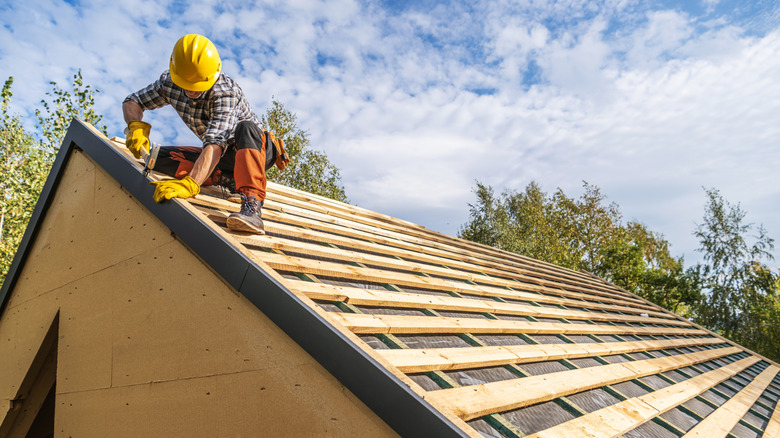
When it comes time to replace a failing roof, asphalt shingles, found on up to 80% of American homes, remain the most common choice among homeowners. These shingles are inexpensive compared to options such as slate, wood shake, or concrete tiles, and are easy to install and maintain. However, if you're after an eco-friendly roof, you may want to avoid this material altogether. Although they may be recyclable depending on your region, most asphalt shingles eventually end up in landfills and can take hundreds of years to decompose. A sleek-looking but eco-friendly alternative? Solar roof shingles.
A roof is a key part of your home you should always splurge on in a renovation, and if you're interested in sustainable living but prefer to avoid the look of large solar panels, these roof tiles should be on your list of considerations. Solar roof shingles, also known as solar tiles, look like modern, dark-colored shingles but are equipped with photovoltaic (PV) technology that transforms sunlight into electrical energy. The energy they generate can be used to meet all or some of your electricity needs, depending on your location, energy usage, and the quality of the shingles.
Solar tiles benefit your home in more than one way
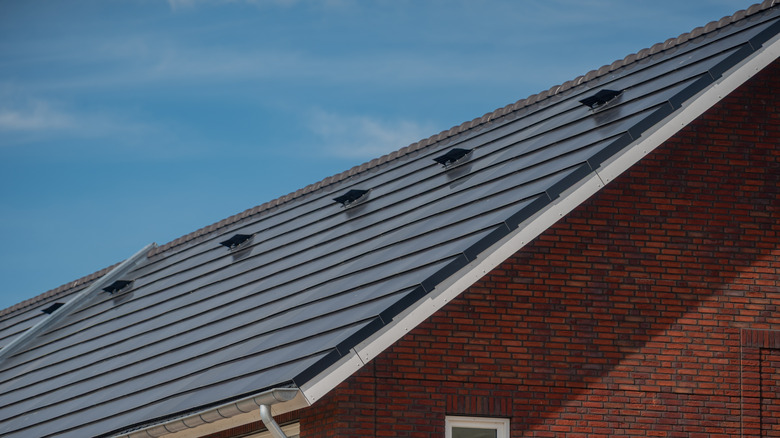
There are many green project upgrades you can do to keep your home sustainable. Solar roof shingles are one of them. They're a strong option for homeowners who have avoided solar installations because they don't want bulky, highly visible panels on full display. Instead, these shingles offer a polished look while lowering your electricity bill. (Although, to be fair, solar shingles typically don't generate as much energy as traditional roof-mounted solar panels do.) Solar shingles come in a range of styles, from sleek, modern rectangles to slate-imitating designs and more traditional shingles. They also function as standard roofing material, protecting your home like traditional shingles.
Whether solar roof shingles pay for themselves depends on several factors. Solar shingles typically come with a higher upfront cost than asphalt shingles and usually require a complete roof replacement. However, rebates and tax incentives, such as the Residential Clean Energy Credit, may help offset some of the cost. There are also factors, such as your roof orientation and pitch, that can affect how much energy your solar tiles generate. (For example, a shaded roof will produce less energy than one in full sun.) They make the most sense if you're already planning a roof replacement and care as much about curb appeal as energy savings. Consulting a local roofing contractor who specializes in solar shingles is a good way to learn about average costs in your area.