

Why Some Nurseries Sell Invasive Plants, And If That's Even Legal To Do

As you walk into a nursery center, you hope to find beautiful plants that will add major curb appeal, attract pollinators, or fill out muddy spots. However, the thought that you could return with an invasive plant has likely not crossed your mind. Yet, the sad reality is that many nurseries continue to sell invasive plants, despite their adverse impact on biodiversity. As an introduced species without major pests and armed with aggressive growth, they outcompete native vegetation and displace local pollinators and wildlife dependent on natives. The reason you can still find them at nurseries, big box stores, and online marketplaces is that the system allows it. Fragmented laws and regulations, outdated lists, grace periods, and the "sterile" loophole enable their sale. Besides, nurseries are ultimately for-profit businesses, and they will cater to demand — and invasives with their easy care, fast growth, and ornate looks are almost always in demand.
A study by the University of Massachusetts published in Frontiers in Ecology and the Environment found that 61% of over 1200 invasive plant species were readily available at nursery centers. This also includes federal noxious weeds, whose interstate sale is outlawed. "When people think of how invasive plant species spread, they might assume species are moving because of birds or the wind dispersing seeds," said Evelyn M. Beaury, a UMass Amherst researcher and author, "But commercial nurseries that sell hundreds of different invasives are actually the primary pathway of invasive plant introduction." Regrettably, most of these sales are not illegal. If an invasive plant isn't on the "prohibited for sale" list or federally recognized as a noxious weed, it can often be legally sold.
Disjointed legislature and profiteering drive invasive plant sales

Despite interstate trades having very strict rules, federal law can't prohibit the sale of invasive plants within a state. The federal law decides which plants can move across state lines, but invasive plants propagated, nurtured, and sold within state borders must be regulated by that particular state. Things get tricky because a plant may spread aggressively in one location but be relatively well-behaved in another due to varying environmental conditions. This can prolong the time it takes for a plant to be listed as invasive.
It's also common for one state to restrict the sale of an invasive species, while the neighboring state allows it. Such inconsistencies enable nurseries to keep selling their invasive stock since interstate movement is hard to track, especially between traveling friends, family members, and online markets — the recent federal budget cuts don't help either. Frequently, plants don't have to travel far before they become a problem. Research published in BioScience found instances of nurseries selling several invasive species within about 13 miles of a documented invasion record.
Moreover, because a sudden sale ban can put nurseries out of business, given the massive investment they make in growing and stocking plants, many states allow a "phase-out" process or grace period. During that time, nurseries will stop growing new plants, but continue to sell their invasive stock. Sometimes, they may sell "sterile" cultivars of invasive plants. Ideally, sterile plants don't produce viable seeds, which restricts their movement. However, experience shows that they can cross-pollinate with a similar species and become a nuisance. Callery pear and its cultivars, like Bradford, are a leading example, and FYI, they are one of the worst trees to plant in your midwestern yard.
Is it legal to sell invasive plants?
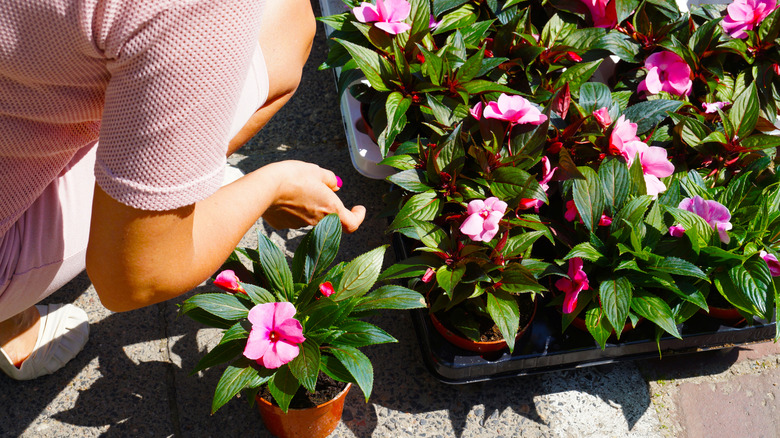
Generally, these laws are more concerned with commercial greenhouses and nurseries, but if you happen to own an invasive plant, it may be illegal for you to sell the plant to your friends and neighbors. Legality strictly depends on whether the plant is restricted in your jurisdiction. The Federal Noxious Weed Act has identified several invasive plants that threaten the natural ecosystem, and so, importing them or moving them across state lines is illegal. However, plants must fit a very a narrow definition to be labeled as noxious weeds. The strict criteria disqualifies many problematic species and lists some plants that have yet to even be found in the U.S.
This shifts the onus to states, which have varying approaches and consequences. For instance, some states like Michigan and Maine publish lists of plants that are illegal to buy, sell, move, or propagate within the state. Missouri has passed the "Cease the Sale Initiative," which restricts the distribution of six invasive species, and Illinois regulates the sale of some invasive plants under the Illinois Exotic Weed Act.
In some states, responsibility is further shifted onto the consumer. For example, a Virginia law taking effect in 2027 directs nurseries to label some plants as invasive and suggest an alternative plant instead. However, this doesn't stop them from selling the plant. The state of New York posts a "prohibited" list and a "regulated" list. Technically, invasive species on the regulated list can still be bought and sold, as long as people are informed about their problematic nature. Before buying, selling, or sharing a plant that could be invasive, research your local laws and discern whether this is a legal plant that can be grown with caution or an invasive plant to avoid at all costs.