

The Easy Bed Bug Deterrent You Already Have At Home (And How To Use It)
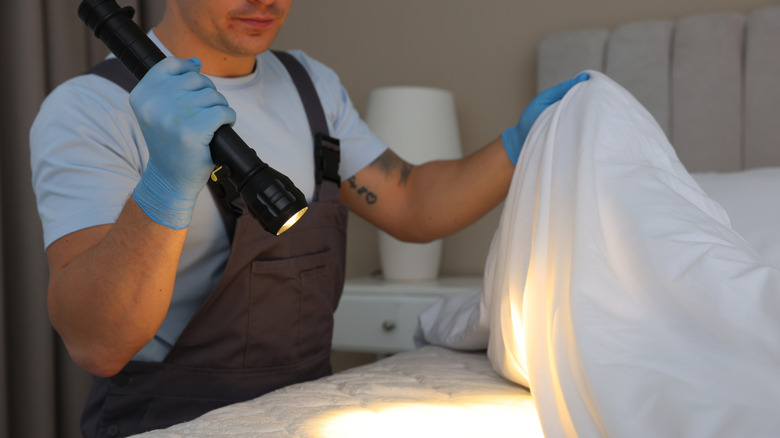
Bed bugs are difficult to deal with once they're inside, so you may have learned some tips and tricks to avoid bringing them home. Recent research suggests, however, that there is a surprisingly simple deterrent that is already in your house. It isn't the only way to prevent them, but it can limit their movement and possibly help prevent an infestation from occurring. A 2026 study from the University of California, Riverside was published in the Journal of Ethology. It found that bed bugs instinctively avoid water and wet surfaces. Researchers saw that they consistently turned away from damp areas during testing, suggesting that water acts as a natural deterrent.
It is interesting to find that something so simple as water can repel them, since it's a natural compound. What this solution comes down to is the bug's physical anatomy. Bed bugs have flat bodies with spiracles on their sides, small openings which they use for breathing. When the bugs come into contact with water, they can actually stick to it due to the surface tension, blocking their spiracles. That risk seems to be enough to keep them away from moisture-rich environments altogether.
Knowing this can help you avoid mistakes everyone makes when dealing with bed bugs, should they happen to invade your home. It doesn't mean, however, that you should go soaking your mattress or furniture, since that can lead to mildew and mold. However, bed bugs typically crawl instead of jumping or flying. This means they will likely avoid crossing water to reach you.
How you can use water to repel bed bugs
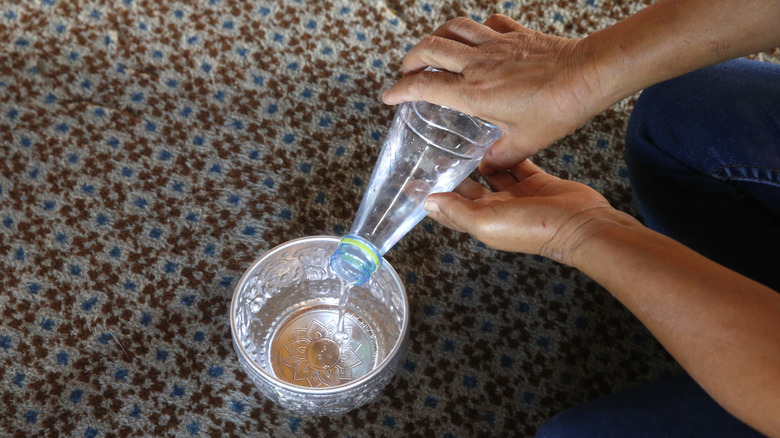
Start by placing containers of water under your bed legs to act as a barrier. Just make sure to keep your bedding off the floor so the bed begs can't climb up. Consider creating some traps in your house that you can observe by placing shallow dishes of water in other areas where you suspect the bugs are hiding. Since water alone won't eliminate an infestation if you have one, you should keep your expectations realistic. Take time to research and find answers regarding common questions about bed bugs.
Even with this new information in hand, bed bugs can still survive temporary submersion in water. Their eggs are even more able to withstand it, so, unfortunately, water isn't a cure all. You'll need to find other ways to get rid of them. Washing blankets and bedding in hot water, then drying them on high heat is effective if you start noticing these bugs. Think of using the water as a way to block and deter bed bugs from finding a place to stay rather than as a standalone solution. It's a simple strategy to make your home less appealing to these pests, but it won't replace professional treatment if you have an infestation.