

The Simple Edging Solution That Keeps Grass Out Of Your Flower Beds
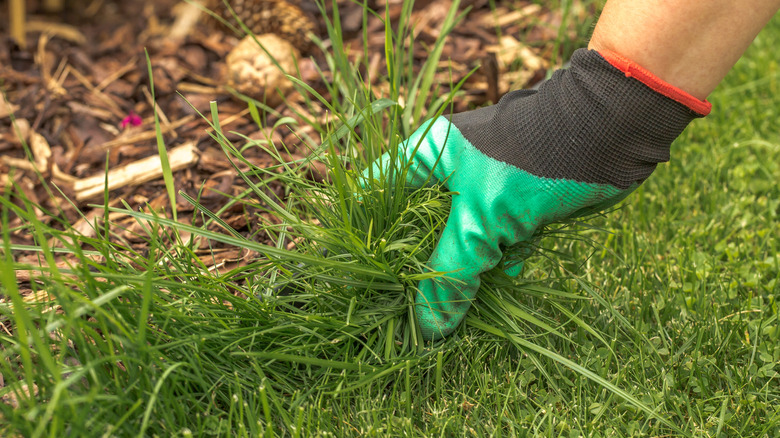
Every gardener knows the eternal frustration of watching their carefully manicured lawn creep into places it simply does not belong. Grass is a notoriously aggressive grower, and many common turf varieties send out sneaky underground runner roots that'll invade wherever they can reach. Before you know it, green shoots of grass are popping up through your beautiful mulch and competing with your prized perennials for space and resources. If this is happening in your yard, you're probably wondering if the only option is installing pricey borders — ones that don't exactly match your aesthetic. Fortunately, learning to edge your grass properly will help keep it from encroaching into your flower bed.
Instead of buying all kinds of edging border materials, you just need to dig a trench-like edge. All you need for this project is a little elbow grease and a sharp shovel. The magic of this approach lies in how it uses the grass's natural biology against itself. When you dig a literal physical gap between your lawn and your garden beds, you cut any existing roots trying to reach into your flower beds, creating an air gap. That's a big deal in this situation, as grass roots naturally stop growing when they hit open air; it's a botanical process known as air pruning. Without solid, moist soil to travel through, the grass halts itself right at this border you've created. You essentially build an invisible moat that stops invasive runner roots dead in their tracks, giving your landscaping a wonderfully crisp aesthetic (and you some peace of mind). It's a simple way to keep your lawn looking well-manicured.
How to dig and maintain a lovely, pristine trench edge
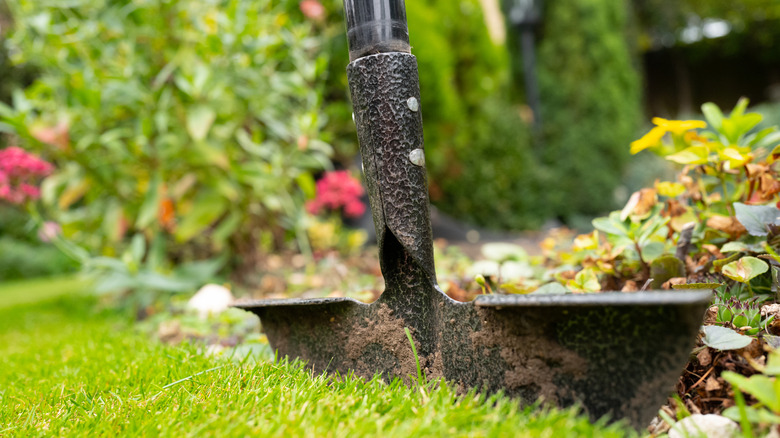
To execute this solution properly, here are tips for sharp DIY lawn edging. The first is to grab a flat digging tool, like a half-moon edger or a garden spade. Position your tool right at the line where the turf meets the soil, then step down firmly to make a clean slice into the earth. Then, don't just cut willy-nilly: your trench needs to be about 3 to 4 inches deep in order to successfully stop those sneaky roots from tunneling again.
And to get the cut just right, aim for a "V" shape. The cut on your lawn should be straight down. Conversely, the dirt in your garden bed should slope lightly toward your new vertical line. This V-shaped slope helps prevent loose dirt or mulch from clogging the trench and gives those grass roots somewhere to spread.
While this trench method is super effective, it'll need fairly regular maintenance to keep that protective air gap in place. Run a string trimmer along the edge of your lush grass whenever you're doing your regular lawn care routine to catch any rogue blades and roots that dare to cross the divide. Then, just one or twice a year (typically during your big spring and fall cleanups), grab your shovel and touch up the whole trench line. Not doing so would be one of the biggest mistakes you can make when edging your lawn. Otherwise, by keeping this line crisp, you'll enjoy a beautifully defined, pristine garden all season long, entirely free of unwanted grass.