

The Stunning Perennial You Should Plant In April For A Garden Full Of Butterflies
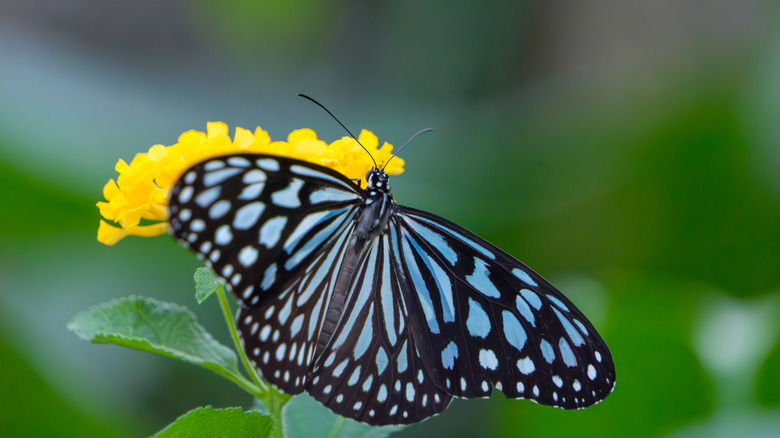
From yarrow flowers that offer a pillowy perch to the tubular flowers of bee balm filled with nectar, the plants in our garden all have a role in creating a sanctuary for the hummingbirds, butterflies, dragonflies, bees, and other pollinators we're trying to attract. While annuals help provide important nectar sources throughout the growing season, it's our flowering perennials that do much of the work in a pollinator garden. One of the best perennials to plant in April is Oriental poppies (Papaver orientale), which are hardy in Zones 3 to 8.
Oriental poppies are an iconic flower that many recognize, but they may not be the first ones you think about planting for pollinators. With colorful, papery flowers, hairy leaves, and seed pods that add lasting texture to your garden, there's a lot to love about Oriental poppies. They're easy for beginners to grow and can be sown directly into the ground in April. The trick with planting poppies is that you don't want to cover the seeds with dirt, since they need light to germinate. They may not bloom the first summer, but direct-sown poppy plants will bloom reliably after that, usually in June and July. While their beauty is fleeting, they bring a cottage garden vibe to any yard.
Discover how to plant and grow Oriental poppies in your pollinator garden
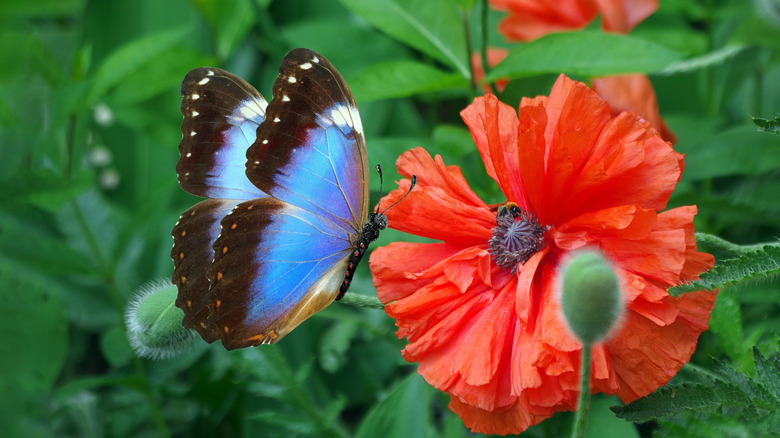
Some gardeners plant poppies directly onto the ground in the fall or winter, but spring planting works just as well. When it comes to the best plants for your pollinator garden, Oriental poppies offer benefits like deer and rabbit resistance and drought tolerance. They like at least 6 hours of light daily, but can tolerate some dappled shade for part of the day. And although they prefer fertile, well-drained soil, they tolerate a variety of conditions. This clump-forming perennial spreads without being invasive, and with a height of 2 to 4 feet, the width of this plant depends more on how much space you give it. Poppies can take up to 24 inches of space in a flower bed, or be grown closer together in mass plantings.
Oriental poppies are the perfect border plant for a driveway, with hues ranging from sizzling red to rose-kissed peach. Offering plentiful color with an abundance of blooms up to 6 inches in diameter, Oriental poppies put on quite a show in late spring and early summer, but the blooms disappear when the heat arrives. For a pollinator garden, they work best in mixed plantings so you don't have empty spaces later in the year. Some companion plants that work well for this include perennials like butterfly weed and foxglove. Poppies also grow well with annuals like cosmos and zinnias to fill the gaps later in the season.