

What To Do If You Find A Baby Bat In Your Home
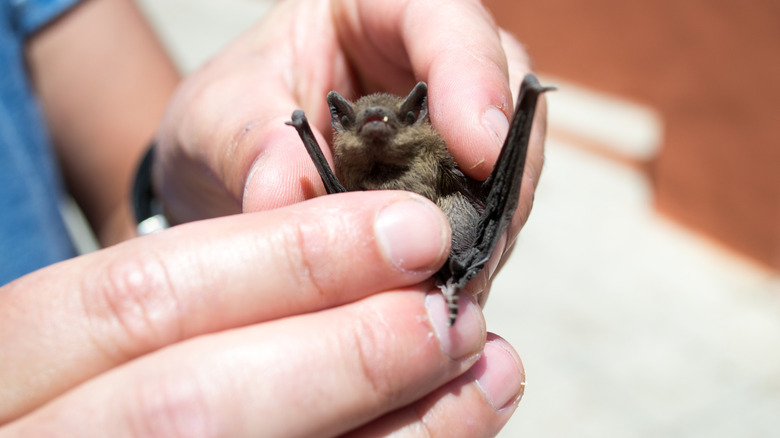
Bats are adorable creatures, with their gentle demeanors and cute appearances, like sky dogs. In fact, their babies are even called pups. Seeing one of these animals flying around at dusk is always a good sign, as they are likely eating pesky insects, and they're vital to the environment. While it's a good thing when bats are in your yard, finding a baby bat in your home is another matter entirely. If you end up with one, you'll need to secure it, call for help from a professional, and search your home for other signs of bat activity.
These little babies, typically born between May and August, are initially hairless, blind, and measure only about 2 inches snout to feet. Thankfully, these mammals aren't usually aggressive, especially if they don't feel cornered. It shouldn't be too hard to secure it, as long as you can stay calm.
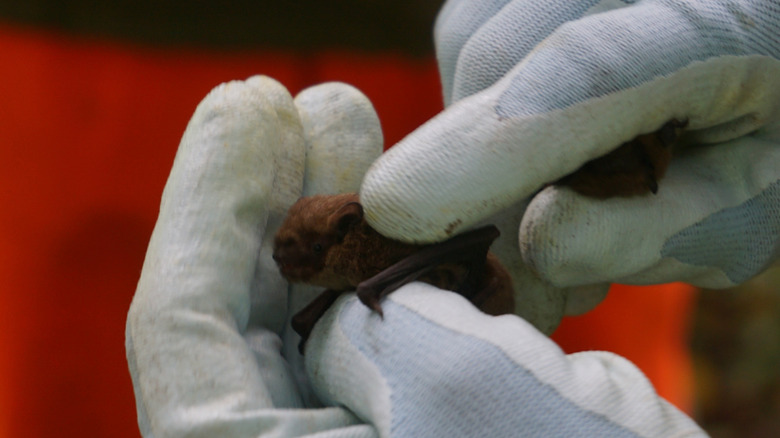
The first step is to make sure you, anyone else in the home, and the bat are as safe as possible. Find a pair of thick gloves. Bats, including the babies, can carry rabies, which can be transferred to people through quick, often painless bites. This is why you should never handle one with bare hands or thin fabric. You will also need a cardboard box or a small plastic tub. You want air holes as well, but make sure the openings are tiny. Adult bats are able to enter holes less than ½ an inch in diameter, and babies are even smaller.
How to safely secure a baby bat
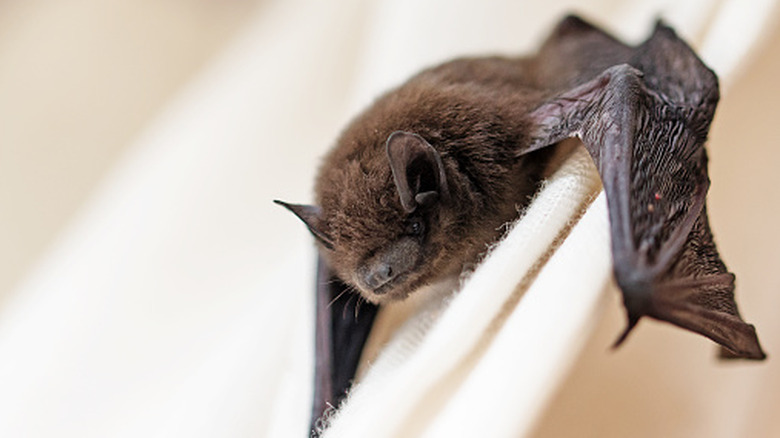
Until they are five weeks old, baby bats can't fly, so they will be on the ground or resting on something. (If the one in your home can fly, wait until it is completely still before proceeding.) While wearing the gloves, gently cover the baby bat with a towel or soft cloth and scoop it up. Then, set it in the container. Place the towel or cloth inside to keep them insulated and protected. Make sure the box is securely closed by placing a book or other item on top.
If you're too nervous to try this method, you can also place the box directly on top of the animal. Take another thin piece of cardboard underneath and try to gently encourage it into the box. Slowly turn the enclosure so it's facing right side up before adding a soft fabric and sealing it shut.
Avoid placing any food inside the box, as it can cause more harm than good. However, you can include a shallow dish of water to prevent them from getting too dehydrated. If you can't get the baby bat into a box, try to keep it as safe as possible. Remove all pets and children from the room to reduce stress on the baby.
What to do with the baby bat next
With a bat that can fly, if there are no signs of an injury, you can wait until night to release them, as they likely accidentally entered your home. However, baby bats cling to their mothers until they are able to fly on their own. Since a fall could have harmed the baby, and often the mother is unable to pick them up and fly from the ground, it's better to have a professional come and help instead of trying to release it yourself. Contact a local bat rescue, a licensed wildlife rehabilitator, or an animal control officer.
After you have the baby bat secured, search your home for other signs of bat activity. While it's not completely unusual to find a bat inside, especially if you make the crucial mistake that's sure to attract bats to your home during winter — leaving your chimney unprotected — a young baby is another matter. Since they usually stay in the roost or cling to their parents until they are old enough to fly independently, it's very unlikely that one managed to get into your house on its own. This means there's a chance you have a roost somewhere, or at least a trapped mother you need to find and remove. You should be checking at least once a year anyway, as it's essential to check your home for bats in the spring, but this baby bat is a good reminder.