

Say Goodbye To Concrete With An Eco-Friendly Garden Path You Can DIY
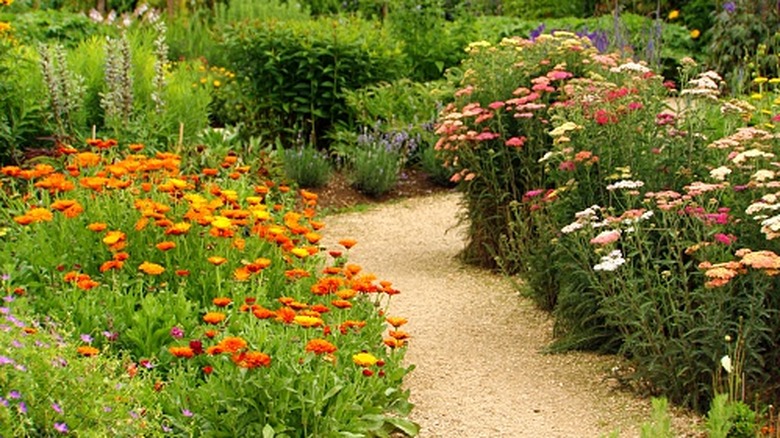
Garden paths connect the different zones of your property, provide a safe place for foot traffic, and add charm and aesthetic appeal to the space. Although concrete offers many customization options, there are downsides to using it for garden paths. Concrete is prone to cracking with freeze and thaw cycles, difficult to repair, and expensive to install. Say goodbye to concrete with an eco-friendly garden path that you can DIY using bark mulch. Creating clearly defined paths is one of the ways to use mulch in your lawn and garden.
Using mulch for your garden paths is a natural, eco-friendly alternative to concrete, stone, or gravel paths. Mulch offers a cushioned feeling that is more comfortable to walk on than concrete or gravel. When selecting mulch for your garden pathways, there are many options for wood chips or shredded bark in various colors, such as light brown, dark brown, black, and red. This variety allows you to customize your paths to your preferences.
Mulch is a budget-friendly DIY garden path idea that is easier to install than concrete, gravel, or pavers. Pathways are better than letting grass grow between garden beds because there is less to mow. Mulch provides a non-slip surface, suppresses weeds, and helps the soil retain moisture. In addition, mulch supports beneficial fungi, which breaks down old mulch into healthy soil and distributes nutrients and water throughout the garden.
Installing a bark mulch garden path
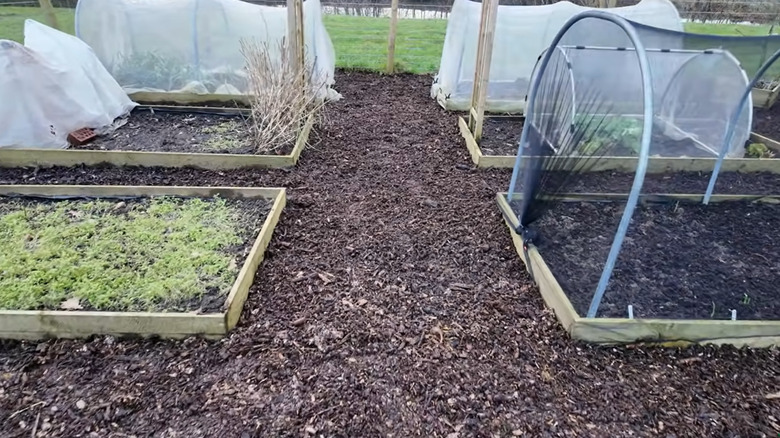
Installing mulch garden pathways is an easier DIY job than putting down concrete, bricks, or gravel. You will need a depth of about 3 or 4 inches of mulch to keep weeds out. Lay down a weed barrier before installing the mulch to increase the weed suppression (e.g., landscaping fabric or cardboard for an eco-friendlier weed barrier). You can expect your new mulch pathway to last about a year or two before needing to add more mulch.
To determine the amount of mulch you will need for your garden path, start by determining the area, or square footage, of the space you are planning to mulch. Once you figure out the square footage, you will multiply that number by the depth of the mulch that you want, such as 3 or 4 inches. Since mulch is sold in cubic feet, you will then divide that number by 12 to get the amount of cubic feet that are needed. When ordering mulch, it can be helpful to keep in mind that a yard of mulch is 27 cubic feet.
Mulch and other loose materials used on a garden path can migrate out of the path over time. Edging helps prevent this. Various options are available for edging your garden path, such as aluminum, steel, plastic, stone, and wood to fit your budget and aesthetic. In addition to keeping the mulch in place, landscape edging can also help create a cohesive front garden.